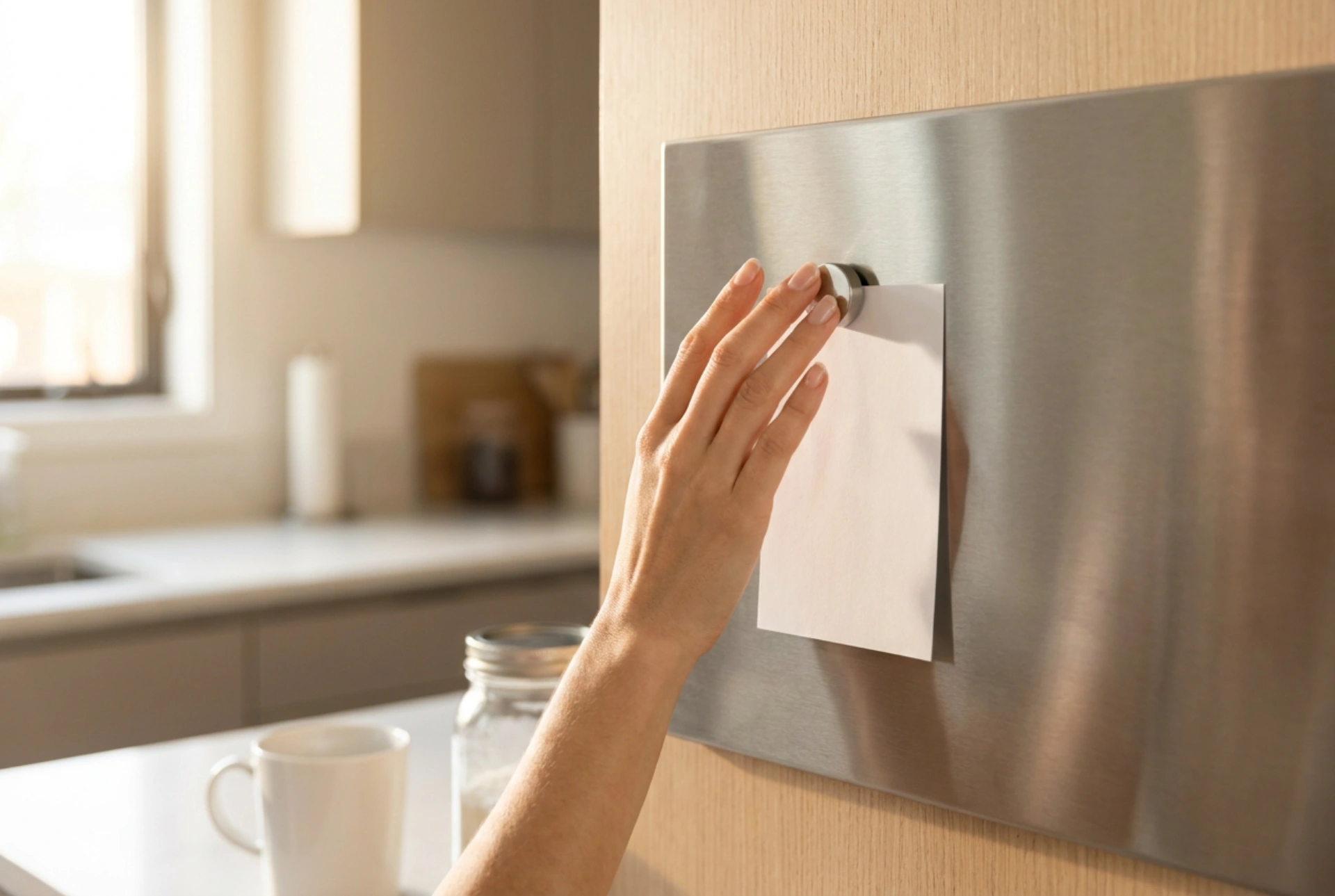


A kitchen magnetic board serves as the central communication hub of a busy home, translating chaotic schedules into a structured, visual workflow. By understanding the physics of magnetic surfaces and applying systematic organisation techniques, you can establish an efficient family noticeboard that reduces cognitive load and keeps everyone aligned.
The Science of Magnetic Surfaces and Maintenance
Not all metal surfaces behave the same way. Standard stainless steel appliances often have an austenitic crystalline structure, which makes them non-magnetic. For a highly functional kitchen board, you require a ferromagnetic base, typically made of coated carbon steel or a specialised magnetic glass panel. Glass boards require stronger neodymium magnets because the magnetic field strength decreases rapidly with distance; the thick glass sheet acts as a barrier between the magnet and the underlying steel plate.
Kitchen environments subject these surfaces to airborne grease, humidity, and heat. Regular maintenance is crucial to prevent the build-up of a sticky lipid film that reduces magnet friction, causing notes to slide down. Clean the board weekly using a solution of isopropyl alcohol or a mild mixture of warm water and a surfactant (dishwashing liquid). Avoid abrasive scourers or acidic cleaners, which can micro-scratch the protective powder coating, leaving the steel vulnerable to moisture and eventual oxidation.
Establishing a Functional Spatial Layout
An effective board relies on strict visual zones rather than a chaotic cluster of papers. Divide your board into three distinct functional zones to streamline how your family processes information:
- The Action Zone: Positioned at eye level, this area holds time-sensitive documents, such as weekly schedules, permission slips, or shopping lists. Use high-strength magnetic clips to secure these active papers.
- The Static Zone: Located in a corner or along the bottom edge, this contains permanent information. Emergency contacts, household rules, or recurring weekly menus belong here. Because these documents remain long-term, secure them with flat, low-profile magnets to prevent accidental displacement.
- The Storage or Input Zone: A designated spot at the bottom of the board for blank notepad slips, a magnetic pen holder, and spare magnets. This ensures that the tools required to write a quick note are always within arm's reach, reducing the barrier to keeping the board updated.
Optimising Cognitive Load with Colour and Materials
Visual processing speed is highly dependent on contrast and colour consistency. Assigning a specific colour to each family member or category of task allows the brain to categorise information instantly without reading every word. For instance, assign blue for appointments, green for meal planning, and red for high-priority, urgent tasks.
When writing directly on whiteboard-magnetic surfaces, use high-quality dry-erase markers with a consistent ink flow. To prevent "ghosting"—the permanent staining of dry-erase ink into the board—always wait for the ink to dry completely (about three to five seconds) before erasing it. Erasing wet ink smears the pigment into the microscopic pores of the board surface. For stubborn residue, a microfibre cloth dampened with a small amount of isopropyl alcohol will break down the binding polymers of the ink without damaging the board's finish.
The Weekly Reset: Maintaining System Integrity
Without a regular maintenance routine, any physical organisation system will succumb to entropy. Establish a weekly reset protocol—ideally on a Sunday evening—to keep the communication board relevant and functional. Follow this step-by-step order of operations:
- Purge: Remove all outdated receipts, expired coupons, and completed school forms. If a note is no longer actionable, recycle it immediately.
- Update: Review the upcoming week's digital calendars or school schedules and transfer key events onto the board's central calendar section.
- Clean: Wipe down the dry-erase sections to remove ghosting and grease. Re-align the physical magnets to maintain clean, straight margins, which visually signals order and reduces mental clutter.