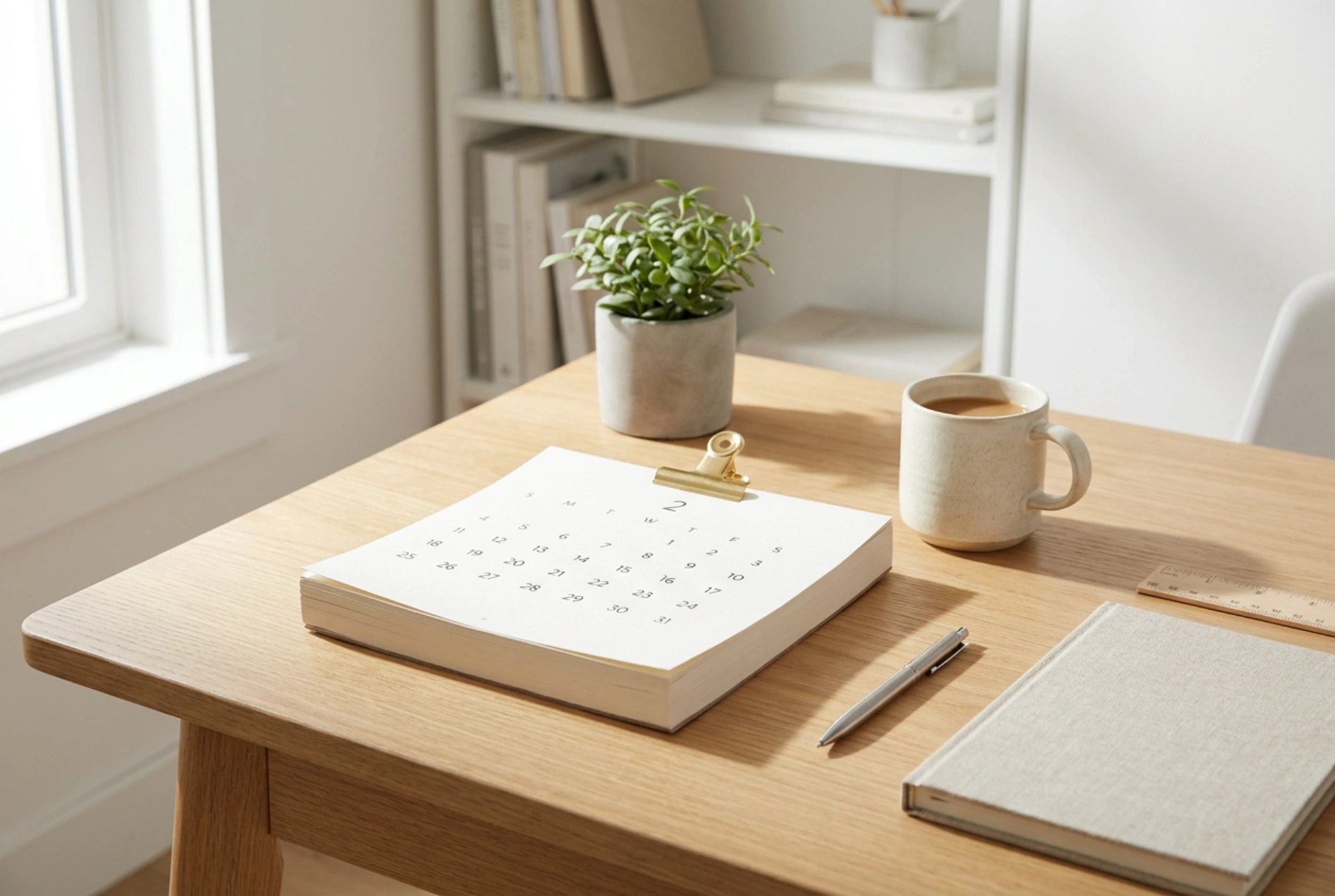


Integrating a tactile tear-off calendar into your daily routine offers a powerful, physical anchor that digital tools simply cannot replicate. By translating the abstract concept of time into a concrete, manual action, you can dramatically improve your daily focus and cognitive clarity.
The Psychology of the Tactile Tear-Off
The act of physically tearing a sheet of paper from a calendar engages multiple senses, creating a distinct neural marker for the start of a new day. In cognitive psychology, this is known as a tactile transition cue. Unlike swiping a notification on a screen, which requires minimal physical effort and is easily forgotten, tearing paper provides auditory and haptic feedback. This physical resistance and the sound of the tear signal to your brain that a specific period of time has closed and a new opportunity has commenced.
This action triggers a micro-release of dopamine, reinforcing the habit of daily planning. Because paper has a fixed physical boundary, it acts as a natural constraint. It forces you to accept the finite nature of a single day, preventing the cognitive overload associated with infinite digital scroll lists.
Structuring Your Morning Tear-Off Ritual
To maximize the utility of a tear-off calendar, consistency in timing and physical placement is essential. Place the calendar in a high-visibility, designated transition zone, such as beside your morning coffee station or next to your keyboard. The routine should follow a precise sequence of actions:
- Clear the previous day: Approach the calendar only after you have completed your initial morning hygiene or beverage preparation. Grip the page firmly at the bottom corner and pull downward in a smooth, swift motion to ensure a clean tear.
- Examine the sheet: Before discarding or archiving the paper, look at the date. This brief, conscious pause grounds your awareness in the present day, month, and season.
- Define the single focal point: Turn the torn sheet over or use the margins of the current day's page to write down one non-negotiable objective for the day. Limiting your primary focus to a single item on a small piece of paper prevents priority dilution.
Optimizing the Back of the Page for Micro-Journaling
The reverse side of a torn calendar page represents blank physical space that is highly valuable for micro-journaling or daily indexing. Instead of tossing the sheet immediately into the recycling bin, repurpose it as a daily capture tool. The limited surface area prevents the pressure of writing long-form journal entries, making it highly sustainable.
Use a fine-liner pen to divide the back of the torn page into three small zones: a morning intention, a midday physiological check-in (such as hydration or posture reminders), and an evening gratitude or key achievement. Because the page is physically separate from your permanent notebooks, it serves as a low-stakes draft space for raw thoughts, which can later be summarized or discarded during your weekly review.
The Weekly Review and Organized Archiving
To prevent paper clutter while maintaining the benefits of physical tracking, establish a systematic process for handling your collection of torn pages. Keep a small, aesthetic wooden box or brass clip on your desk to hold the week's pages. Every Sunday, perform a five-minute physical audit of these sheets.
Review the notes written on the backs of the pages to identify patterns in your productivity, mood, or habits. Once the data has been synthesized or transferred to a digital archive if necessary, consciously recycle the paper. This final step of recycling completes the lifecycle of your weekly time management, offering a sense of closure and preparation for the upcoming week.