

Transitioning from disposable plastic wrap to glass storage containers is a fundamental step in food safety and kitchen microbiology. Glass provides an inert, non-porous barrier that preserves the delicate proteins and lipids in cold cuts while preventing bacterial proliferation.
The Material Science of Glass in Cold Storage
Understanding why glass outperforms synthetic plastics requires a look at molecular structures. Plastic polymers are microscopically porous and prone to scratching over time. These microscopic fissures act as physical reservoirs for organic residues and bacterial colonies, such as Listeria monocytogenes, which can survive even after standard hand washing. In contrast, tempered or borosilicate glass presents a perfectly smooth, non-porous amorphous solid surface. It does not chemically interact with the acids, salts, or fats present in processed meats, meaning it will never absorb odours, transfer plasticisers, or become stained.
Furthermore, glass has a significantly higher thermal mass than thin plastic. When the refrigerator door is opened, warm ambient air rushes into the cavity. Plastic containers adjust to this temperature change rapidly, causing localized warming of the food inside. Glass containers, however, absorb and retain cold energy, maintaining a stable microclimate that prevents the condensation cycles that accelerate food spoilage.
Controlling Moisture and Preventing Oxidation
The deterioration of cold cuts is driven by two main chemical reactions: lipid oxidation and microbial growth. Exposure to atmospheric oxygen breaks down unsaturated fatty acids, resulting in rancid odours, discolouration, and altered flavours. Standard silicone-sealed glass containers create an airtight environment that severely limits oxygen replenishment, pausing this degradation process.
Excess moisture, however, is equally dangerous. Condensed water pooling at the bottom of a container encourages the growth of psychrotrophic bacteria, which thrive at low temperatures and cause the familiar slimy texture on hams and poultry slices. To mitigate this risk, employ a moisture-management technique: line the bottom of the glass container with a sheet of unbleached parchment paper. This paper acts as a capillary wick, absorbing excess condensation without drying out the meat. When stacking different types of charcuterie, place sheets of parchment paper between the layers to prevent moisture migration and cross-contamination.
Thermal and Chemical Cleansing Protocols
Maintaining the hygienic integrity of your storage system requires rigorous cleaning protocols. Because glass is highly resistant to thermal shock and chemical degradation, it can be subjected to sanitisation processes that would deform or degrade plastics.
For routine washing, utilise hot water of at least 60°C and a standard surfactant-based detergent to emulsify surface fats. For deeper sanitisation, glass can be exposed to thermal disinfection in a dishwasher cycle exceeding 70°C or rinsed directly with boiling water. To eliminate persistent odours or oily films without scratching the glass, apply a paste of sodium bicarbonate and water, rub gently with a soft sponge, and rinse thoroughly. Avoid abrasive steel wool, which can create micro-scratches that harbour bacteria. Always ensure the silicone gaskets on the lids are removed, cleaned, and dried separately, as moisture trapped beneath gaskets is a primary cause of mould growth.
Stacking and Placement Strategy in the Refrigerator
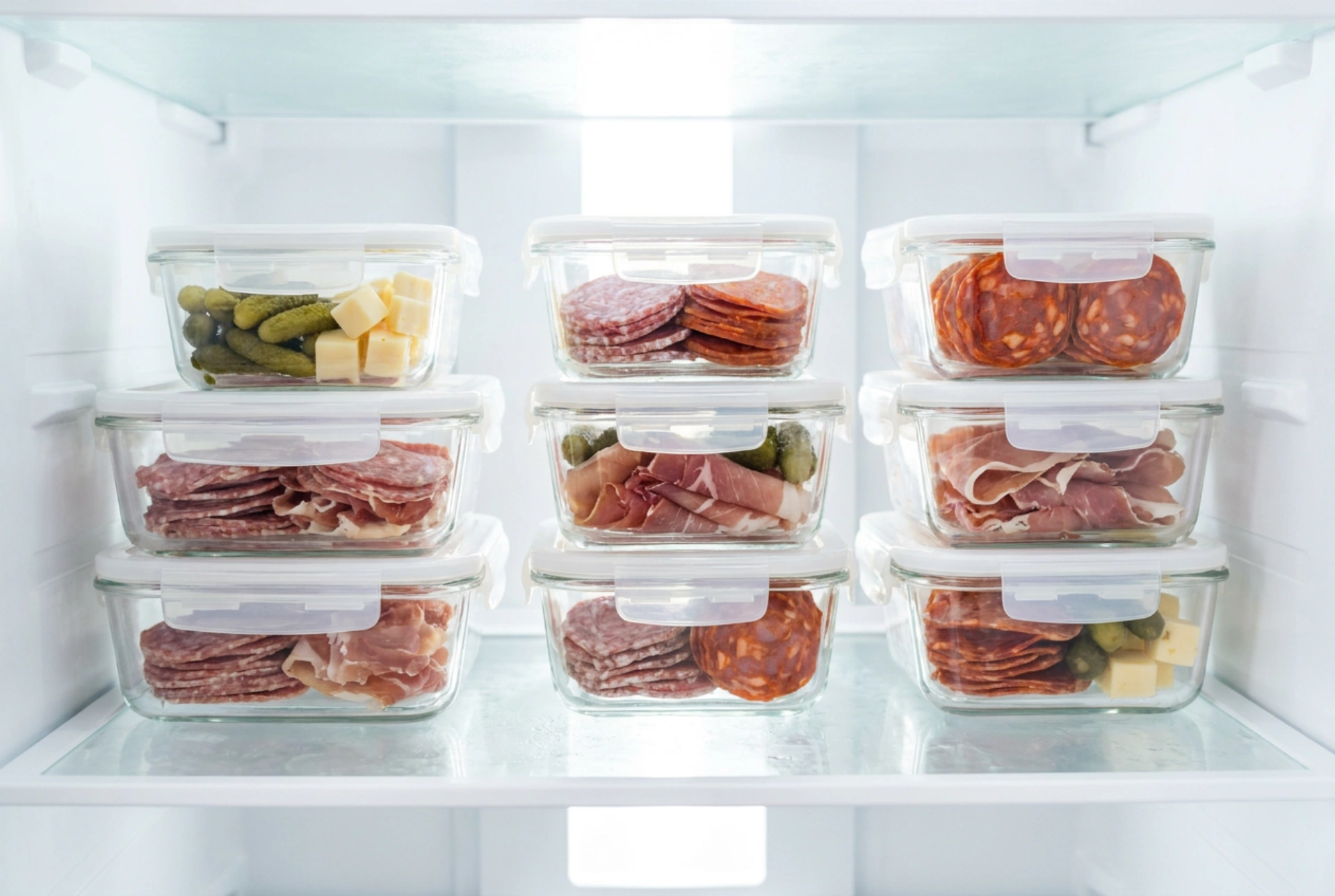
The physical arrangement of containers inside the refrigerator directly impacts food preservation. Cold air naturally sinks, making the lowest shelf of the refrigerator, just above the vegetable drawers, the coldest zone. This area typically registers between 1°C and 3°C, which is the optimal temperature range for highly perishable, high-protein items like cold cuts.
Stack your glass containers systematically. Place denser, cured meats such as salami or prosciutto, which have lower water activity, in the upper containers of your stack. High-moisture cooked hams should occupy the very bottom containers to prevent any potential dripping or moisture transfer. Labelling the glass lids with a liquid chalk marker with the storage date ensures a strict first-in, first-out consumption pattern, reducing food waste and ensuring peak freshness.