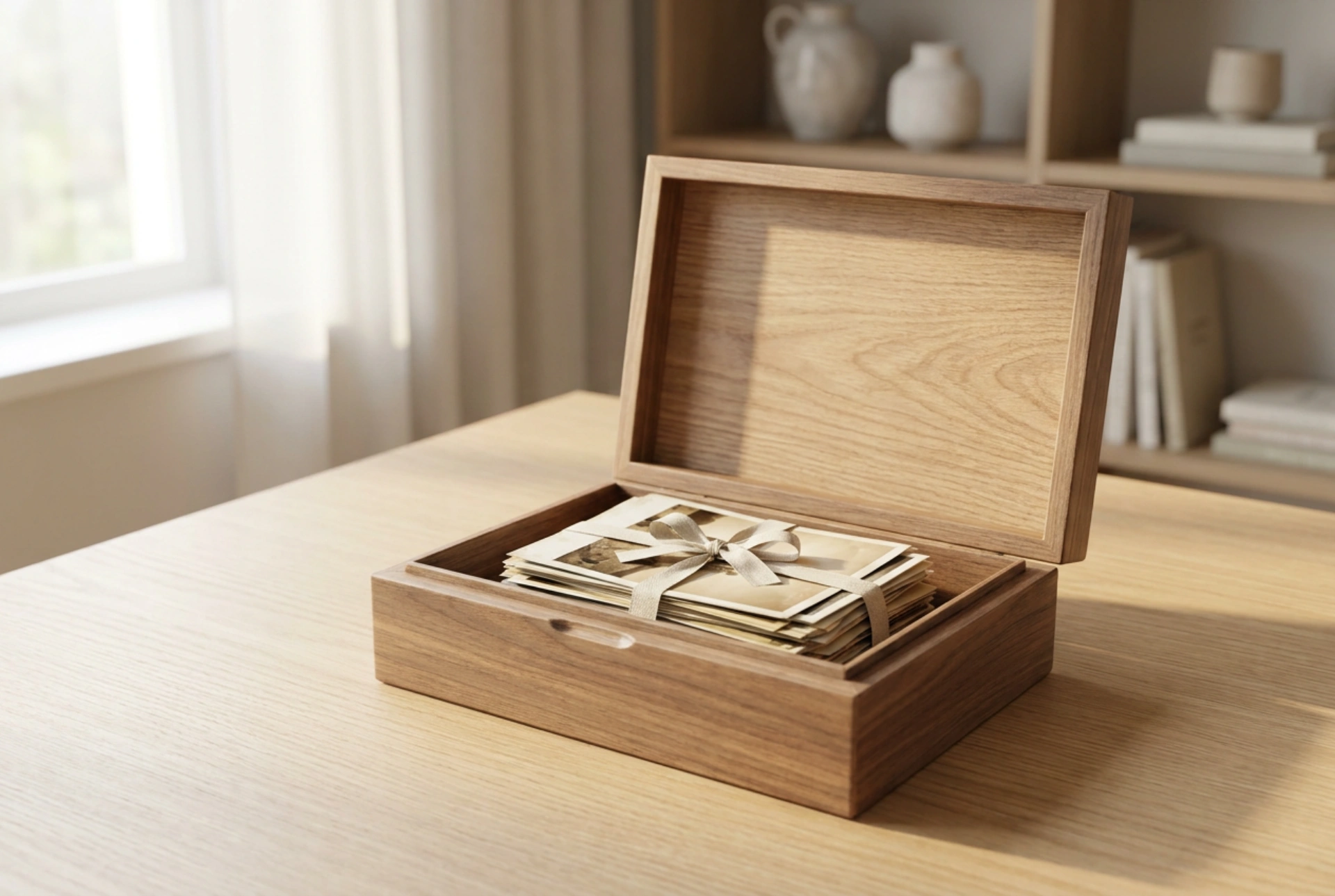


Storing physical photographs in wooden boxes requires an understanding of material science to prevent chemical degradation over time. By combining the natural breathability of wood with acid-free archival techniques, you can preserve your family history from environmental decay.
The Chemistry of Photo Decay and Degradation
Photographic prints are delicate chemical structures. Traditional photographs consist of a paper base, a baryta or polymer coating, and a gelatin emulsion layer containing light-sensitive silver halide crystals or organic dyes. These elements are highly susceptible to chemical reactions triggered by environmental factors. Moisture, oxygen, volatile organic compounds (VOCs), and acidic migration are the primary catalysts for yellowing, fading, and brittleness. To stop these reactions, you must control the immediate microclimate surrounding the prints.
Why Wood Choice Matters: VOCs and Resin Risks
While wood is an excellent, sturdy medium that naturally regulates minor humidity fluctuations, not all timber is safe for direct contact with archival materials. Raw wood contains lignin, natural acids, and terpenes (volatile organic compounds) that off-gas over time. Softwoods like pine or cedar release high levels of acidic resins, which can migrate into photographic paper and cause rapid acid hydrolysis—the chemical breakdown of cellulose fibres.
For safe storage, choose seasoned hardwoods such as oak, maple, or beech, which have lower resin contents. Ensure the wood is completely dry and has not been treated with acidic stains or polyurethane varnishes that emit harmful solvents during curing. If using a varnished wooden box, let it off-gas in a well-ventilated area for several weeks before placing any photos inside.
Creating an Archival Barrier Inside the Box
Even when using a high-quality hardwood box, physical photographs should never sit in direct contact with raw wood. You must establish a chemical barrier to prevent acid migration. This is achieved by utilizing specialised materials:
- Acid-free, lignin-free paper: Use these sheets to separate individual prints. This prevents the chemical emulsion of one photograph from sticking to the back of another under pressure.
- Glassine envelopes: A glazed, semi-translucent paper that is air and water-resistant, protecting prints from physical friction and dust.
- Polyester or polypropylene sleeves: Chemically inert plastic sleeves provide excellent physical protection and allow you to view photos without depositing skin oils onto the surface.
Managing the Microclimate: Humidity and Oils
Wood is a hygroscopic material, meaning it naturally absorbs and desorbs moisture from the air. This characteristic helps buffer minor environmental shifts, but extreme humidity remains a threat. High humidity (above 60%) encourages mold growth and gelatin softening, while low humidity (below 30%) causes paper fibres to become brittle. Keep the wooden keepsake box in a temperature-controlled room, avoiding damp basements or hot attics.
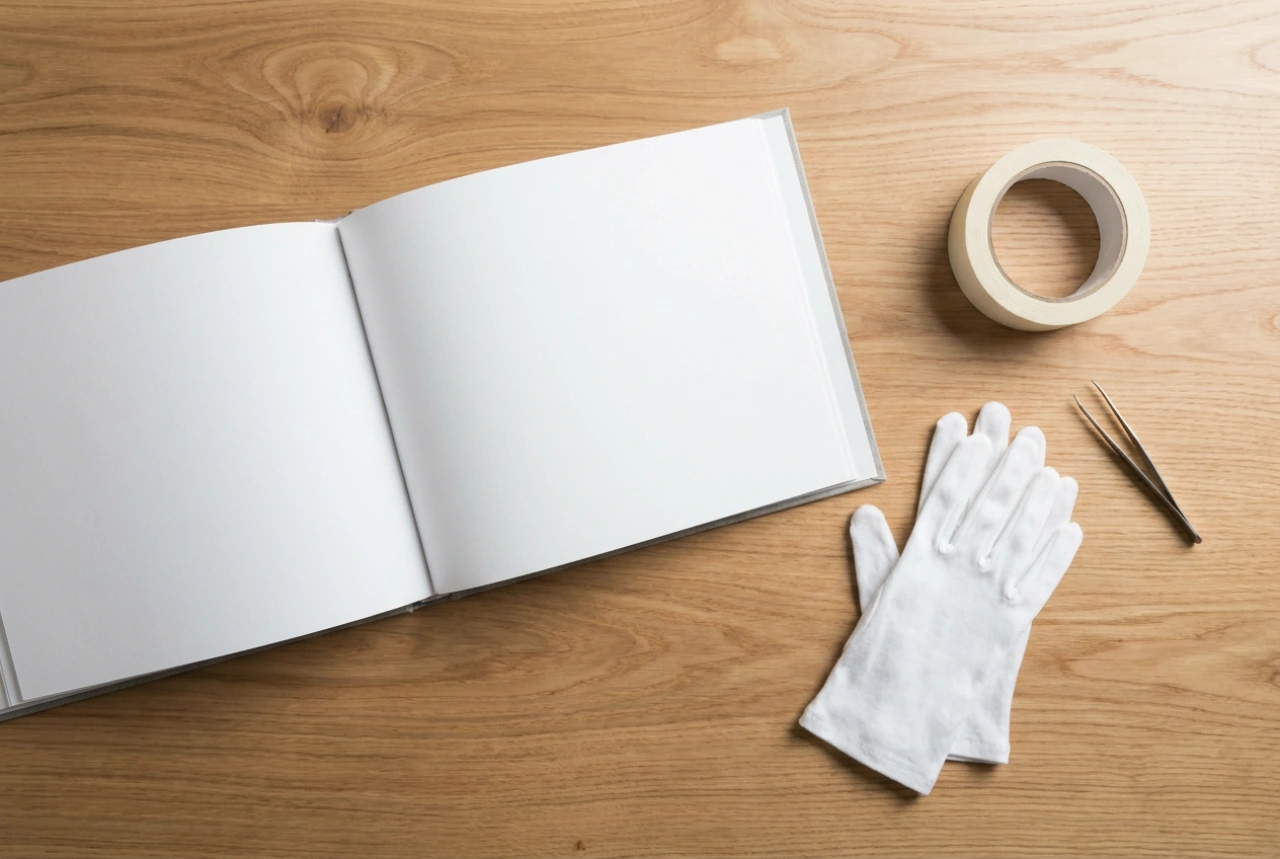
To regulate internal moisture, place a small, food-grade silica gel packet inside the box to absorb excess moisture. Furthermore, always handle historic prints using clean, lint-free white cotton gloves. Human skin naturally secretes sebum, an oily substance containing fatty acids and sodium chloride. These substances etch into photographic emulsions over time, creating permanent fingerprint stains that cannot be chemically reversed.
A Systematic Approach to Sorting and Archiving
Organising your collection should follow a logical, low-friction workflow. Begin by laying out your prints on a clean, dry surface covered with a cotton sheet. Categorise the images chronologically or by family branch. Write any identifying information, such as dates or names, gently on the back of the print using a soft, acid-free archival pencil (such as a 4B or 6B graphite pencil). Avoid ballpoint pens or felt-tip markers, as their inks contain solvents that bleed through the paper over time. Once labelled and sleeved, stack the prints flat inside the wooden box to prevent warping, placing heavier prints at the bottom of the stack.