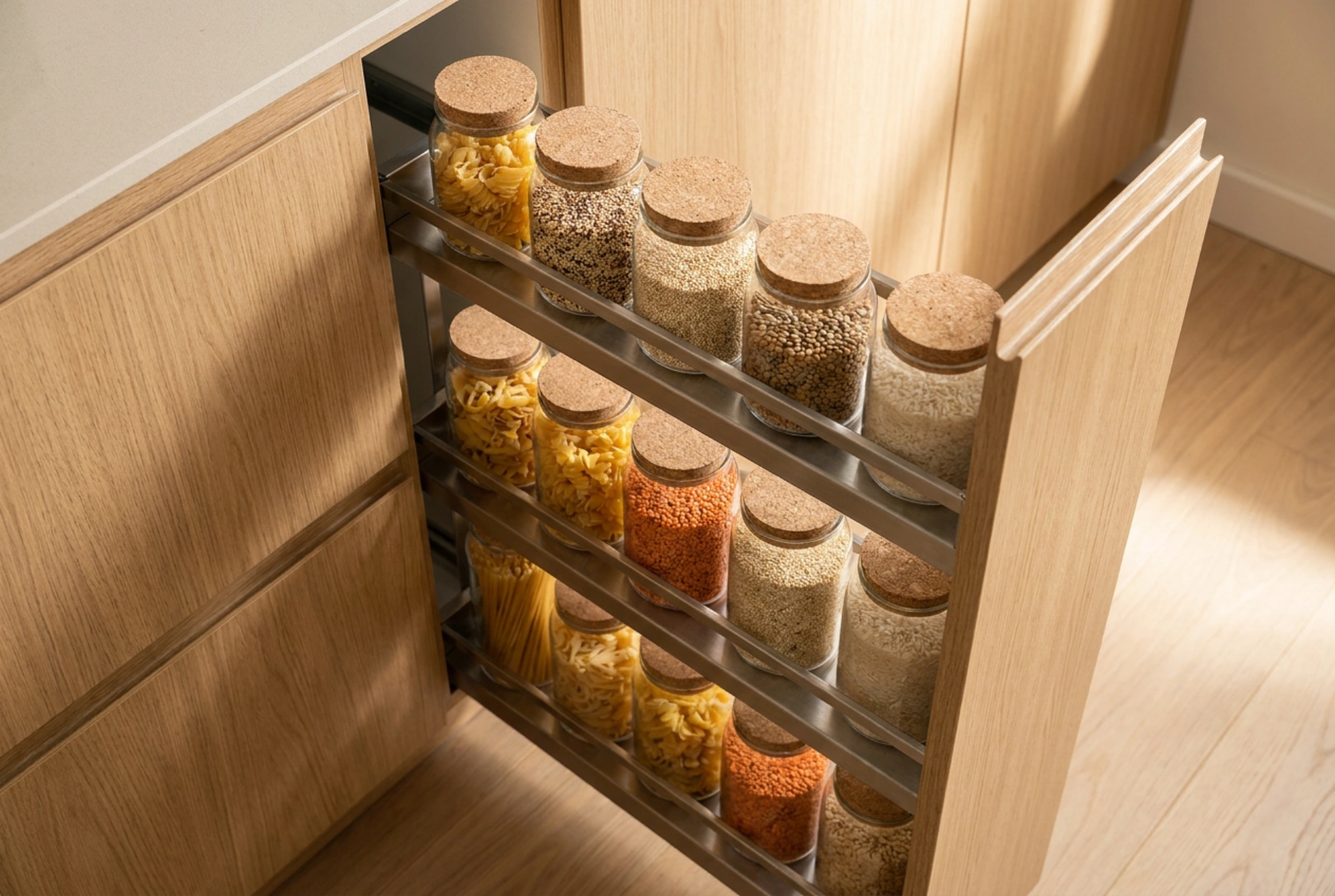


Maximizing storage in narrow kitchen gaps requires an understanding of thermodynamics, structural mechanics, and material science to prevent food spoilage. Utilizing slim pull-out shelving units transforms underused crevices into highly efficient, microclimate-controlled storage zones.
The Physics of Narrow Gaps: Microclimates and Airflow
Narrow spaces next to large appliances, such as refrigerators, are highly susceptible to microclimatic shifts. Refrigerators emit heat during their cooling cycles due to the thermodynamic work of the compressor. When a slim shelving unit is inserted into a tight gap adjacent to this heat source, the heat transfers through radiation and convection, raising the localized temperature. Elevated temperatures accelerate the degradation of dry food, speeding up chemical oxidation and creating an ideal environment for pantry pests. To mitigate this, ensure a minimum clearance of two centimeters to allow convective airflow, letting heat escape upward instead of penetrating your food containers.
Material Selection: Load Bearing and Center of Gravity
Slim shelving units have a high height-to-width ratio, making them prone to tipping over due to a high center of gravity. To counteract this physical instability, material choice and weight distribution are paramount. Heavy-duty powder-coated steel provides structural rigidity, whereas lightweight plastics degrade over time under mechanical stress. When organizing, always place the heaviest items—such as oils, vinegars, and glass jars—on the bottom shelf. This lowers the center of gravity, stabilizing the unit during movement. The upper shelves should hold lighter goods like spices and grains. Furthermore, choose wheels with ball bearings and polyurethane tread to reduce friction and absorb kinetic shock when pulling the shelf out.
Decanting and Packaging Dynamics in Tight Spaces
Original commercial packaging is rarely optimized for space efficiency and often traps air, which accelerates food spoilage. To maximize the utility of a narrow shelving unit, dry goods must be decanted into rigid, stackable containers. From a geometric perspective, square and rectangular containers eliminate the dead space inherent to cylindrical jars, increasing storage density by up to 25 percent. From a chemical perspective, select containers made of borosilicate glass or food-grade polymers that do not leach compounds. Ensure the containers utilize a mechanical locking lid with a silicone gasket. Unlike natural rubber, which degrades when exposed to oxygen, silicone maintains its elasticity, creating a hermetic seal that prevents moisture ingress.
Thermal Stratification and Storage Hierarchy
Within any vertical storage unit, temperature stratification occurs because warm air rises while denser, cool air settles near the floor. Understanding this thermal gradient dictates the optimal placement of different dry goods:
- The Ground Zone (Coolest): Ideal for oils, vinegars, and liquid preserves. Cooler temperatures preserve the chemical bonds of unsaturated fats, preventing rancidity.
- The Middle Zone (Moderate): Best for starches, grains, legumes, and flour. These goods require stable humidity levels and benefit from being kept away from ground-level moisture.
- The Top Zone (Warmest): Reserved for highly stable items like salt, sugar, and sealed canned goods. Sugar and salt are naturally hygroscopic but chemically stable under mild temperature fluctuations when stored in airtight vessels.
Maintenance, Friction Control, and Hygiene
The narrow nature of these shelving units means they accumulate dust and microscopic food particles in hard-to-reach areas. Regular maintenance prevents mechanical failure of sliding mechanisms and eliminates food sources for pests. Once every quarter, remove the unit entirely to vacuum the gap and wipe down the tracks. To keep sliding mechanisms operating smoothly, apply a thin layer of dry PTFE (polytetrafluoroethylene) lubricant. Unlike wet lubricants or oils, dry PTFE does not attract dust or food particles, ensuring a smooth, friction-free slide without creating a sticky buildup that could harbor bacteria.