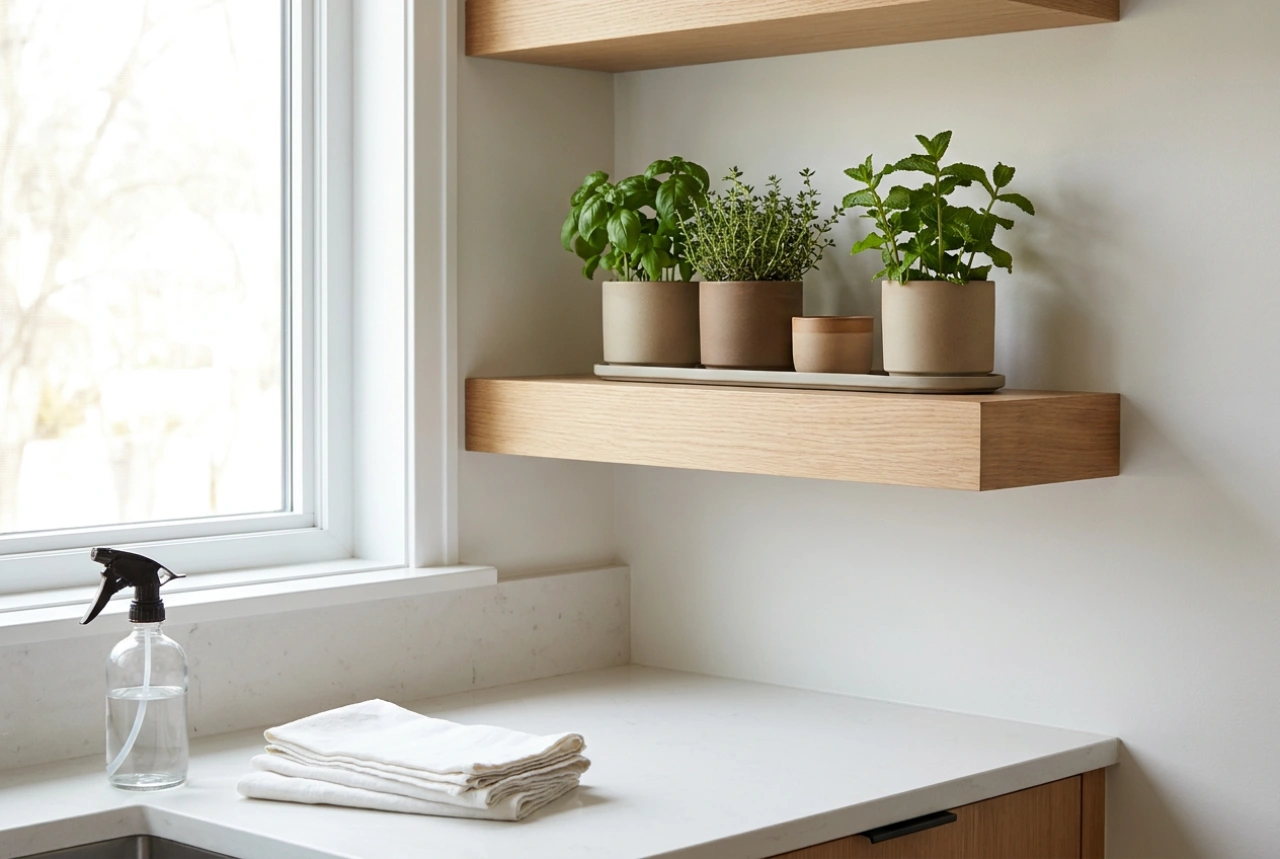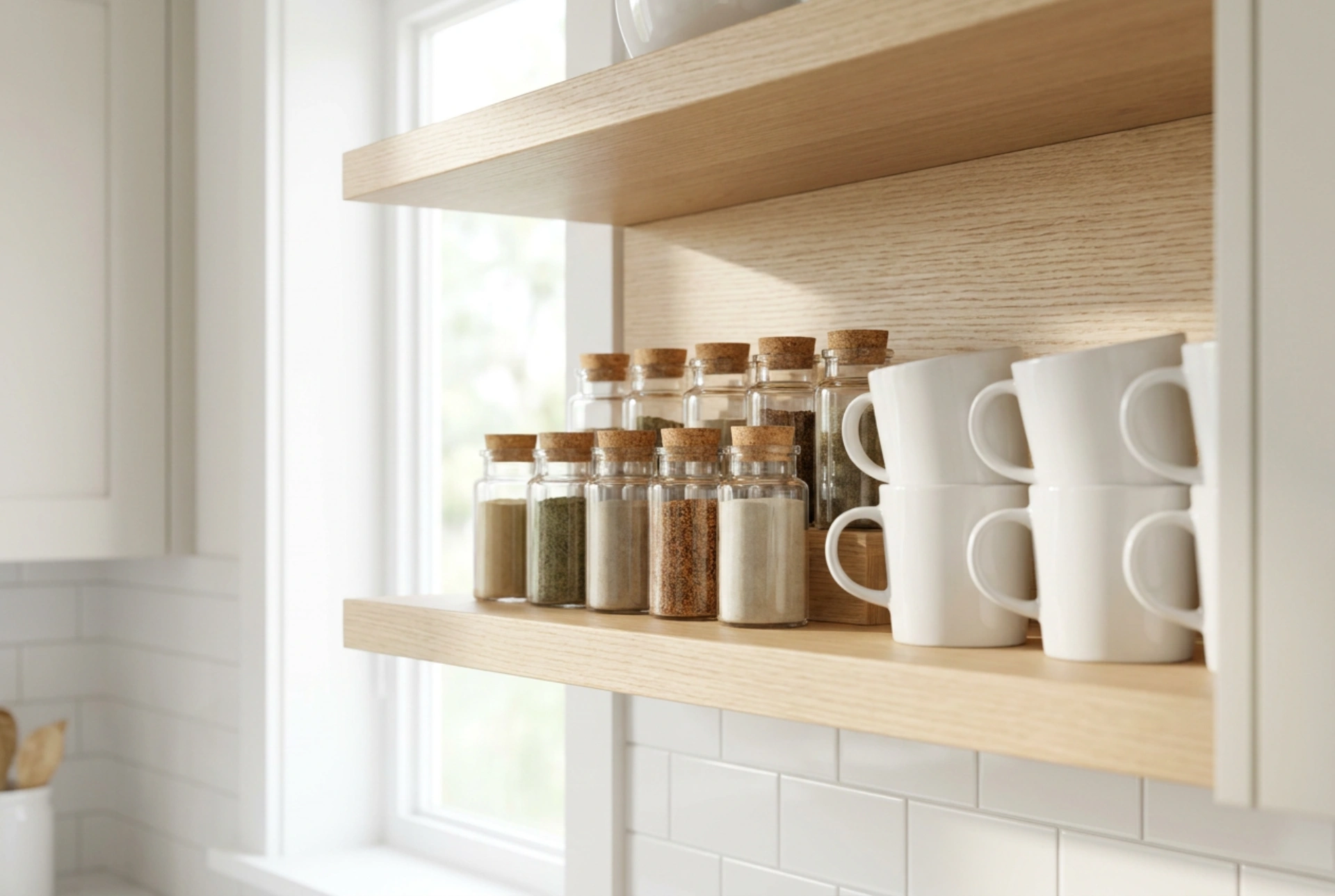


Optimising vertical space with a kitchen wall shelf requires a strategic understanding of weight distribution, microclimates, and material science to keep spices potent and ceramic mugs safe from damage.
The Physics of Shelf Placement: Managing Heat and Humidity
The primary enemy of stored culinary ingredients is the kitchen microclimate. Placing a spice shelf directly above or adjacent to a cooktop exposes delicate herbs and spices to rapid fluctuations in temperature and relative humidity. High temperatures accelerate the volatilisation of essential oils—such as piperine in black pepper, cinnamic aldehyde in cinnamon, and d-limonene in citrus peels—rendering them flavourless within weeks.
Furthermore, steam rising from boiling water introduces moisture into the air. When this humid air encounters cooler spice containers, condensation occurs inside the jars. This leads to the clumping of powdered spices (such as garlic powder or ground paprika) due to a process called hygroscopic caking, which can also foster fungal growth. To prevent this, wall shelves must be installed at least one metre away from major heat and steam sources, ideally in a cool, dry zone of the kitchen where air circulation is consistent but gentle.
Material Science: Selecting Shelves and Storage Vessels
The choice of material for both the shelf and the containers dictates the longevity of your storage system. Solid timber shelves, whilst aesthetically pleasing, are porous and can absorb cooking fats and airborne volatile organic compounds. If choosing wood, it must be sealed with a food-safe, non-porous polyurethane or hardwax oil to prevent grease penetration and facilitate easy sanitisation.
For container selection, glass remains the gold standard for preserving spices due to its chemical inertness; it does not react with acidic or highly aromatic compounds. However, clear glass allows ultraviolet (UV) radiation to penetrate, which initiates photo-oxidation, breaking down organic pigments and flavor compounds. If your shelf is positioned in direct sunlight, opt for amber or cobalt glass jars. Additionally, closure mechanisms matter: screw-on metal lids with plastisol liners or high-density silicone gaskets provide a superior moisture barrier compared to porous cork stoppers, which can allow ambient humidity to seep in over time.
Ergonomics and Structural Load Distribution
Arranging items on an open shelf is an exercise in structural physics and daily ergonomics. Mugs, typically constructed from dense stoneware or porcelain, carry significant static weight compared to lightweight glass spice jars. To prevent structural failure or bowing of the shelf over time, heavy ceramic mugs should be placed directly above or as close as possible to the wall brackets or studs. This minimises the bending moment and reduces the shear stress on the wall anchors.
Arrange your spices using an active-use hierarchy. Place frequently used ingredients on the lower, most accessible level, sorting them from left to right in order of culinary application (e.g., salt, pepper, and primary cooking oils first). To prevent aroma cross-contamination, store highly pungent spices containing sulfurous compounds (like asafoetida or garlic) in jars with pristine seals, slightly isolated from delicate floral or sweet herbs.
Cleansing and Degreasing Protocols
Open kitchen shelving is inevitably subjected to a fine film of aerosolised cooking grease, which acts as an adhesive for household dust. Cleaning this surface requires an understanding of lipid solubility. Standard water-based wiping merely smears the grease layer. Instead, use a mild surfactant solution or a diluted isopropyl alcohol spray (70% concentration) to break down the lipid bonds on glass jars and sealed wooden surfaces.
Avoid harsh chlorine-based detergents or abrasive scouring pads, which can strip protective finishes from wood and etch the surface of glass containers, creating microscopic crevices where bacteria can colonise. A microfiber cloth dampened with warm water and a pH-neutral dish soap is sufficient for regular maintenance, followed by immediate drying with a lint-free towel to prevent moisture spots.