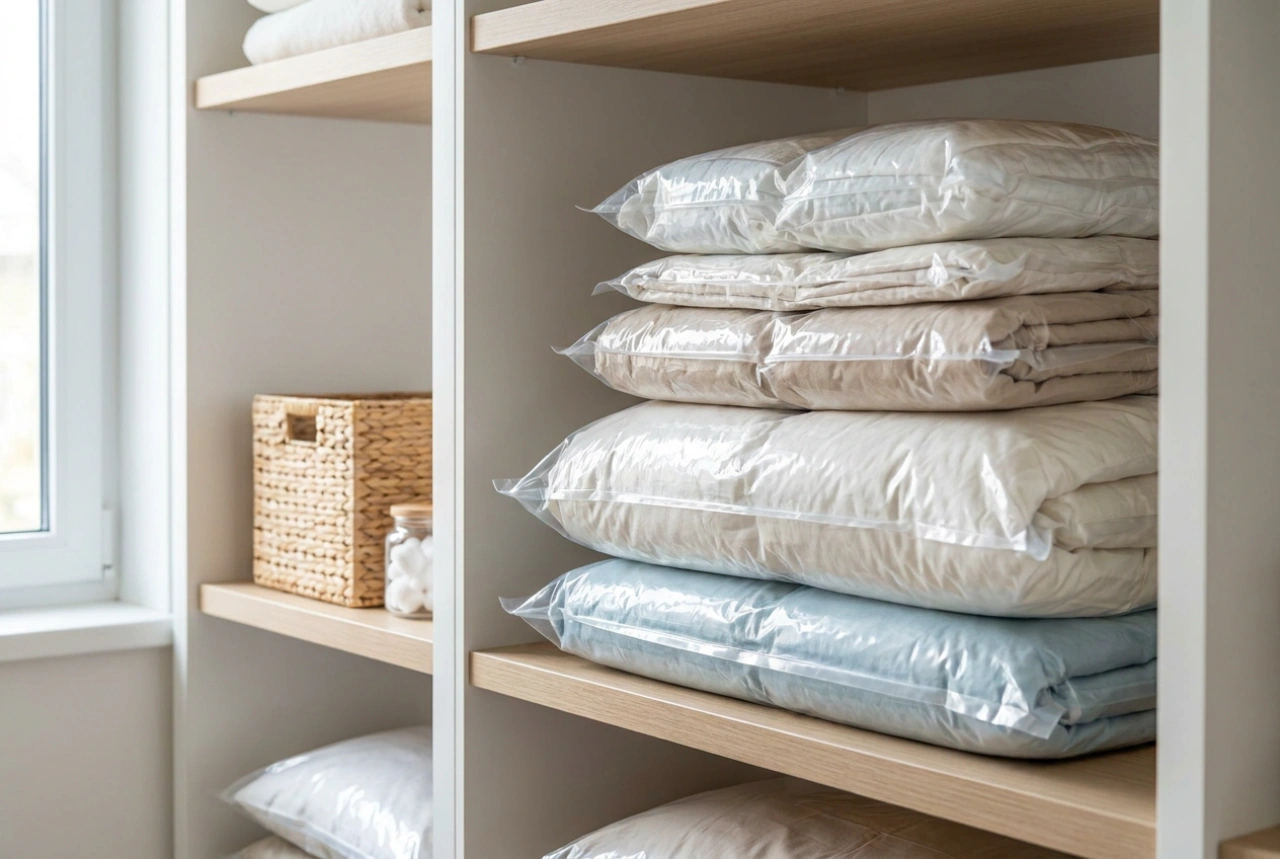


Efficient storage in compression bags relies on displacing trapped air within fabric weaves while protecting the structural integrity of the fibers. By selecting the correct folding method based on textile construction, you can double your storage capacity and prevent stubborn, deep-set creasing.
The Physics of Compressed Fabrics
To optimize space inside storage bags, it is essential to understand how different textiles hold air. Fabrics are either woven or knitted. Knitted textiles, such as wool sweaters and cotton t-shirts, feature interlocking loops that naturally trap a significant volume of air. These fabrics are highly compressible because the air pockets between the loops can be easily squeezed out without damaging the fiber elasticity. Woven fabrics, like denim, linen, and formal shirts, feature threads crossing at right angles, leaving very little internal air space. Attempting to compress these materials excessively does not yield much extra space but instead subjects the rigid fibers to severe mechanical stress, resulting in sharp, semi-permanent creases. Therefore, the goal of folding for compression is not just to make items smaller, but to align the fibers in a way that minimizes bulk while allowing air to escape freely from the weave.
The Flat Rectangular Stack vs. The Ranger Roll
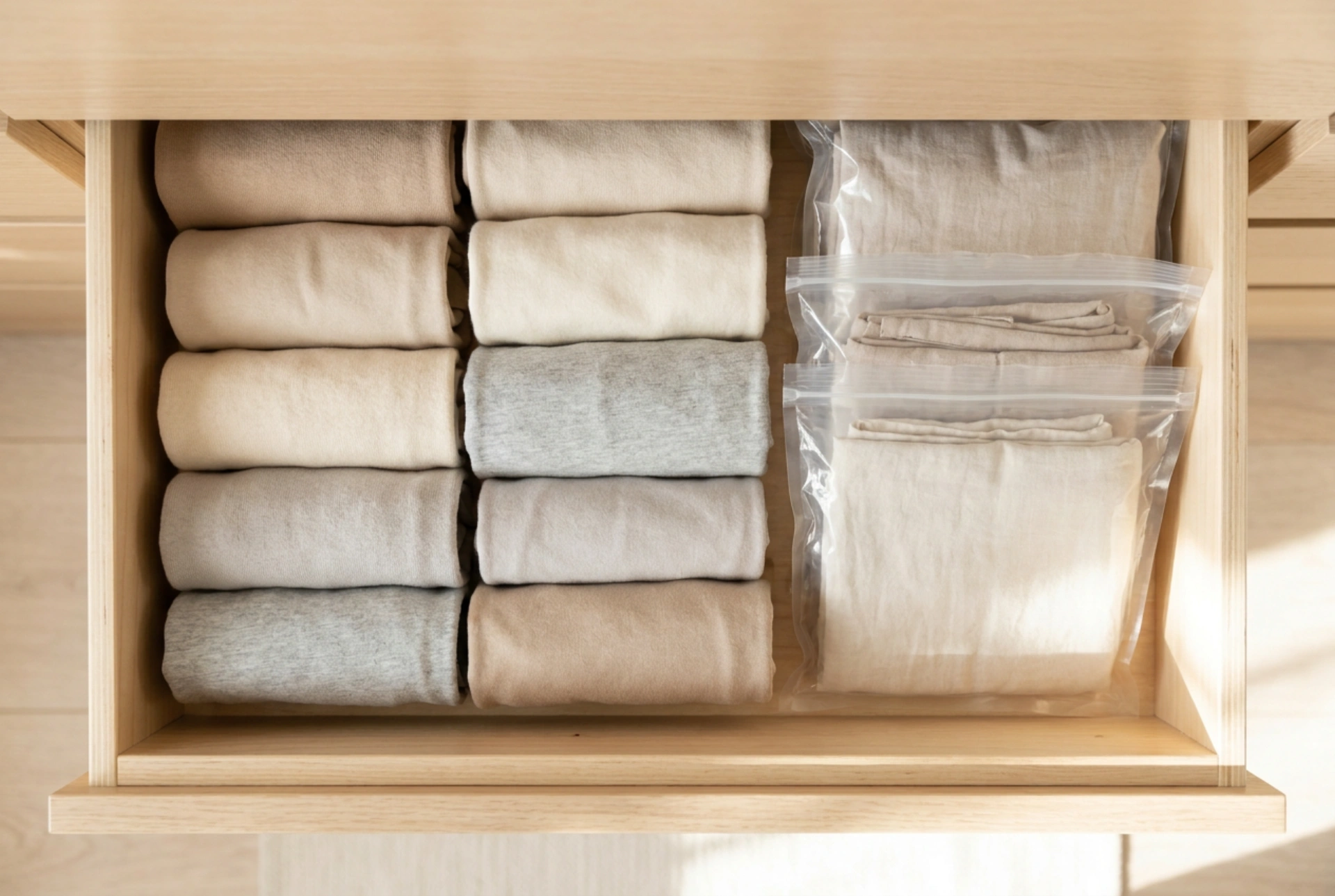
Different garment types require distinct folding geometries to achieve maximum space efficiency inside a sealed bag. For structured or woven garments, the flat rectangular fold is the superior choice. When garments are folded into neat, uniform rectangles of equal width, they distribute weight and pressure evenly across the surface of the bag. This prevents the formation of hard ridges when the vacuum is applied.
For casual, resilient, and knitted garments, the Ranger Roll or military roll is highly effective. This technique involves folding the garment into a tight cylinder and securing it with an inverted hem. Rolling forces air out of the fabric layers progressively from one end to the other. Inside a storage bag, these cylinders can be packed tightly side-by-side like logs, filling every corner of the bag and leaving no dead space. However, rolling should be avoided for stiff collar shirts or heavy woolens, as the tight radius of the roll can overstretch outer fibers while crushing inner ones.
Step-by-Step Folding and Packing Protocol
To ensure your clothes remain preserved and compact, follow this systematic packing sequence:
- Complete Moisture Removal: Never pack clothes that are even slightly damp. Residual moisture is trapped under vacuum pressure, leading to musty odors and fabric rot. Allow garments to air out completely after laundering.
- The Alternating Stack Method: When packing flat-folded items like trousers or sweaters, alternate the direction of the bulky parts. For example, place the waistband of one pair of trousers to the left, and the next to the right. This maintains a level stack and prevents the bag from ballooning in one area.
- Smooth as You Fold: Use your hands to smooth out every fold as you make it. Air trapped between layers of fabric acts as a cushion; smoothing forces this air out before the garment even enters the bag.
- The 80% Capacity Rule: Do not overfill the bag. Leave at least ten centimeters of space from the zip closure. Overfilled bags exert too much pressure on the seams and zipper, leading to slow air leaks over time.
Preserving Delicate Fibers Under Pressure
While vacuum compression is excellent for synthetic fibers, cotton, and down jackets, delicate natural fibers like silk, wool, and cashmere require special handling. High pressure can cause animal fibers to lose their natural resilience. To protect these materials, wrap them in clean, acid-free tissue paper before folding. The paper acts as a mechanical buffer, absorbing excess friction and preventing fibers from fusing or matting under pressure. Furthermore, avoid compressing down-filled jackets by more than 50% of their original volume, as over-compression can snap the delicate feathers, permanently reducing the insulation properties of the garment.