

Transitioning from digital clutter to a structured, paper-based weekly layout reduces cognitive load and enhances task retention through tactile feedback. By utilising a physical, printable template, you can design a highly functional visual landscape that keeps your priorities front and centre without screen-induced fatigue.
The Cognitive Science of Pen and Paper
Writing by hand triggers a neural process known as the encoding phase, where the brain analyses the spatial relationships of letters and words on physical paper. This motor-sensory interaction establishes stronger memory pathways than typing on a glass screen or keyboard. When you physically ink a task into a printed weekly calendar, your brain categorises it as a commitment rather than merely temporary data.
Furthermore, a physical page eliminates the cognitive friction caused by digital notifications, endless scrolling, and tab switching. The static nature of a printed page provides a fixed spatial frame. This means your brain can build a mental map of your week, associating specific tasks with physical locations on the paper—such as the top-right corner for weekend chores or the central column for midweek deadlines. This spatial mapping significantly reduces the mental energy required to recall what needs to be done next.
Structuring Your Weekly Review: The Sequence of Action
To maximise the efficiency of a printable weekly template, you must follow a systematic sequence of operations during your planning session, preferably at the end of the preceding week or on Sunday evening. This sequence ensures no critical tasks are overlooked and prevents over-commitment.
- The Brain Dump: Begin by externalising every outstanding task onto a separate piece of scrap paper. This clears your working memory, allowing you to categorise and evaluate items objectively.
- Categorisation and Filtering: Group your tasks into high-impact objectives, routine maintenance tasks, and quick admin duties. Be ruthless; discard or postpone items that do not fit into the upcoming week's realistic capacity.
- Time Blocking the Non-Negotiables: Transfer fixed appointments, deadlines, and essential routines onto your weekly printable first. These form the unshakeable anchors of your schedule.
- Buffer Zone Allocation: Never pack your calendar to 100% capacity. Leave at least a two-hour buffer zone every day to absorb unexpected delays, transit times, or urgent disruptions.
Optimising Your Layout for Maximum Usability
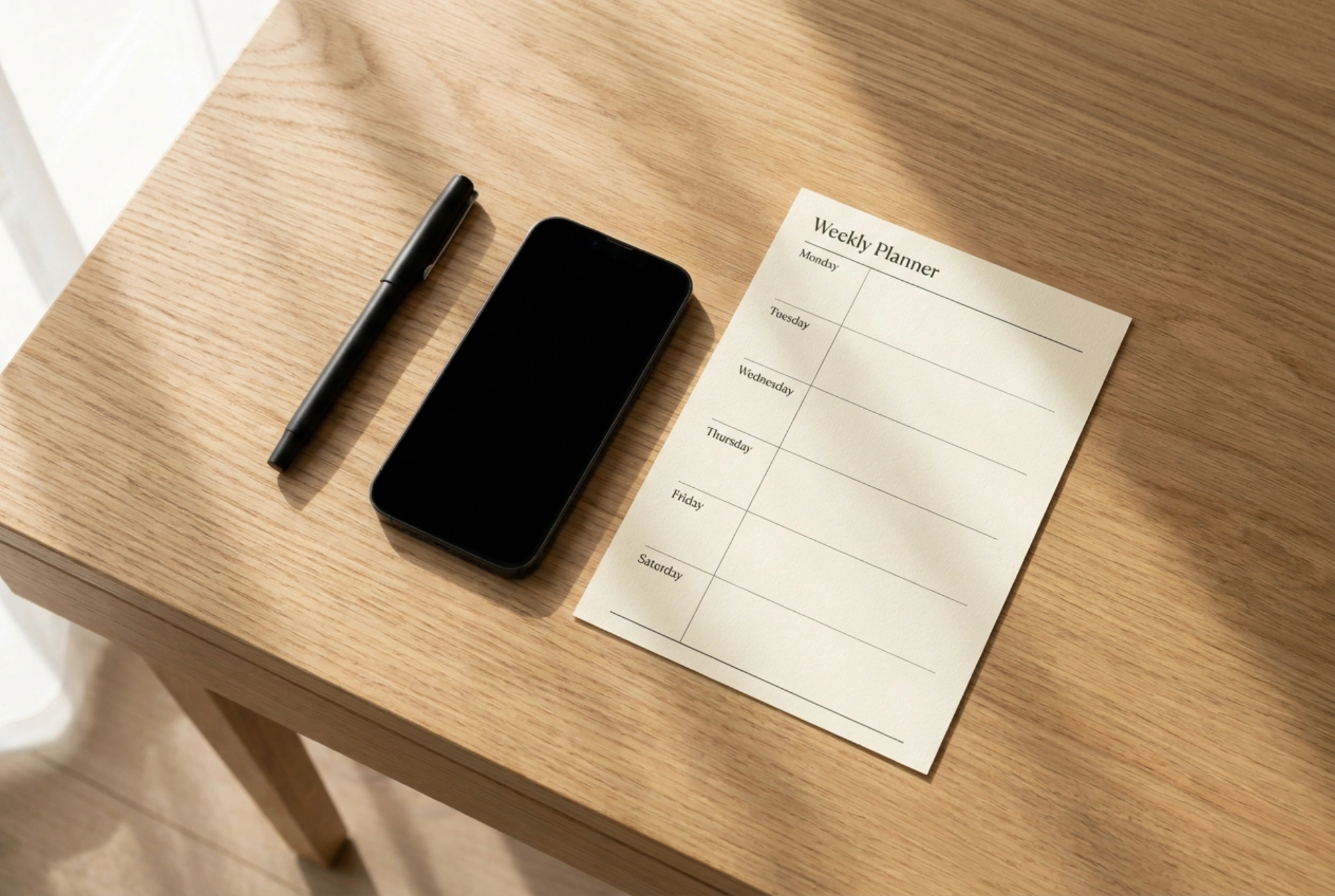
The layout of your printed planner directly influences your productivity. A clean, minimalist design is not just aesthetically pleasing; it reduces visual noise, allowing your brain to process information faster. Look for templates that balance vertical columns with unstructured notes sections.
Positioning your printed calendar on your desk is a physical cue that prompts regular interaction. Place it parallel to your keyboard or in a dedicated stand within your primary line of sight. By keeping the schedule visible, you reinforce your focus through continuous passive exposure, preventing the "out of sight, out of mind" phenomenon common with closed browser tabs and minimised applications.
The Daily Calibration Routine
A weekly plan is a dynamic roadmap rather than a rigid set of rules. To keep the system functional, dedicate five minutes each morning to align your daily actions with the weekly overview, and five minutes each evening to review progress. During the evening review, use a simple system of notation: a tick for completed tasks, an arrow for migrated items, and a neat line through cancelled objectives. This tactile closure provides a psychological sense of accomplishment and prepares your mind for restful downtime.