

Vacuum sealing preserves food quality by removing atmospheric oxygen, halting aerobic bacterial growth and preventing oxidative degradation. Mastering this preservation method requires understanding the physical properties of sealing films and implementing strategic portioning rules based on thermodynamics and microbiology.
The Science of Oxygen Depletion in Food Storage
Food spoilage is primarily driven by chemical oxidation and biological activity. When food is exposed to atmospheric air, oxygen reacts with lipids and pigments, leading to rancidity and discolouration. Additionally, aerobic micro-organisms such as moulds and certain bacteria thrive in oxygen-rich environments, rapidly breaking down organic matter.
By extracting air and creating a hermetic seal, a vacuum sealer reduces the partial pressure of oxygen within the container. This lack of oxygen halts the respiration of aerobic pathogens and significantly slows down lipid oxidation. However, vacuum sealing does not eliminate anaerobic bacteria, such as Clostridium botulinum. Therefore, vacuum preservation must always be combined with temperature control, such as refrigeration or freezing, to ensure complete safety.
Anatomy of a Vacuum Bag: Embossed vs. Smooth Films
Not all plastic bags are suitable for vacuum sealing. Standard storage bags are porous to gases and lack the structural integrity to withstand atmospheric pressure. Professional vacuum bags are made from multi-layer co-extruded polymers, typically combining polyamide (nylon) for strength and gas barrier properties with polyethylene for food-grade safety and reliable heat-sealing capabilities.
- Embossed (Channel) Bags: These bags feature a textured or patterned surface on one side. The micro-grooves act as tiny air pathways. When used in external suction sealers, these channels allow the machine to draw out air even when the two sheets of film are pressed together.
- Smooth Bags: Completely flat on both sides, these are designed for chamber vacuum sealers. In a chamber machine, pressure is equalised both inside and outside the bag, allowing air to escape without the need for embossed channels. Smooth bags are generally thinner and more cost-effective for high-volume processing.
For optimal durability, look for films with a thickness of at least 80 to 90 microns. For bone-in meats or sharp ingredients, 120-micron bags prevent punctures and subsequent loss of vacuum.
Thermodynamics and the Rules of Strategic Portioning
Efficient portioning is not just about organisation; it is governed by thermal dynamics. When freezing food, the rate of freezing determines the size of the ice crystals formed within the cellular structure of the food. Slow freezing creates large ice crystals that rupture cell walls, leading to moisture loss and mushy textures upon thawing.
To preserve texture and nutrients, follow these thermodynamic portioning rules:
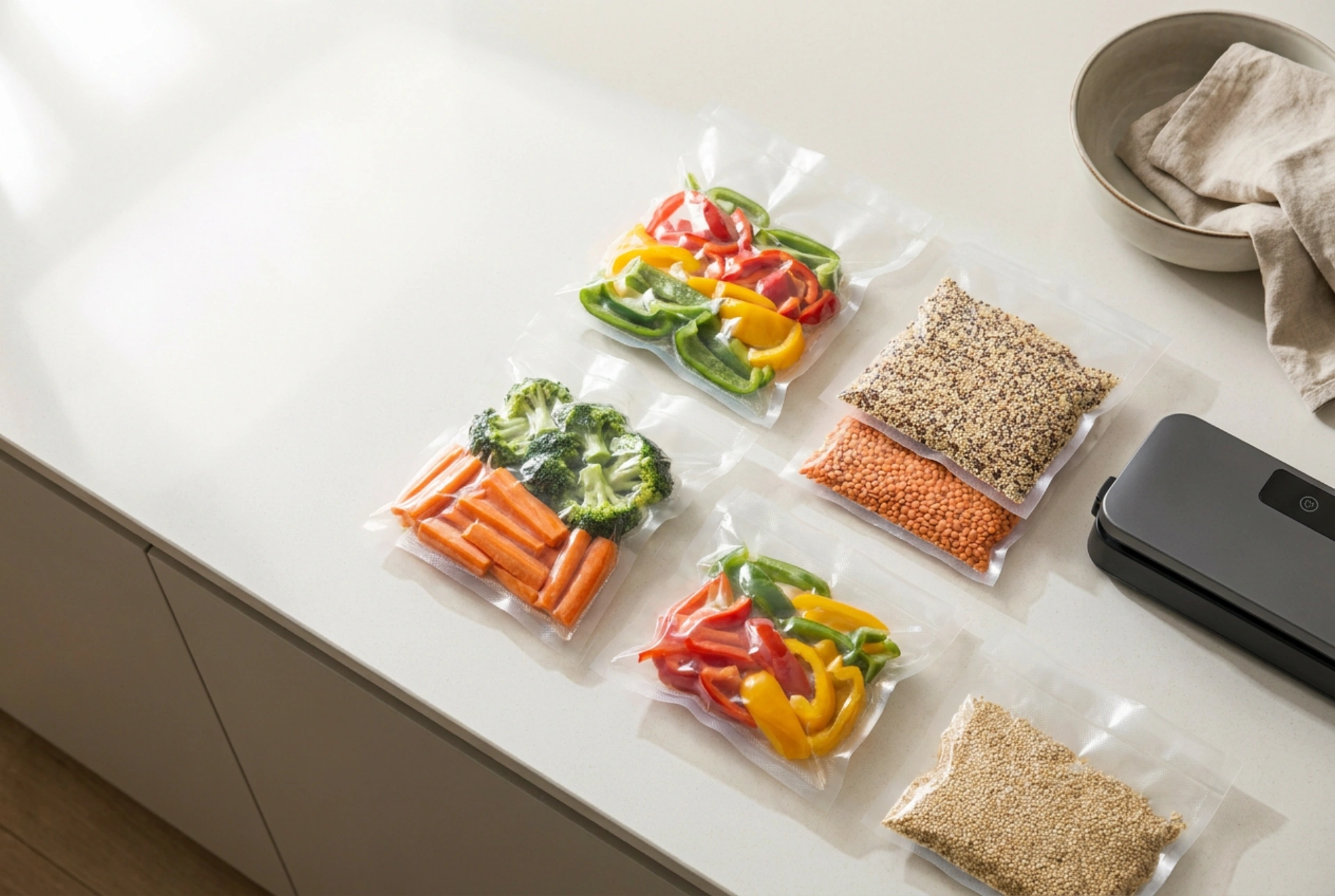
- Maximise Surface Area: Store food in flat, thin profiles rather than thick, spherical blocks. A flat package freezes up to four times faster because the cold penetrates to the thermal centre of the food much quicker. This rapid phase transition ensures small ice crystal formation.
- Single-Meal Dosing: Portion ingredients according to exact consumption patterns. Once a vacuum package is opened, the atmospheric shield is lost, and the degradation process resumes. Never seal larger quantities than can be consumed or processed within 24 hours of opening.
- Pre-Freezing Liquids and Soft Items: Liquid-rich foods (stews, sauces) or soft berries can be crushed or drawn into the vacuum pump during sealing. Pre-freeze these items on a tray until solid before vacuum packaging to maintain their structural integrity and prevent liquid from compromising the heat seal.
Executing the Perfect Seal: Step-by-Step Technique
Achieving a reliable hermetic seal requires precise control over moisture and temperature. Liquid in the sealing zone is the primary cause of seal failure, as it steam-vaporises during the heating phase, leaving microscopic pathways for air to re-enter.
To prevent this, fold the top collar of the bag outward before filling to keep the sealing area free of grease and moisture. Leave at least 8 centimetres of headspace at the top of the bag to allow the sealing bar to compress the plastic without tension. When sealing moist foods, select a "moist" or extended-heating setting on your sealer, which applies heat for longer to boil off any trace moisture and fuse the polymer layers securely.