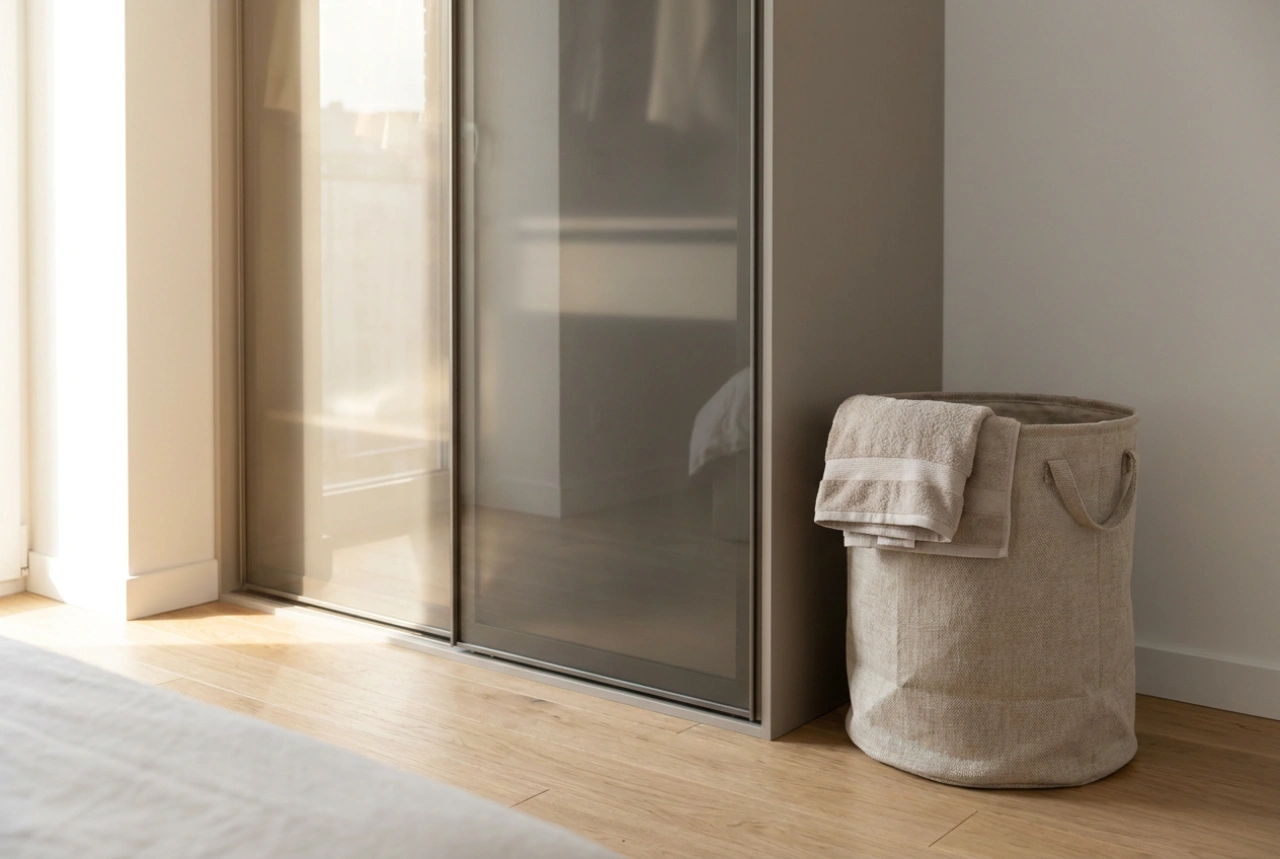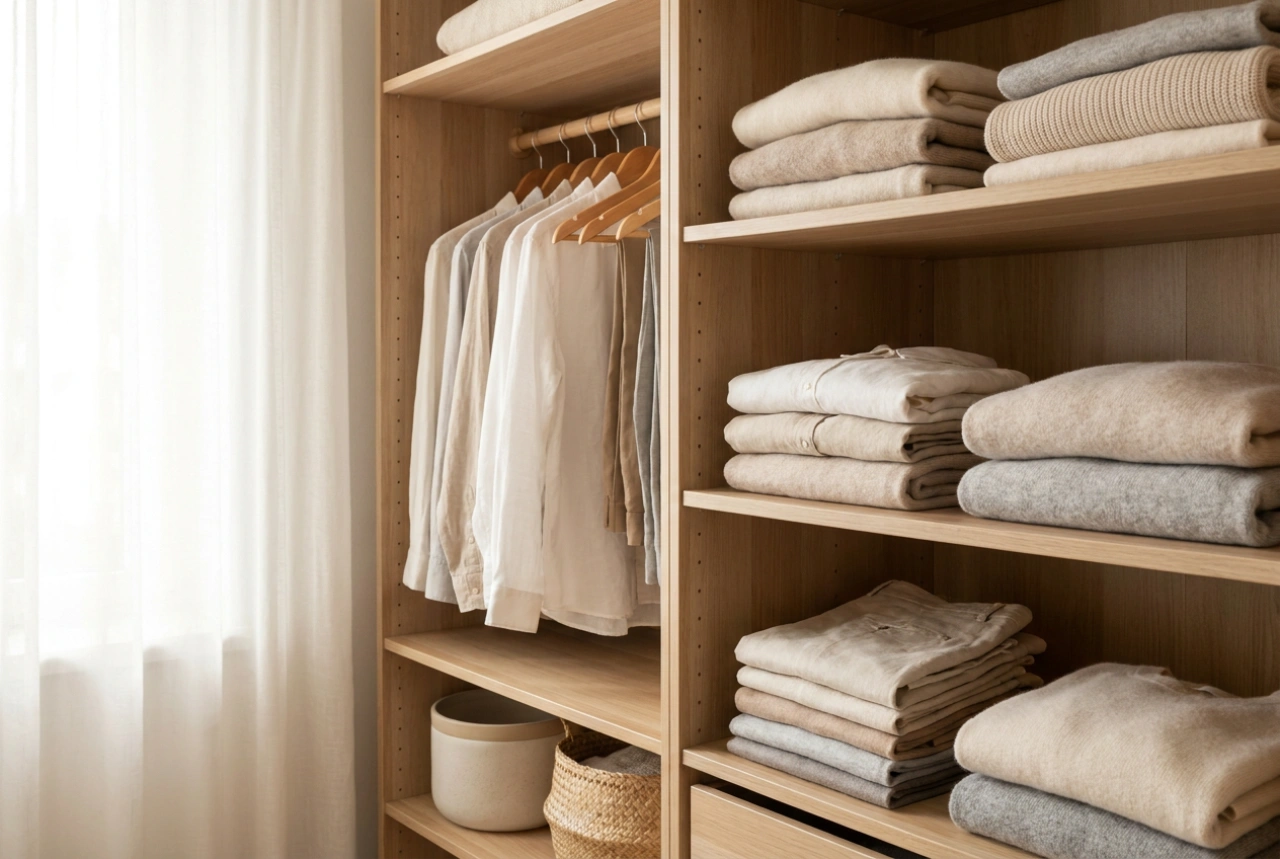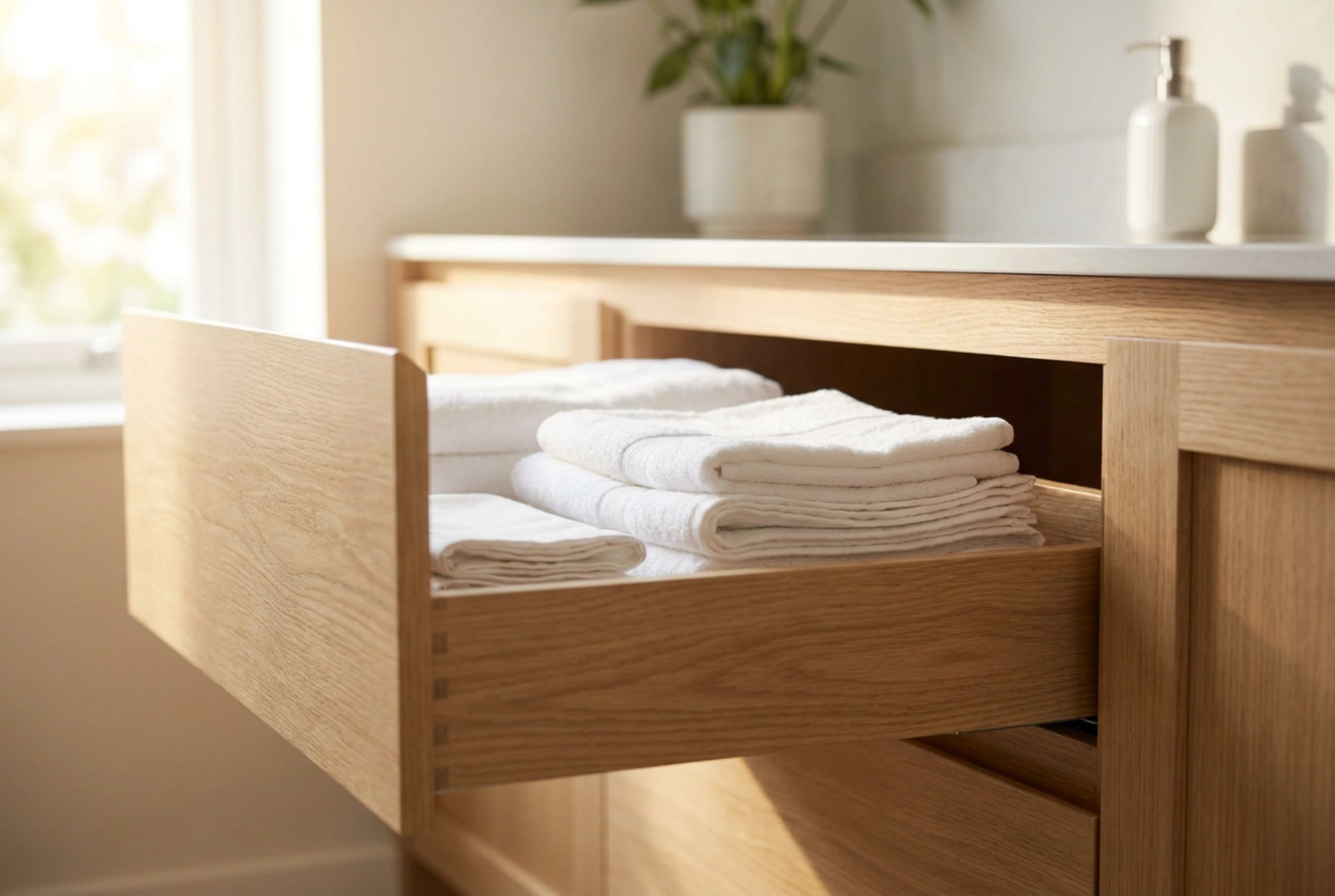


Integrating laundry storage directly into cabinetry keeps utility zones visually organized while preventing moisture-related fabric degradation. Understanding the physical demands of air circulation and material durability is key to designing an effective, long-lasting built-in laundry system.
The Physics of Laundry Storage: Controlling Moisture and Airflow
Dirty textiles are rarely completely dry; they contain perspiration, environmental moisture, and residual humidity. When damp fabrics are confined to an airtight space, the relative humidity rises rapidly. This microclimate promotes the proliferation of anaerobic bacteria and mildew spores, which thrive in dark, stagnant environments. The metabolic byproducts of these micro-organisms produce volatile organic compounds, leading to persistent, sour odors that are difficult to wash out.
To prevent this, built-in laundry systems must prioritize passive ventilation. Air must flow continuously through the storage compartment to encourage evaporation. This can be achieved through specific design details:
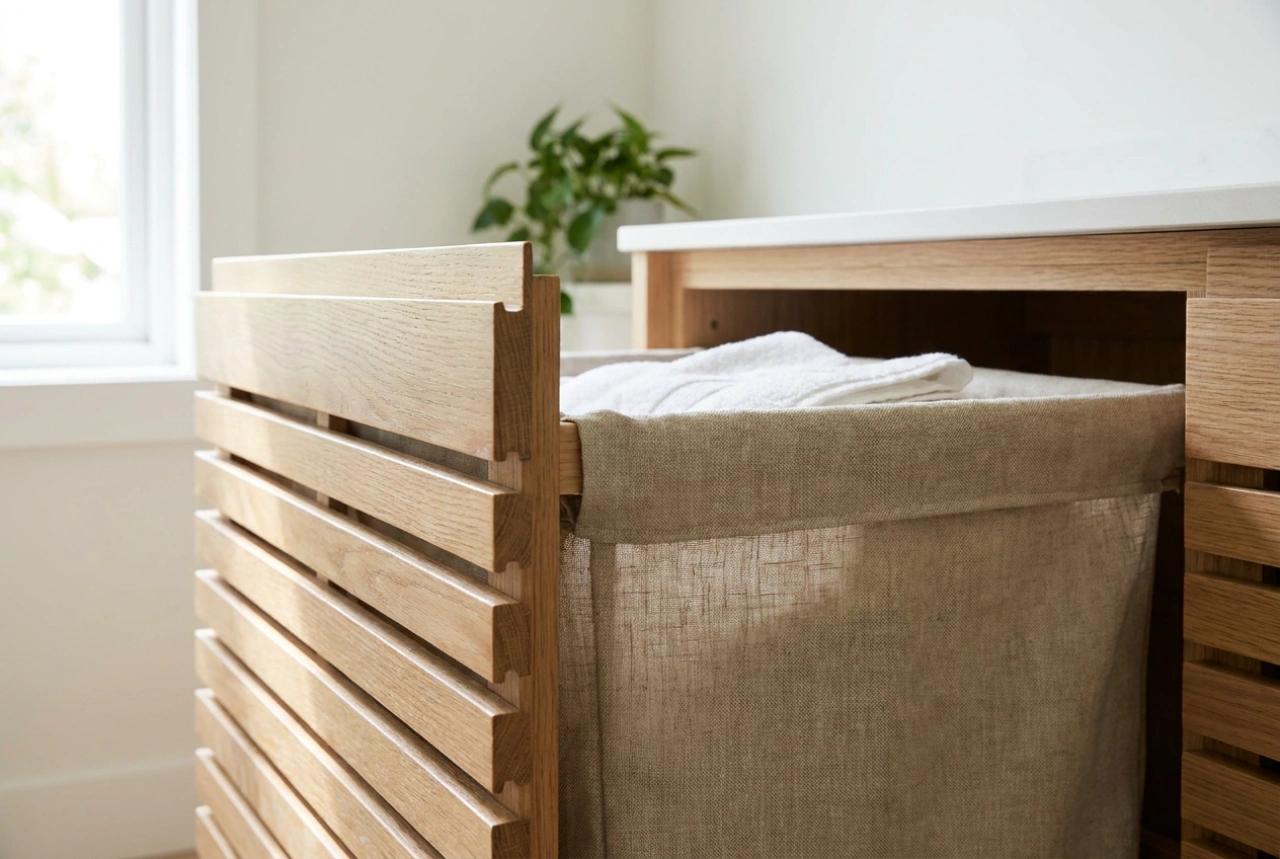
- Perforated or Slatted Fronts: Cabinet doors with louvres or open slats allow natural convection currents to carry moist air out of the enclosure.
- Wire Mesh Inserts: Utilizing powder-coated steel wire baskets instead of solid plastic tubs maximizes air contact with the fabrics from all sides.
- Ventilation Grilles: Installing small grilles at the base and top of the cabinet carcass ensures a chimney effect, drawing cooler air in from the bottom and expelling warmer, humid air from the top.
Material Science in High-Humidity Utility Zones
Utility rooms experience significant fluctuations in temperature and humidity, which can severely damage standard furniture materials. Standard particleboard is highly hygroscopic; its cellulose fibers readily absorb water vapor, causing the binder resins to fail and the panels to swell or warp. For built-in laundry enclosures, selecting chemically stable, water-resistant substrates is crucial.
Moisture-resistant Medium Density Fibreboard (MR MDF) or marine-grade plywood are the preferred structural choices. These materials are manufactured using hydrophobic resins that resist water absorption. For the outer finish, high-pressure laminates (HPL) or polyurethane-based lacquers provide a non-porous barrier that prevents moisture penetration. For the interior baskets, polypropylene is highly recommended due to its excellent chemical resistance, low surface energy (which prevents dirt adhesion), and ease of sanitization.
Mechanical Ergonomics and Load Distribution
The mechanical components of a pull-out laundry drawer must withstand substantial dynamic forces. While dry cotton is relatively light, damp fabrics are dense and heavy. A single load of wet laundry can easily double in weight. Consequently, the drawer runner systems must be rated for high load capacities—typically between 30 and 50 kilograms.
Full-extension runners equipped with soft-close dampening mechanisms are vital. They allow the basket to be pulled completely clear of the cabinet carcass, giving unimpeded access to the rear compartments, while preventing the heavy drawer from slamming shut. Slamming not only damages the cabinet joinery over time but can also displace the internal sorting bins, causing structural misalignment.
Optimizing Workflow with Pre-Sorting Compartments
A truly functional laundry zone eliminates secondary handling. By designing the built-in system with multiple, dedicated compartments, sorting occurs at the point of disposal rather than immediately before washing. A three-compartment configuration is highly efficient:
- Light Textiles: Dedicated to whites and pastel cottons to prevent dye transfer during hot wash cycles.
- Dark Textiles: For denim, black garments, and deeply saturated colors that require cold-water cycles to preserve pigments.
- Delicates and Synthetics: For wool, silk, or activewear that requires specialized, low-temperature programs or gentle mechanical action.
This division optimizes washing machine loads, ensuring that machines are run only when a specific compartment is full, which conserves water and energy.
Sanitization and Long-Term Maintenance
Over time, dust, skin cells, and organic residues accumulate inside laundry baskets, creating a biofilm. Regular maintenance is necessary to keep the built-in system hygienic. Removable plastic or canvas liners are ideal, as they can be easily extracted for cleaning. Plastic inserts should be wiped down monthly with a mild solution of sodium carbonate (washing soda) or a dilute oxygen bleach. These alkaline compounds break down organic fatty acids and neutralize odors without degrading the polymers. Fabric liners should be washed at high temperatures (at least 60 degrees Celsius) to eliminate bacteria and fungal spores.