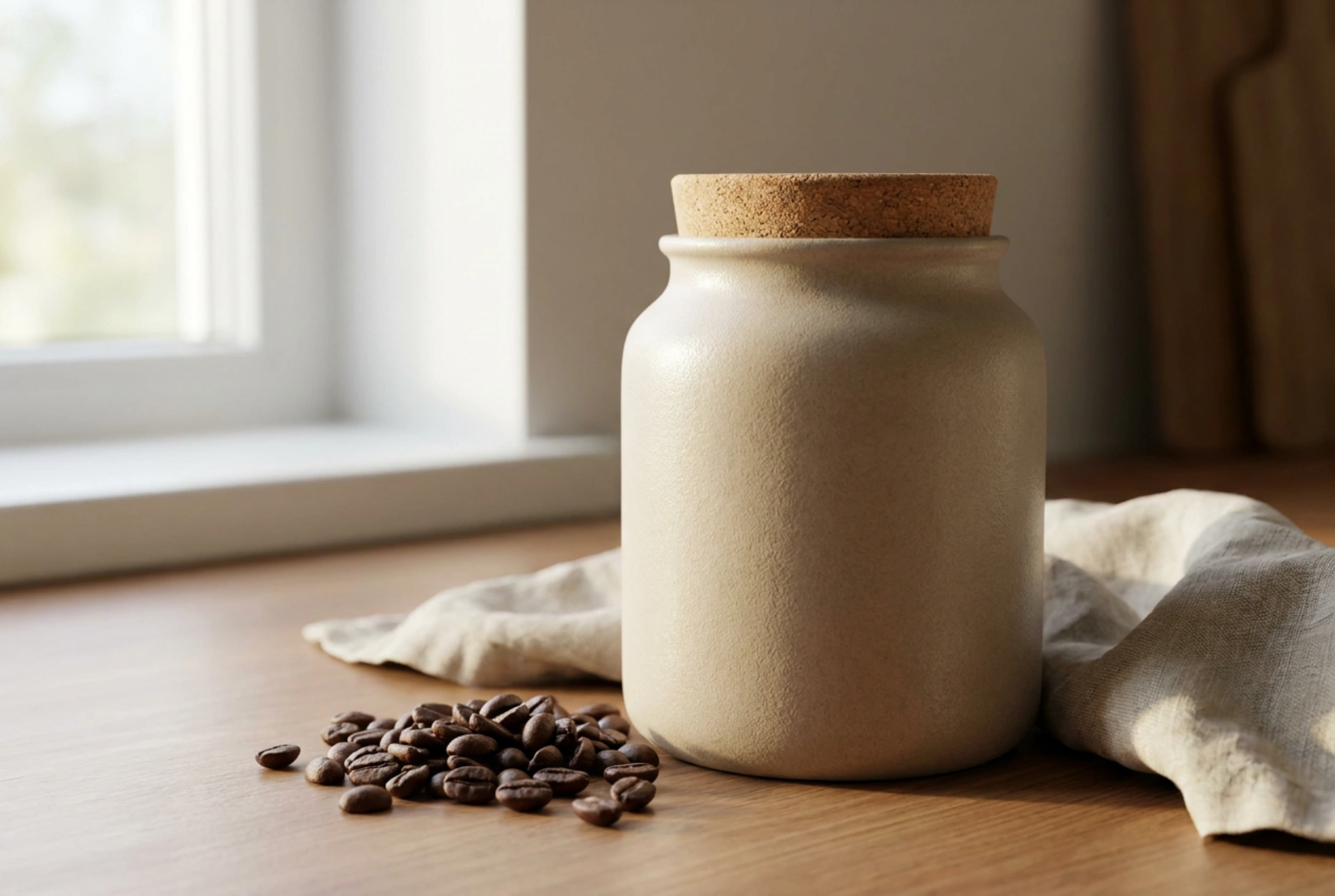


Light is one of the primary catalysts for the degradation of roasted coffee beans, initiating a process known as photo-oxidation that rapidly destroys delicate aromatic compounds and oils. Storing coffee in ceramic canisters is highly effective at preventing this damage, but understanding the material science behind how ceramics interact with light, temperature, and moisture is key to preserving flavor.
The Chemistry of Light and Coffee Degradation
To understand why light protection is crucial, one must look at the chemical composition of roasted coffee beans. Coffee contains a high concentration of lipids (fats), volatile organic compounds (esters, aldehydes, and ketones), and chlorogenic acids. When exposed to both ultraviolet (UV) and visible light, these molecules absorb photons, which excites their electrons and initiates free radical chain reactions.
This process, called photo-oxidation, breaks down the lipids into free fatty acids, leading to rancidity—characterized by a flat, stale, or metallic taste. Additionally, volatile compounds responsible for the complex floral, fruity, or nutty notes are highly sensitive to photochemical breakdown. Once these compounds are destroyed, they cannot be recovered, permanently dulling the cup quality.
Why Ceramics Block Electromagnetic Radiation
From a physical standpoint, fired ceramic materials are highly effective barriers against the entire spectrum of visible and ultraviolet light. Unlike clear glass or semi-translucent plastics, which allow photons to pass through and interact with the beans, ceramic is a dense, opaque crystalline structure. The mineral composition of clay (primarily alumina and silica) combined with the firing process creates a solid matrix that reflects and absorbs all incident light at the surface, ensuring the interior remains in absolute darkness.
This complete opacity makes ceramic far superior to amber or tinted glass. While tinted glass reduces UV transmission, it still allows certain wavelengths of visible light to penetrate, which can still trigger slow degradation over time. Ceramic eliminates this risk entirely.
The Role of Glazing and Porosity
While the opacity of ceramic is absolute, its efficacy as a storage vessel depends heavily on the surface finish. Unfired or unglazed clay is highly porous. These microscopic pores can trap ambient moisture and absorb the volatile oils exuded by roasted coffee beans. Over time, these trapped oils oxidize within the porous walls of an unglazed container, creating rancid odours that contaminate fresh batches of coffee.
To prevent this, ceramic coffee canisters must feature a high-quality, food-safe glaze on both the interior and exterior surfaces. Glazing involves applying a liquid glass mixture to the ceramic before firing it at high temperatures. The glaze melts and vitrifies, forming a non-porous, glassy barrier. This smooth, impermeable surface prevents the absorption of oils, makes the container easy to clean, and provides an additional barrier against moisture migration.
Thermal Mass and Microclimate Stability
Beyond light protection, ceramics offer a significant physical advantage in terms of thermal stability. Ceramic materials have a high specific heat capacity and low thermal conductivity compared to metals like tin or stainless steel. This means ceramic does not transfer external ambient heat quickly to the interior of the vessel.
In a standard kitchen environment, temperature fluctuations occur frequently due to cooking, sunlight, or appliances. Metal containers transfer these temperature spikes directly to the coffee beans, accelerating chemical reactions and staling. A heavy ceramic canister acts as a thermal buffer, maintaining a stable microclimate inside the vessel and slowing down the rate of volatile evaporation.
The Crucial Link: Airtight Integrity
While ceramic perfectly solves the light problem and mitigates thermal fluctuations, it cannot preserve coffee alone without a proper mechanical seal. Oxygen is the ultimate enemy of coffee freshness. When choosing or using a ceramic canister, the lid mechanism must be carefully evaluated. A loose-fitting ceramic lid will allow continuous gas exchange, rendering the light-blocking properties useless. Look for canisters fitted with a flexible silicone or rubber gasket and a secure latch or weighted lid system that creates a true hermetic seal, keeping oxygen out and preserving the carbon dioxide barrier naturally emitted by freshly roasted beans.