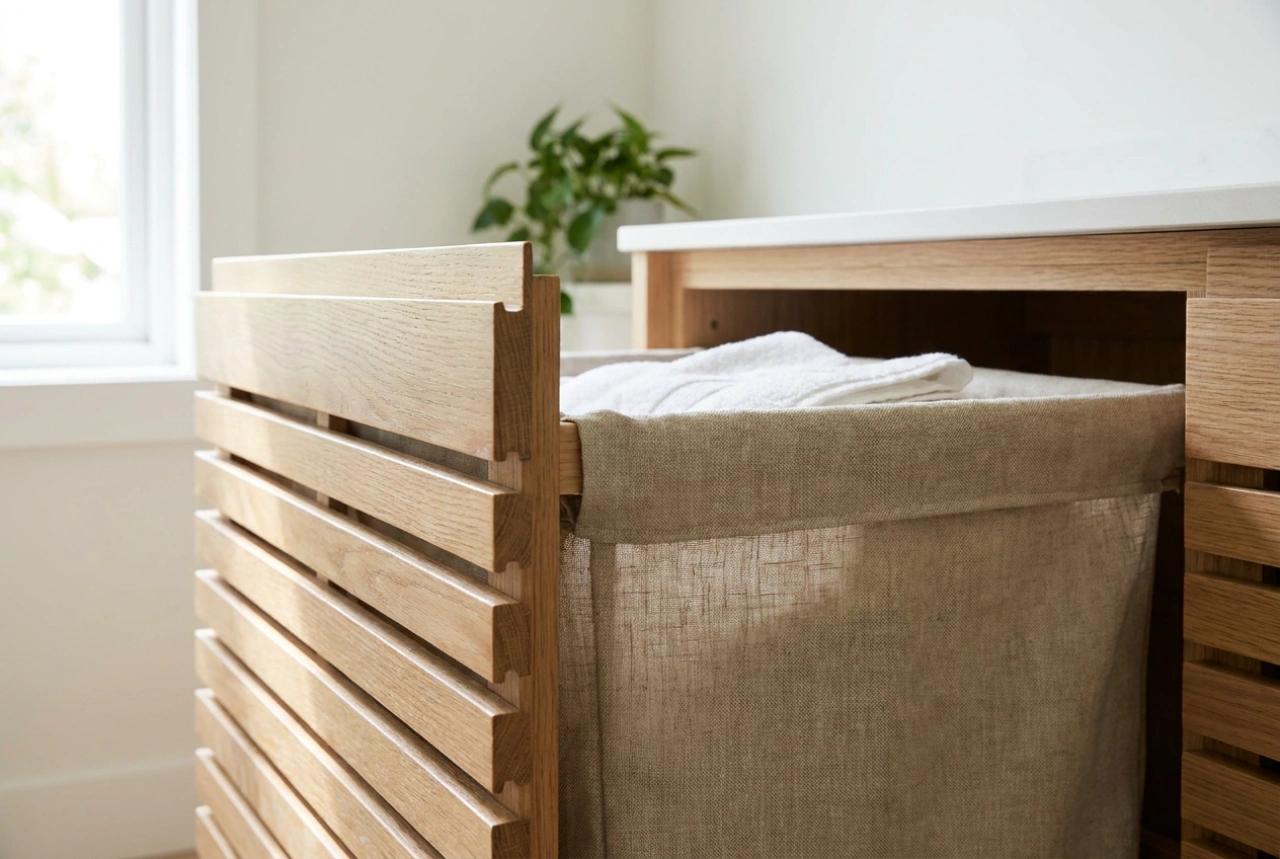


Integrating a laundry basket directly into a deep drawer or pull-out cabinet is an excellent way to maintain a clean, minimalist aesthetic, but poor planning can easily waste up to forty percent of the cabinet's internal volume. Maximising this space requires a precise understanding of hardware clearances, weight distribution, and ventilation physics to ensure efficiency and durability.
Understanding Cabinet Clearances and Usable Volume
To avoid losing precious cabinet space, you must calculate the exact difference between the external cabinet width and the internal drawer box dimensions. Standard drawer runners require approximately 13 to 25 millimetres of clearance on each side, depending on whether they are side-mounted or undermounted. Undermount runners are highly recommended for laundry drawers because they sit beneath the drawer box, maximising the horizontal width available for the basket containers. Additionally, height clearances must account for the drawer bottom thickness and the overhead clearance needed to lift the laundry bins out of the drawer frame. Choosing a customised low-profile steel frame system rather than a thick wooden drawer box can reclaim up to 50 millimetres of internal width, allowing for larger capacity containers within the same footprint.
Weight Dynamics and Hardware Selection
Laundry is deceptively heavy, especially when dealing with damp items. A standard load of dry cotton laundry weighs about 4 to 5 kilograms, but damp towels can easily double this weight. When planning a pull-out laundry drawer, standard drawer runners rated for 15 or 30 kilograms are insufficient over time, leading to sagging, misalignment, and eventual mechanical failure. Opt for heavy-duty runners rated for at least 50 kilograms. Full-extension runners are non-negotiable; they allow the drawer to pull out completely past the countertop overhang, giving you vertical access to the entire basket. This prevents the need for excess top clearance, saving vertical cabinet space that can be utilised for a shallow internal drawer directly above the laundry bins for storing detergents or washing accessories.
Moisture Management and Ventilation Physics
Storing soiled or slightly damp clothing in an enclosed cabinet creates a high-humidity microclimate, fostering mould, mildew, and volatile organic compound accumulation. To prevent this, your drawer design must facilitate natural air convection. Standard solid wooden or plastic bins trap moisture at the bottom. Instead, select perforated or wire-mesh baskets fitted with removable, washable linen liners. To encourage airflow, incorporate a ventilation gap at the top and bottom of the cabinet door front, or drill a series of ventilation holes in the back panel of the cabinet carcass. This allows cooler room air to enter from the bottom and warmer, moisture-laden air to escape from the top, keeping fabrics dry and protecting the wooden cabinet carcass from swelling due to humidity.
Compartmentalisation and Sorting Tactics
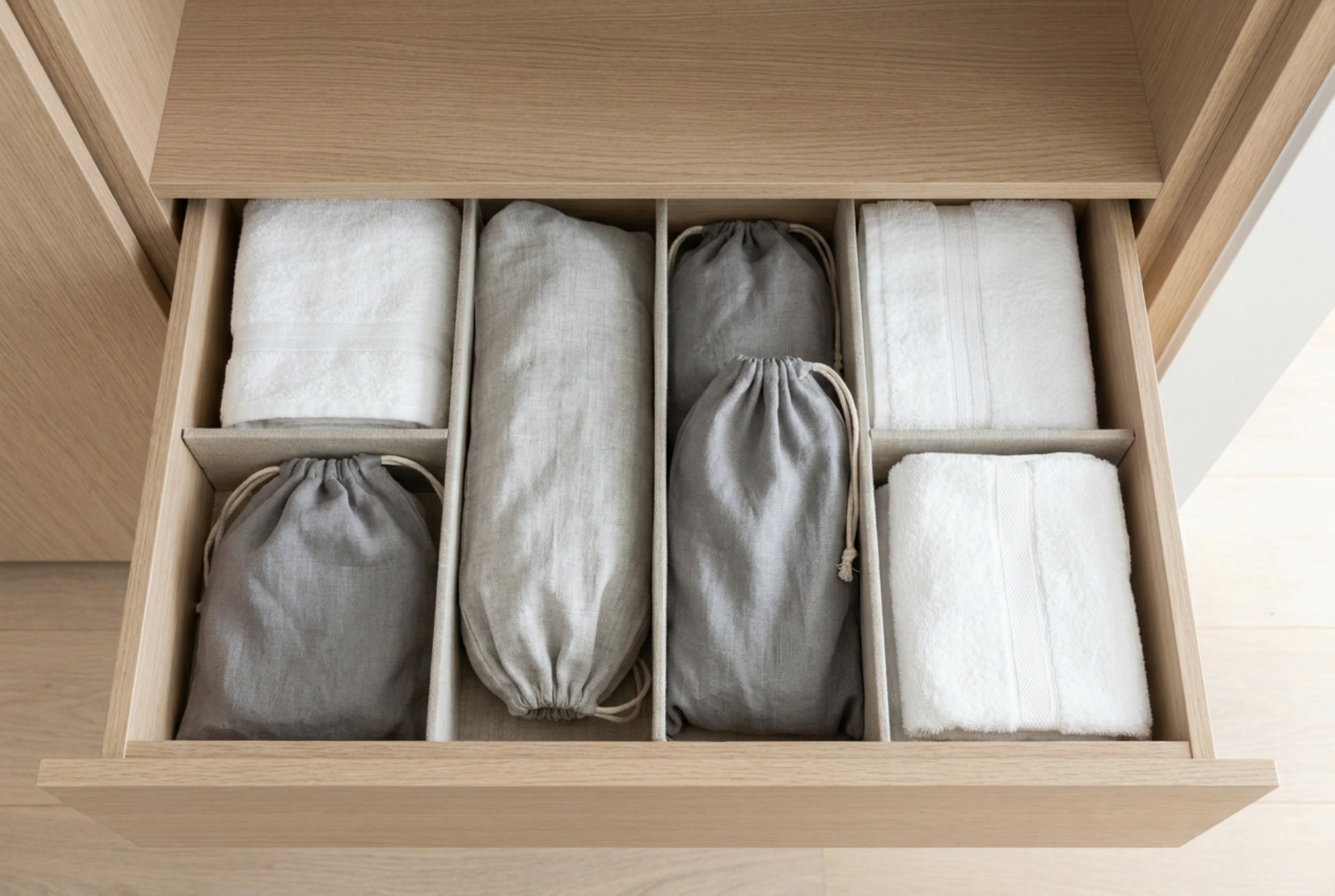
Rather than installing one massive, deep bin that forces you to dump and sort laundry on the floor, utilise a modular system with two or three narrower, tall baskets. This sorting-at-source method optimises space by utilising the full vertical height of the cabinet. For a standard 600-millimetre-wide cabinet, two 30-litre or three 20-litre vertical bins fit perfectly side-by-side. Ensure the bins have integrated, ergonomic handles that sit flush with the rim. This allows you to lift individual bins out effortlessly without wasting space on external protruding handles or wide structural dividers.