

Mini photo albums offer a highly efficient, tactile solution for organizing curated prints, but protecting these physical memories requires understanding the physical and chemical interactions between paper, ink, and storage materials.
The Chemistry of Photo Preservation: Avoiding Acid and PVC
Physical photographs are highly sensitive chemical structures. Traditional silver halide prints, as well as modern inkjet dye and pigment prints, are vulnerable to chemical degradation caused by their immediate environment. When selecting a mini photo album, the material composition of the pages and pockets is the most critical factor for long-term preservation.
Many budget albums utilize polyvinyl chloride (PVC) plastic sleeves. Over time, PVC releases volatile plasticisers and trace amounts of hydrochloric acid gas as it degrades under heat and light. This process, known as plasticiser migration, causes the plastic to stick to the photo emulsion, permanently transferring and destroying the image. To prevent this chemical destruction, choose albums with sleeves made from chemically inert polymers such as polypropylene, polyethylene, or polyester. These materials do not off-gas or react with photographic emulsions.
The paper elements of the album must also be carefully selected. Standard paper contains lignin, a natural organic polymer found in wood. Lignin breaks down over time, releasing acidic byproducts that turn paper yellow and brittle, eventually migrating into the photographic paper and causing discoloration. Look for certified acid-free and lignin-free paper cores and mounts, which maintain a neutral pH level (7.0 to 8.5) and protect the prints from acid-induced fading.
Structural Mechanics of Mini Albums: Binding and Mounting
The physical construction of a mini album dictates how well it protects its contents from physical wear and environmental exposure. There are three primary mounting styles, each with specific physical implications:
- Slip-in Pocket Albums: These provide excellent protection against physical friction and dust. The physical pocket shields the photo surface from direct handling, though they must fit snugly to prevent the print from sliding and experiencing mechanical wear along the edges.
- Dry-Mount/Paper Page Albums: Traditional paper-page mini albums require mounting hinges or photo corners. This is structurally superior because it avoids adhesive contact with the image. Photo corners made of polyester allow the print to expand and contract slightly with atmospheric changes without buckling.
- Self-Adhesive Albums: These should generally be avoided. The sticky adhesive coating on these pages often contains acidic glues that chemically bond with the photo backing over time, making future removal impossible without tearing.
A high-quality mini album should feature a robust binding method, such as stitch binding, which allows the book to lay flat when opened. This minimizes the physical stress on the spine and prevents the pages from flexing excessively, which can cause micro-cracking in dry photographic emulsions.
The Impact of Temperature, Humidity, and Light
Photographic dyes and silver grains are susceptible to atmospheric decay. High temperatures accelerate chemical reactions, meaning that for every 10°C increase in temperature, the rate of chemical degradation in photographic paper roughly doubles. Relative humidity is equally critical: high humidity (above 60%) promotes mold growth and softens the gelatin emulsion, making it sticky and highly vulnerable to physical damage. Conversely, extremely low humidity (below 30%) causes the emulsion to dry out, curl, and crack.
To mitigate these risks, store your mini photo albums in a location with stable environmental conditions, ideally below 20°C and between 30% and 50% relative humidity. Avoid storing albums in basements, attics, or near external walls where microclimates fluctuate rapidly.
Light exposure, particularly ultraviolet radiation, triggers photolysis—a process where light energy breaks the chemical bonds of the photo dyes, leading to irreversible fading. While mini albums inherently protect prints from constant light when closed, they should still be stored away from direct sunlight to prevent localized heat buildup on the cover fabric, which can transfer through the pages.
Order of Operations for Album Assembly
To safely assemble your mini album without contaminating the prints, follow a precise handling protocol:
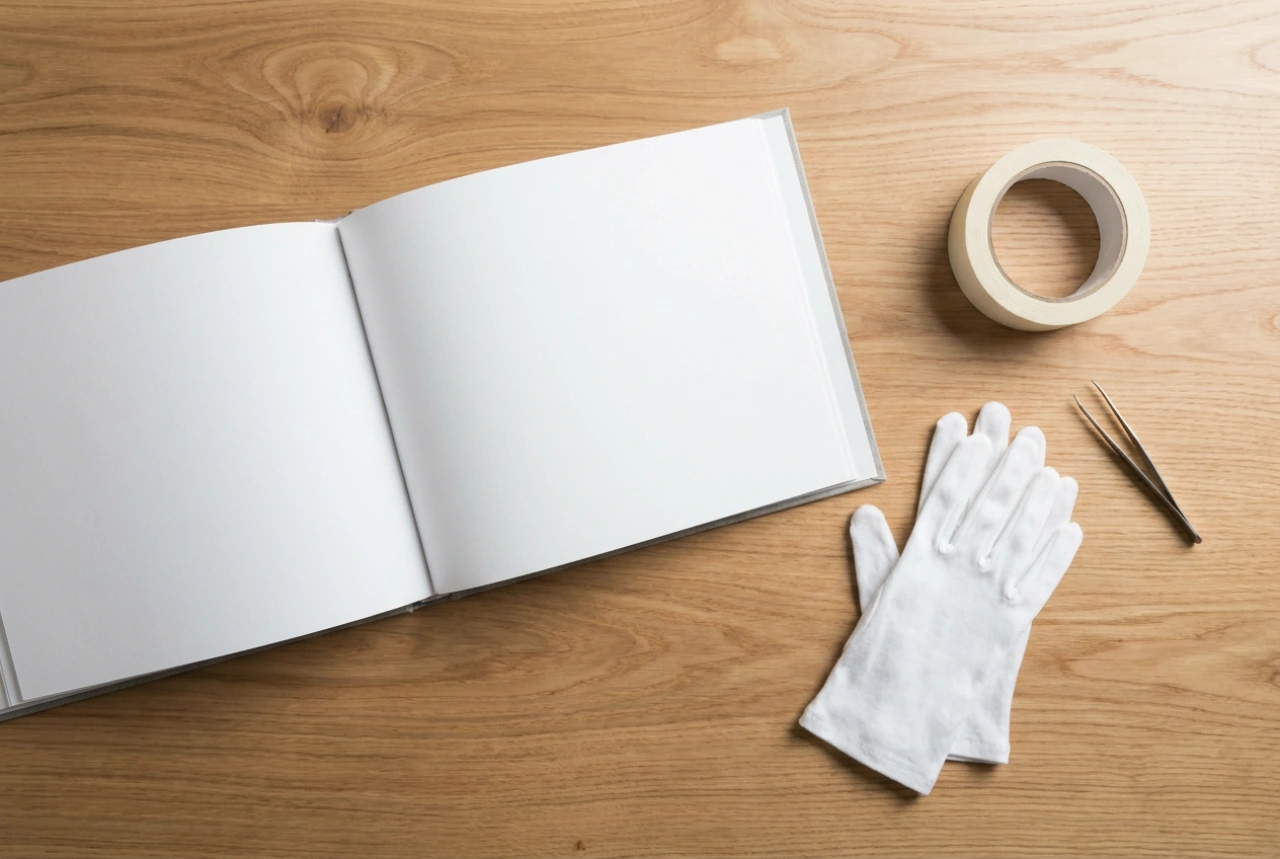
- Wash and thoroughly dry your hands to remove natural skin oils and salts, or wear clean, lint-free cotton or nitrile gloves. Sebum contains fatty acids that attract dust and leave permanent, acidic fingerprints on photographic emulsions.
- Prepare a clean, dust-free flat work surface, preferably wood or a clean cutting mat, avoiding textured surfaces that could scratch the prints.
- Organize your prints chronologically or topically before opening the album to minimize the time the pages are exposed to open air and potential contaminants.
- Insert the prints gently, starting from the back of the album to the front. This sequence prevents your hands from constantly rubbing against previously inserted pages.
- Store the completed album vertically on a shelf rather than stacking multiple albums horizontally. Horizontal stacking exerts constant physical pressure on the bottom albums, which can cause prints to fuse to plastic sleeves over time.