

Storing eggs correctly is not just a matter of visual order; it is a precise science of preservation that directly affects food safety and shelf life. Implementing a dedicated refrigerator egg holder stabilizes temperature, prevents cross-contamination, and maintains the structural integrity of the egg's natural barriers.
The Porous Nature of Eggshells and Odour Mitigation
To understand why open storage or original cardboard packaging can be problematic, one must look at the material science of an eggshell. An average chicken eggshell is composed of calcium carbonate and contains between 7,000 and 17,000 microscopic pores. While these pores allow gas exchange during embryonic development, they also act as entry points for unwanted substances in a domestic kitchen environment.
When left in open trays or porous cardboard cartons, eggs readily absorb volatile organic compounds (VOCs) and strong aromas from surrounding foods like onions, garlic, or fish. Original cardboard packaging is also highly hygroscopic; it absorbs moisture from the refrigerator air, creating a damp microclimate that can foster mold growth. A dedicated, non-porous egg container—made of high-grade acrylic or food-safe plastic—acts as a physical barrier, sealing the eggs away from ambient smells and moisture fluctuations.
Thermal Stability: Why the Fridge Door is a Risk Zone
Many refrigerators feature built-in egg trays in the door. From a thermodynamic perspective, this is the least suitable location for egg storage. Every time the refrigerator door opens, the contents are exposed to warm ambient kitchen air, followed by a rapid cooling cycle when the door closes. This constant thermal cycling causes micro-condensation to form on the surface of the eggshells.
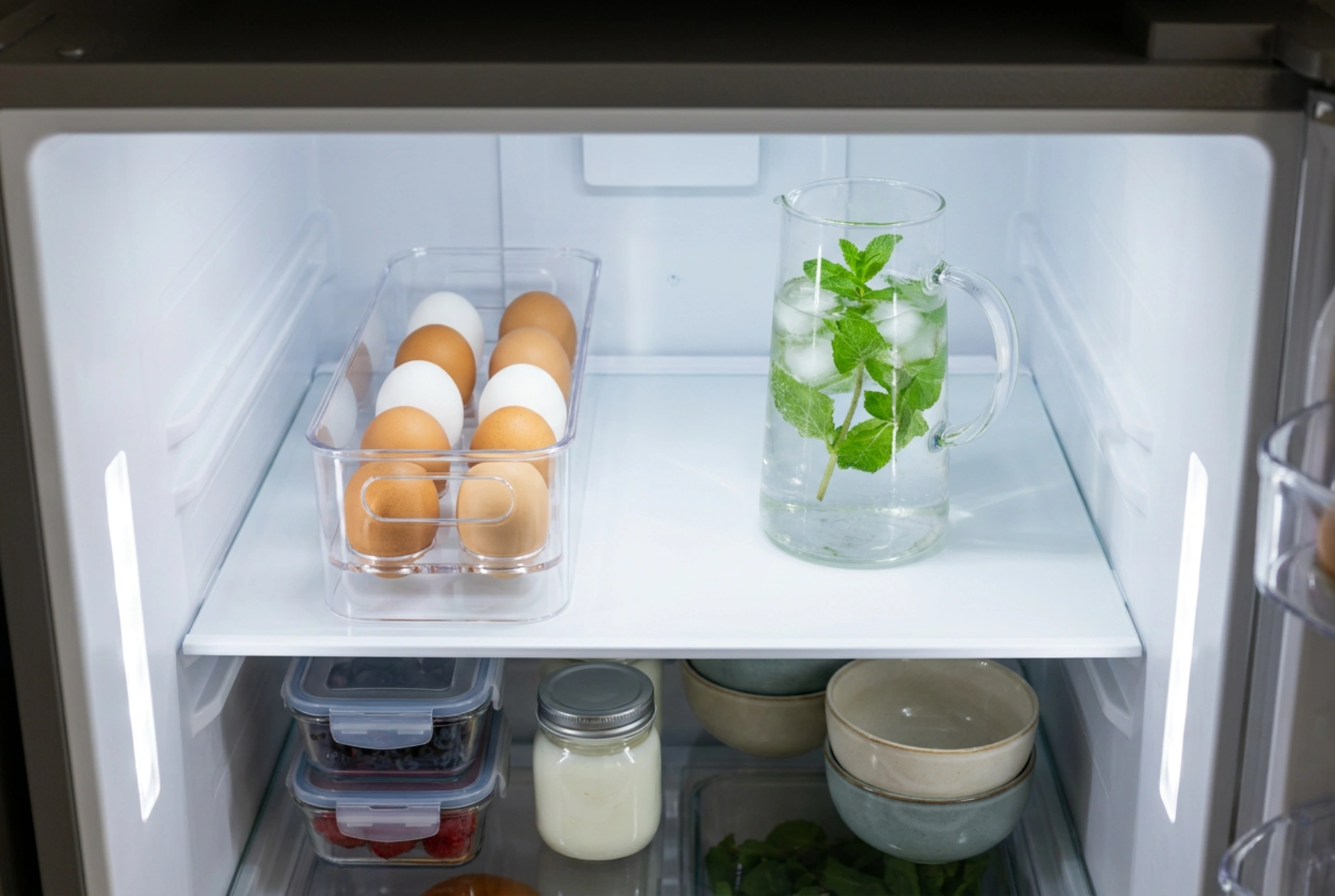
Moisture on the shell is dangerous because it dissolves the cuticle (or bloom)—the thin, outer proteinaceous layer that naturally seals the pores of the egg. Once the cuticle is compromised, surface bacteria, particularly salmonella, can easily migrate through the pores into the nutrient-rich interior. Utilizing a mobile egg holder allows you to position your eggs on an internal refrigerator shelf, preferably the middle or lower shelf, where temperatures remain constant (ideally between 1°C and 4°C).
The Geometry of Storage: Pointed-End Down
The internal anatomy of an egg dictates how it should be physically oriented. Inside the blunt end of the egg lies a small air cell. As the egg ages, moisture evaporates through the pores, and the air cell expands. Storing eggs with the pointed-end down and the blunt-end up keeps this air pocket at the top.
This orientation serves two critical mechanical purposes. First, it prevents the air pocket from rising and displacing the yolk, keeping the yolk suspended safely in the center of the albumen (the egg white) where it is less likely to come into contact with any bacteria that might have penetrated the shell. Second, it reduces the risk of the air cell rupturing, which accelerates spoilage. Dedicated egg holders are specifically engineered with tapered, individual cups that hold each egg perfectly upright in this optimal position.
Hygiene and Material Selection for Egg Holders
When choosing an egg organiser, material science and cleanability should guide your decision. Smooth, non-porous materials such as BPA-free acrylic, polyethylene, or ceramic are ideal because they do not absorb moisture, bacteria, or odours. Unlike paper cartons, these materials can be chemically sanitized.
To maintain strict kitchen hygiene, egg containers should be washed regularly with warm water and a mild, fragrance-free detergent. Avoid abrasive scrubbers that can create micro-scratches where bacteria can colonize. Ensure the container is completely dry before restocking it, as any residual moisture can encourage bacterial capillary action through the eggshell pores. Choosing transparent containers also allows for quick inventory checks without opening the lid, further reducing thermal fluctuations within the appliance.