

Setting up a robust physical document filing system in a plastic folder requires understanding how paper degrades and how polymer materials interact with printed inks. By applying basic principles of material science and systematic categorization, you can protect your essential household paperwork from moisture, chemical transfer, and structural decay.
The Chemistry of Plastics: Choosing Polypropylene over PVC
When selecting a plastic document folder or accordion file, the chemical composition of the polymer is the most critical factor for long-term preservation. Many cheap plastic folders are manufactured from Polyvinyl Chloride (PVC). Over time, PVC releases volatile plasticisers (phthalates) as it degrades. These compounds migrate into the paper, chemically bonding with printer toner and ink, which causes the text to lift off the page and stick to the plastic pocket.
To prevent this chemical transfer, always use folders made from Polypropylene (PP) or Polyethylene (PE). Polypropylene is acid-free, chemically inert, and copy-safe. It does not contain harmful plasticisers, meaning your printed documents can rest against the plastic surface for decades without the risk of ink adhesion or chemical yellowing. Additionally, PP has a high fatigue resistance, allowing the folder creases and joints to bend repeatedly without cracking.
The Physics of Paper: Handling Metal and Thermal Prints
Before placing any document into your plastic organizer, you must prepare the physical sheets to prevent mechanical and chemical damage. The most common mistake is storing documents with metal staples or paperclips. In environments with fluctuating humidity, the iron in steel clips oxidises, creating iron oxide (rust) that permanently stains paper fibres and degrades the cellulose structure. Always remove metal fasteners. If you must keep sheets grouped, use plastic-coated paperclips, acid-free paper bands, or a simple folding technique.
Thermal paper, which is commonly used for receipts and utility slips, presents another challenge. The print on thermal paper is created by a heat-sensitive chemical reaction rather than ink. This dye-precursor layer is highly volatile and reacts poorly to the static microclimate inside plastic pockets, causing the print to fade rapidly. To preserve thermal receipts, photocopy them onto standard alkaline-buffered copy paper before filing, or store the original receipts inside small, acid-free paper envelopes before sliding them into the plastic compartments.
A Systematic Order of Operations for Categorisation
An efficient document folder relies on a logical, easy-to-navigate indexing system. A disorganised folder increases physical handling, which transfers oils from your skin to the paper, accelerating degradation. Follow this strict sequence to categorise and load your folder:
- Purge and Flatten: Lay all documents on a clean, dry surface. Remove duplicates, expired policies, and envelope packaging. Gently iron out major creases with your hands to minimise bulk.
- Establish Five Core Sections: Divide your household papers into distinct, functional categories. Recommended categories include: Identity and Legal (birth certificates, passports), Financial (active bank statements, tax records), Property and Housing (rental agreements, deeds, utility contracts), Health and Medical (vaccination records, prescriptions), and Assets (appraisals, warranties).
- Chronological Sorting: Within each category, arrange documents chronologically with the most recent document at the front. This minimises searching time and reduces physical wear on older papers.
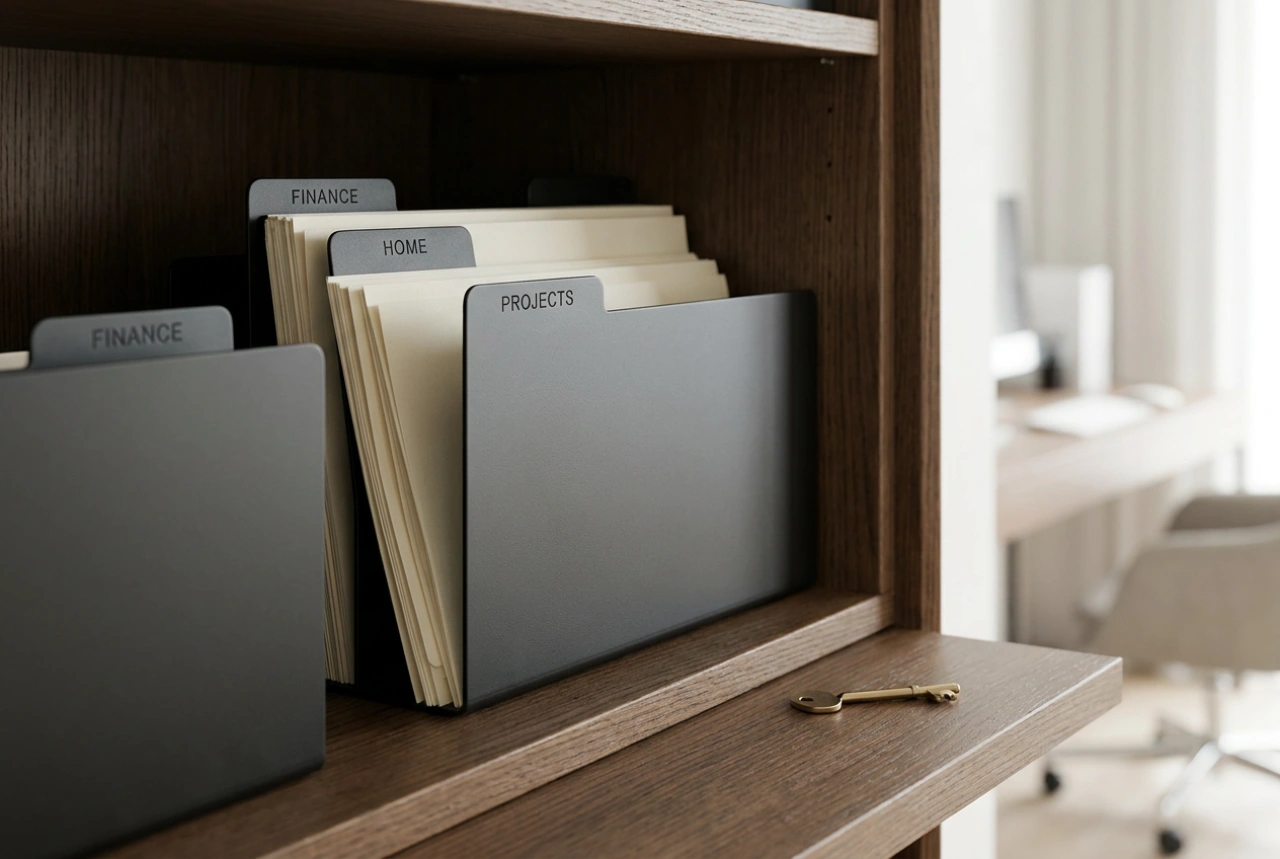
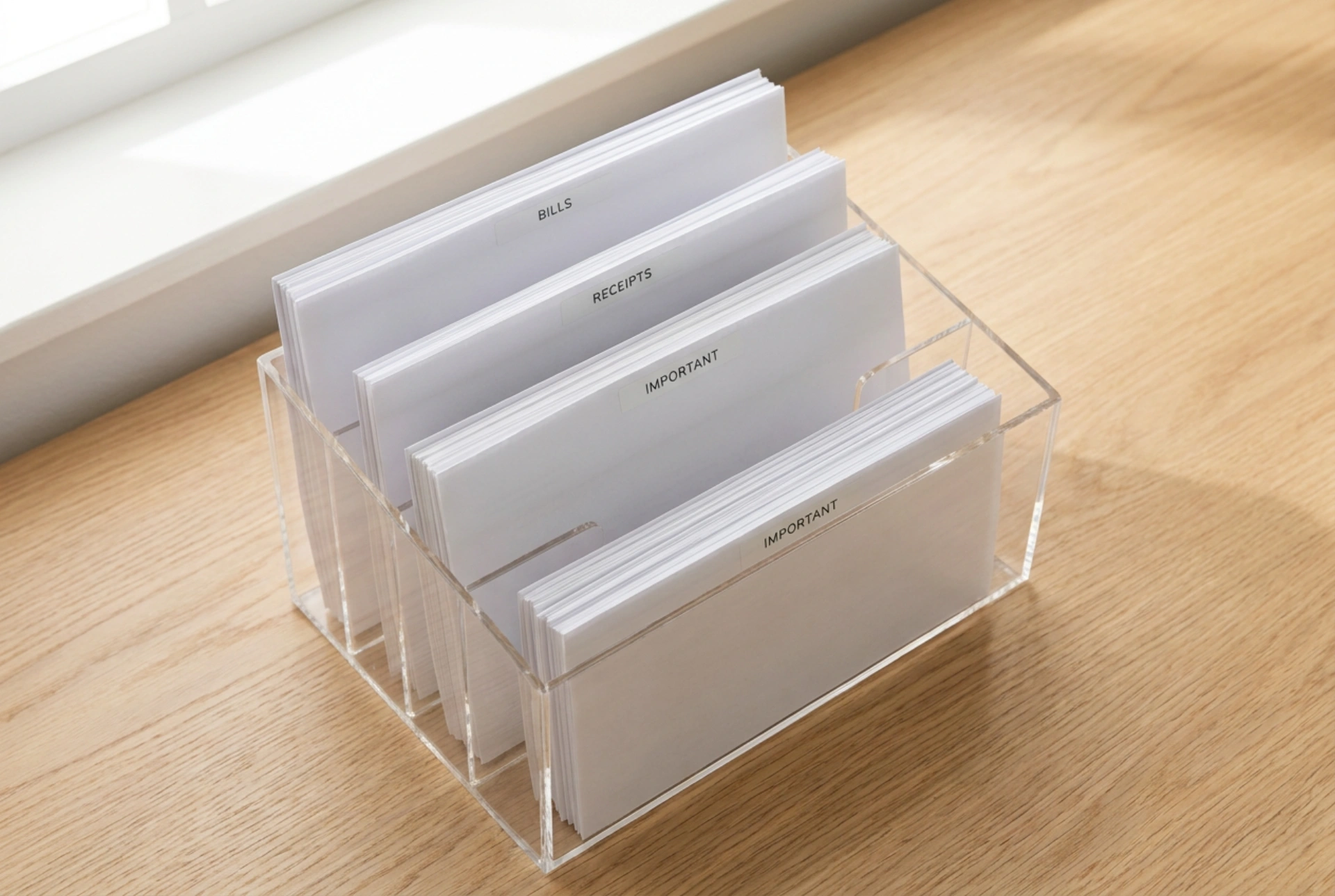
- Index and Label: Use the tab inserts provided with the folder. Write clear, high-contrast labels in block capitals. If the plastic tabs are prone to static, slightly moisten your fingertip to slide the paper labels into the slots smoothly.
Microclimates and Storage Conditions
Plastic folders are excellent for shielding papers from external spills and dust, but they also seal in moisture. Storing a plastic folder in a humid basement or near an external wall can trap moisture inside the pockets, creating a high-humidity microclimate that encourages the growth of mould spores (which feed on paper starch). Always store your plastic document folder vertically in a dark, dry space with stable temperatures, ideally below 21°C and between 30% and 50% relative humidity. This prevents both hydrolytic degradation of the paper and the buildup of static electricity on the plastic surfaces.