

Preserving family ephemera in a compact photo album requires more than just aesthetic curation; it demands an understanding of material science to prevent the chemical degradation of paper, inks, and emulsions. By applying archival principles to a small-scale album, you can safeguard your most valuable physical keepsakes from environmental decay for generations.
The Chemistry of Preservation: Selecting the Right Album Materials
The primary enemy of stored paper and photographs is chemical instability. Standard, commercially available albums often contain materials that actively accelerate decay. When choosing a compact album, the chemical composition of the pages, pockets, and adhesives must be carefully evaluated to prevent irreversible damage.
Traditional paper contains lignin, an organic polymer that binds wood fibres together. Over time, lignin oxidizes, producing acidic compounds that break down cellulose chains, leading to yellowing, embrittlement, and eventual disintegration of both the album pages and the items contact-mounted to them. To prevent this, always select certified acid-free and lignin-free paper. Such paper is often buffered with calcium carbonate, which creates an alkaline reserve to neutralise acids that may migrate from the stored keepsakes themselves.
Equally critical is the chemical composition of transparent sleeves. Avoid polyvinyl chloride (PVC) at all costs. PVC degrades over time, releasing volatile plasticizers and hydrochloric acid. This manifests as a sticky residue, a distinct chemical smell, and the permanent transfer of photographic emulsion onto the plastic sleeve. Safe alternatives include chemically inert polymers such as polypropylene, polyester, and polyethylene, which do not off-gas or react with delicate silver halide or inkjet prints.
Handling and Preparing Delicate Keepsakes
Before placing any item into your compact album, it must be prepared to minimize future degradation. The human hand naturally secretes sebum, an oily substance composed of lipids, wax monoesters, and sweat containing lactic acid and sodium chloride. When transferred to historical paper or photographic emulsions, these compounds attract microscopic dust particles and trigger localized oxidation, appearing years later as permanent dark fingerprints.
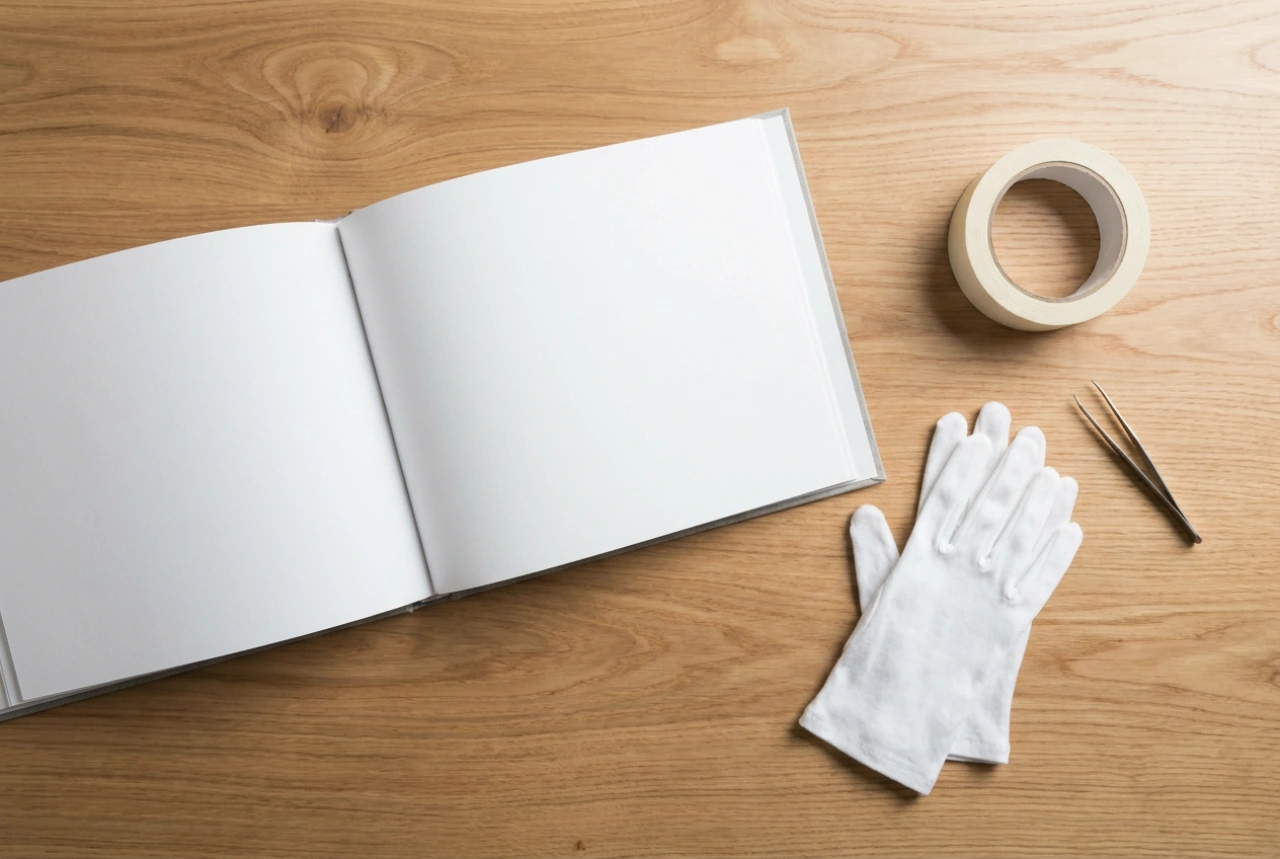
- Wear protective barriers: Wear lint-free cotton or nitrile gloves when handling loose photographs, letters, or tickets. Alternatively, use non-reactive tools like brass or stainless-steel tweezers to position items precisely.
- Stabilize old adhesives: Many vintage keepsakes have remnants of acidic self-adhesive tape. Do not attempt to rip these off, as this will tear the paper fibres. If the adhesive is dry and brittle, gently flake it off with a plastic spatula; if it is sticky, interleave the item with silicone-release paper to prevent it from bonding to the album pages.
- Examine structural integrity: Ensure all items are completely dry. High moisture content within paper fibres encourages fungal growth (foxing), which leaves reddish-brown spots that are highly difficult to remove chemically without weakening the paper matrix.
Mechanical vs. Adhesive Mounting: The Physics of Attachment
A compact album offers limited surface area, prompting a temptation to glue items directly to the pages to maximize space. However, direct adhesion violates the fundamental rule of archival preservation: reversibility. Any mounting technique applied must be completely undoable without altering the original state of the keepsake.
Furthermore, materials react differently to fluctuations in relative humidity. Paper and photographic substrates expand and contract at different rates. If a photograph is glued flat to a thick cardstock page, this differential expansion creates physical tension, resulting in warping, bubbling, or tearing of the weaker material. To mitigate this stress, employ mechanical mounting methods:
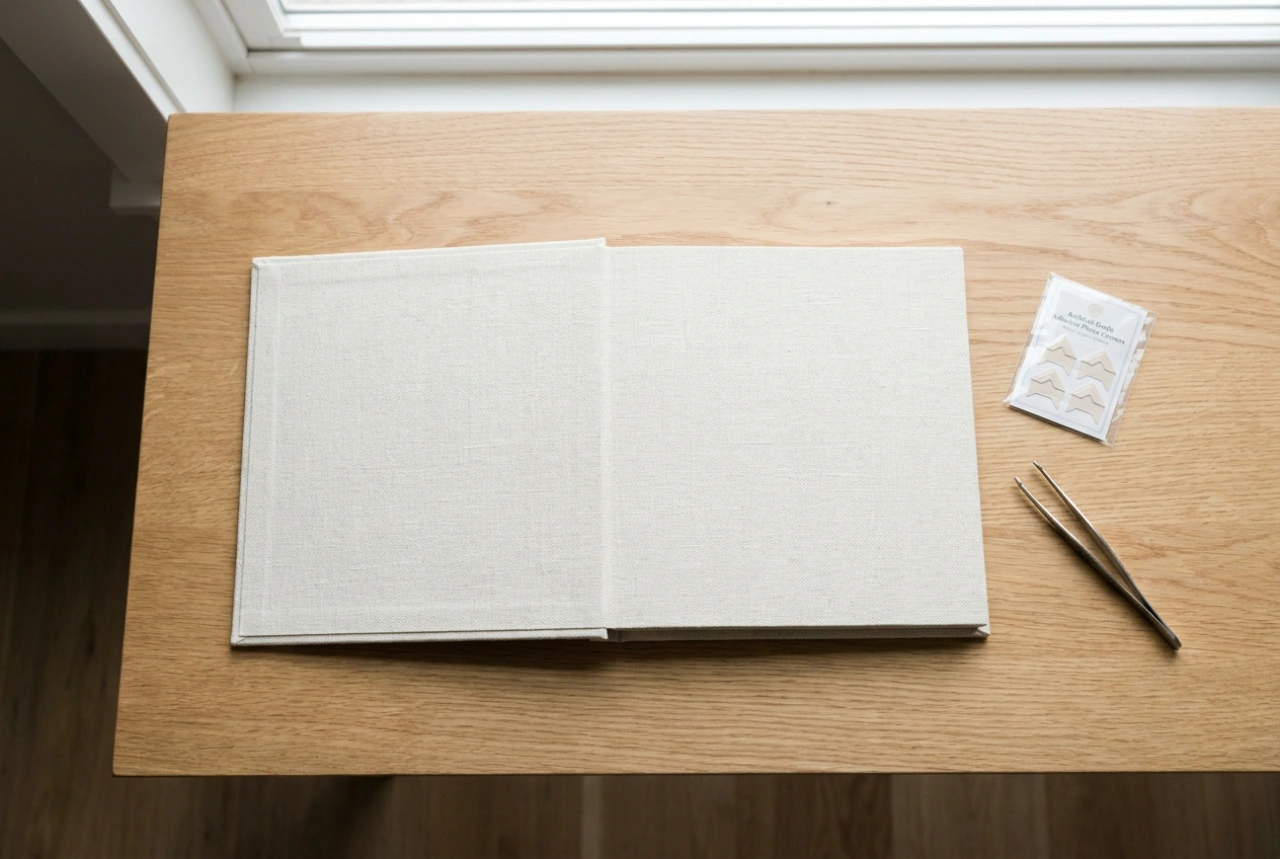
- Archival photo corners: Made from inert polypropylene or acid-free paper, these corners adhere to the album page, not the keepsake. The item slips into the corners, allowing it to slide minutely as it expands or contracts with temperature variations.
- Polyester photo hinges: For double-sided documents or items where corners would obscure vital information, use self-adhesive polyester hinges with a water-reversible adhesive. These allow the document to swing open while remaining anchored.
- Avoid liquid glues and standard tapes: Polyvinyl acetate (PVA) glues and rubber-based adhesives contain solvents that penetrate paper fibres, causing permanent staining and chemical breakdown.
Microclimate Control and Long-Term Storage
Once compiled, the compact album functions as a microclimate. The environment in which the album is stored directly dictates the rate of chemical reactions inside it. The rate of chemical degradation doubles with every 10°C increase in temperature. Therefore, temperature and relative humidity must be actively managed.
Store the album in a room with stable conditions, ideally at a temperature below 20°C and a relative humidity between 30% and 50%. Avoid storing the album in damp basements, uninsulated attics, or near external walls where condensation can occur. Excess moisture triggers hydrolysis, breaking down gelatin binders in photos and encouraging mould growth. Conversely, extremely low humidity (below 30%) causes paper fibres and photographic emulsions to dry out, becoming brittle and prone to cracking under physical handling.
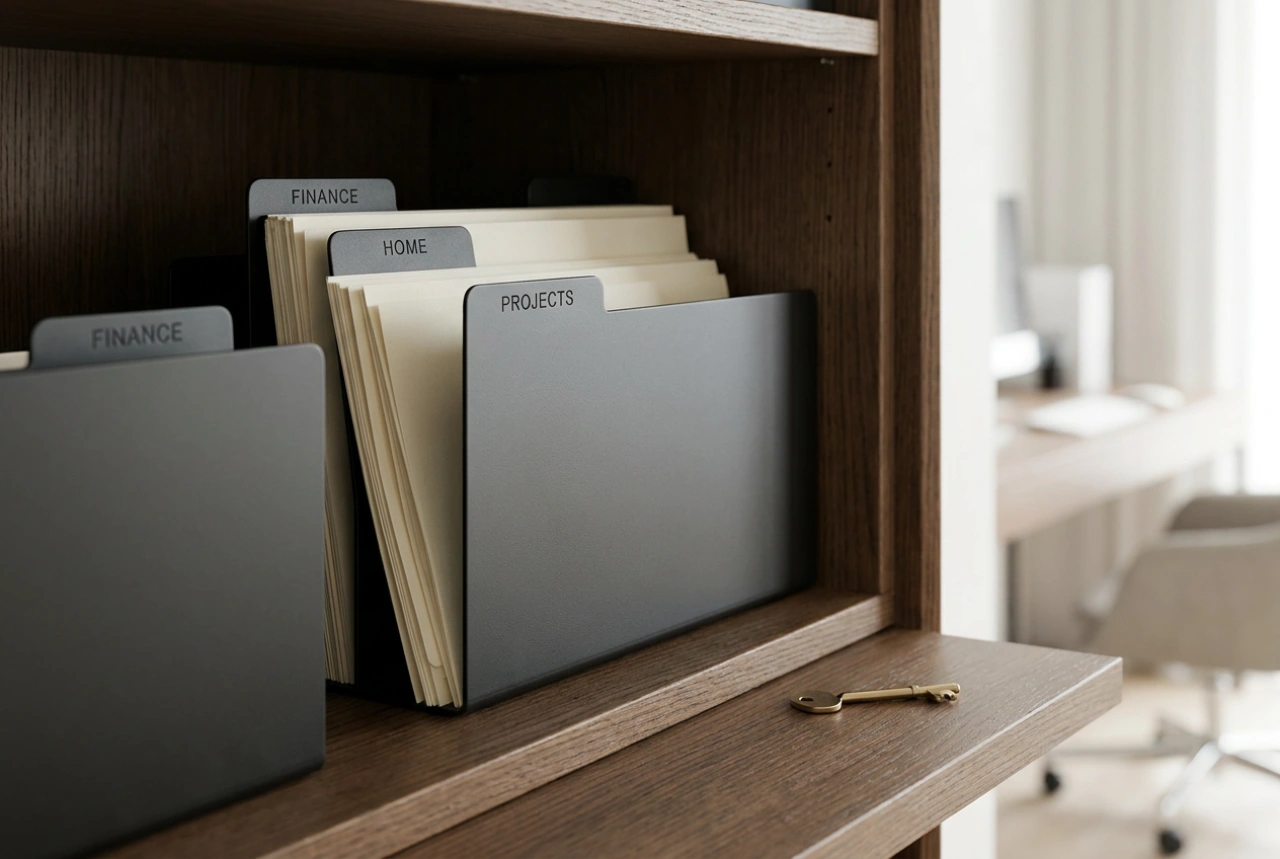
Finally, store the album horizontally (flat) rather than vertically. In a small, tightly packed album, vertical storage puts downward gravitational pressure on the lower edges of the delicate keepsakes, which can cause slipping, bending, or damage to the mounting corners over time. Horizontal storage ensures even weight distribution across the entire surface area of the pages.