

To preserve the baking properties of flour and prevent spoilage, selecting the right storage container requires understanding how moisture, oxygen, and pests interact with milled grains. Standard paper packaging fails to shield flour from environmental changes, making a dedicated container essential for maintaining kitchen hygiene and ingredient quality.
The Physics of Moisture: Why Airtight Seals Are Essential
Flour is highly hygroscopic, meaning it readily absorbs water vapor from the surrounding air. When flour absorbs moisture, its water activity levels rise, creating a hospitable environment for mold spores and bacterial growth. Furthermore, excess moisture triggers premature enzymatic activity, which degrades the gluten-forming proteins (gliadin and glutenin) essential for dough structure.
An ideal container must feature a mechanical sealing mechanism, such as a silicone gasket paired with a latch system or a high-tolerance screw-top lid. The gasket compresses to create a physical barrier that prevents gaseous exchange. By keeping the relative humidity inside the container low, you ensure the starch molecules remain dry and free-flowing, preventing clumping and preserving the flour's baking performance over months.
Material Science: Selecting the Right Barrier
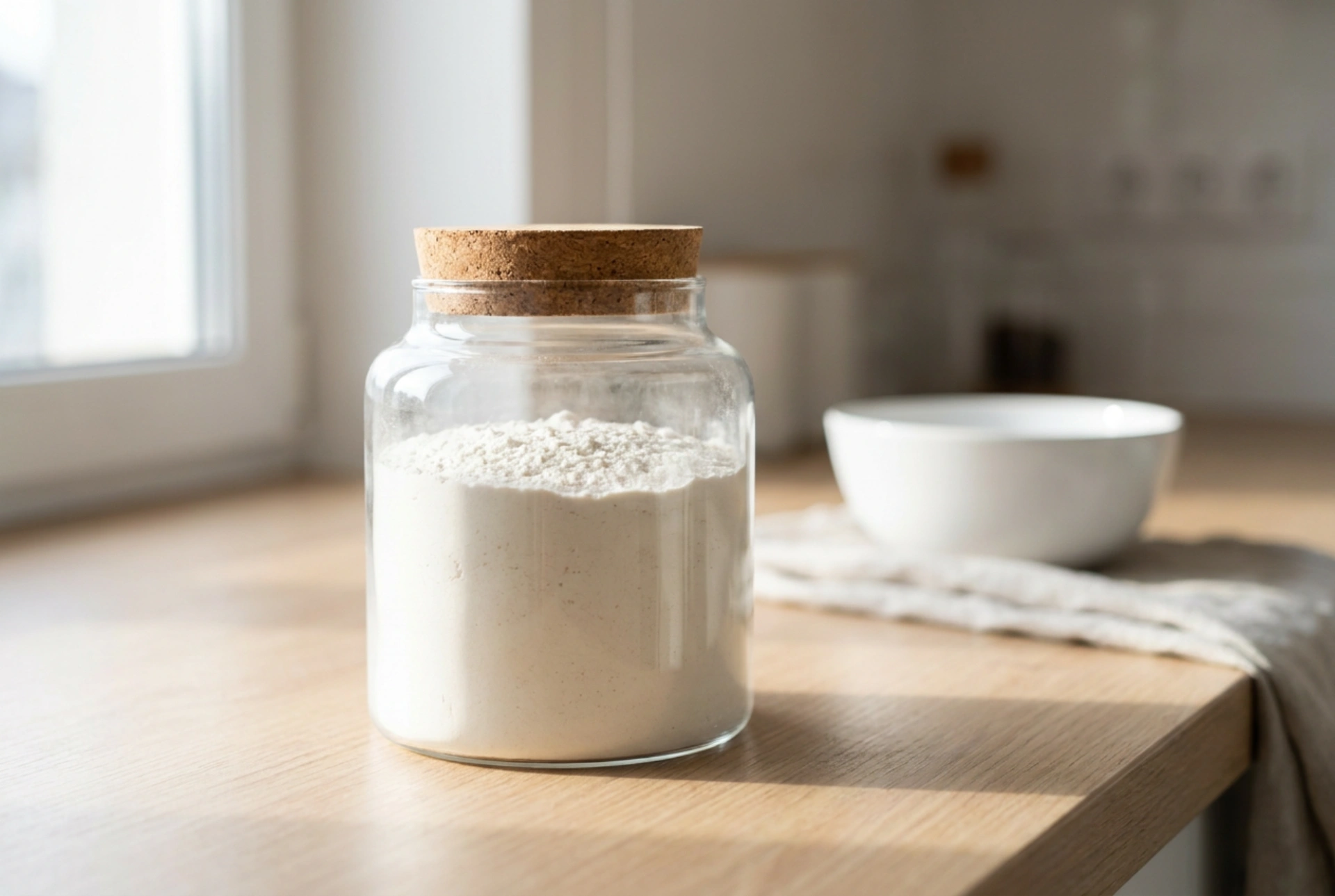
The choice of material directly affects the shelf life of different flour types. Glass and ceramic are chemically inert, meaning they do not transfer odors or chemical compounds to the flour. They are also completely impermeable to oxygen and moisture. Glass allows for easy visual inventory checks, but transparent materials expose flour to light. Light accelerates photo-oxidation, particularly in whole-grain flours containing lipids, leading to rancidity and off-flavors.
If using glass, store the container in a dark pantry, or opt for opaque ceramic or high-density food-grade plastics (such as polypropylene). Polypropylene is lightweight, impact-resistant, and has low gas permeability, making it a highly practical choice for active kitchens. However, for long-term storage of lipid-rich whole wheat or alternative nut flours, glass or ceramic remains superior due to their absolute gas-barrier properties.
Pest Exclusion and Mechanical Barriers
Pantry pests, such as weevils and flour beetles, can easily penetrate paper bags and weak plastic wraps. These insects are attracted by the volatile organic compounds emitted by grains. A container with a robust mechanical seal prevents these odors from escaping, thereby eliminating the olfactory cues that attract pests to your pantry.
Additionally, the sealing gasket must be completely seamless. Even microscopic gaps in a loose-fitting lid can allow micro-pests or their larvae to enter. A compression seal not only keeps external pests out but also ensures that if any dormant eggs present from the milling process hatch, the infestation remains completely isolated, preventing cross-contamination to other dry goods in your larder.
Ergonomics, Geometry, and Daily Usability
The physical design of a flour container should facilitate precise culinary techniques. A wide-mouth opening is critical for the "scoop and level" method of measuring flour, preventing compaction which leads to inaccurate measurements. Containers with square or rectangular footprints maximize shelf space efficiency in pantries compared to cylindrical jars.
Static electricity is another physical factor to consider. Synthetic plastics tend to accumulate static charge, causing fine flour particles to cling to the container walls and fly out upon opening. High-quality anti-static food-grade plastics or naturally grounded materials like glass and ceramic mitigate this issue, keeping your countertops clean and minimizing waste during preparation.
Flour Storage Performance Checklist
- Hermetic Seal: Look for food-grade silicone gaskets with mechanical latches or tight-fitting screw threads.
- Light Protection: Use opaque containers or store transparent jars in dark cupboards to prevent lipid oxidation.
- Wide Aperture: Ensure the opening is wide enough to fit a standard measuring cup comfortably.
- Inert Material: Choose glass, ceramic, or BPA-free polypropylene to prevent chemical and odor migration.