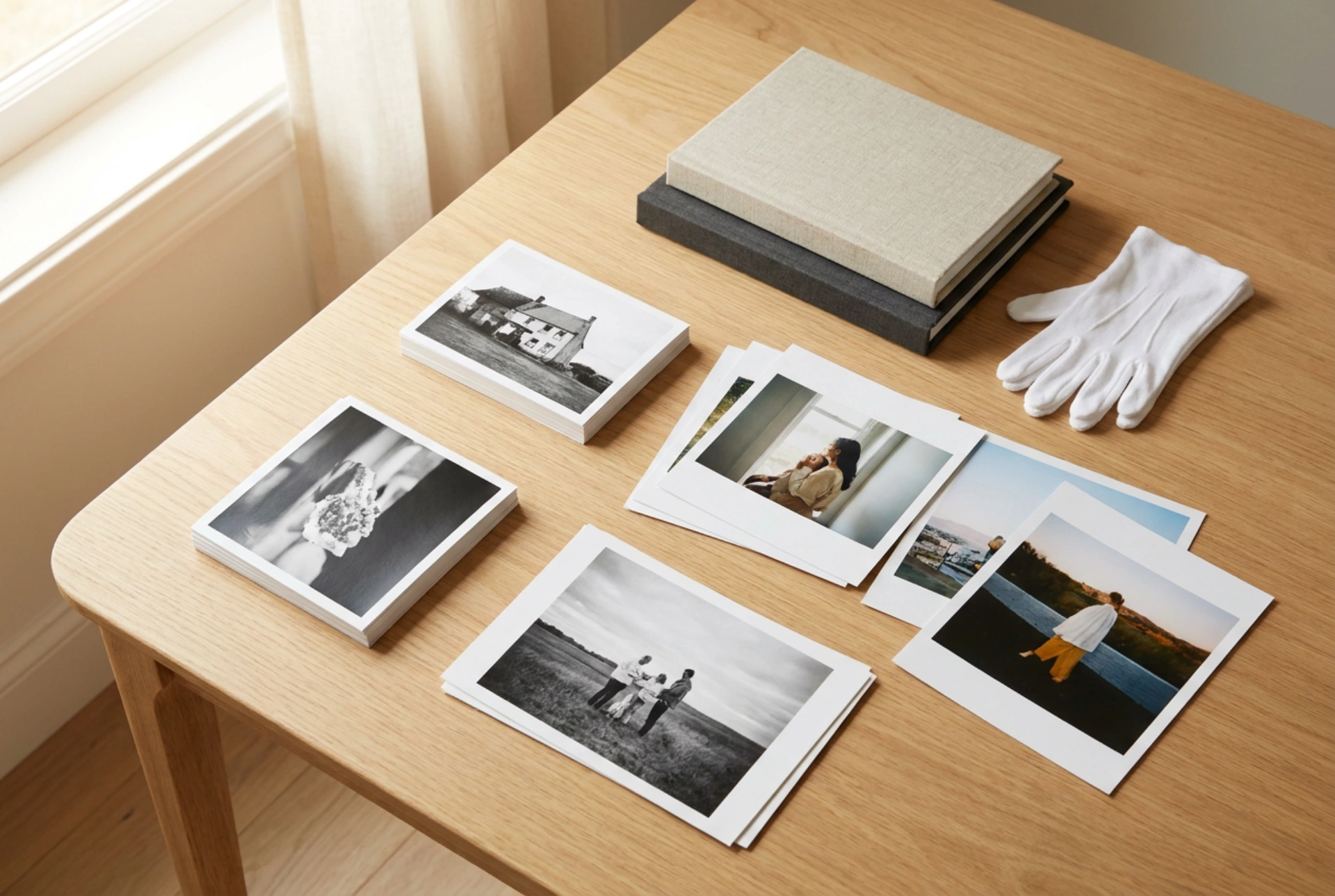


Organizing physical photo prints into slip-in pocket albums is a tactile process that preserves memories, but handling delicate photographic paper without a system can lead to permanent damage, smudges, and torn plastic seams. Achieving a clean, damage-free archival setup requires understanding the physical properties of photographic emulsions and the mechanics of polymer pockets.
The Science of Photo Degradation: Why Clean Handling Matters
Photographic prints, particularly those produced via silver halide chemical processes or high-quality inkjet sublimation, feature a sensitive gelatin or polymer emulsion layer on the surface. This layer is highly susceptible to moisture, mechanical friction, and chemical contamination. Human skin naturally secretes sebum (an oily substance containing lipids and fatty acids) and acidic sweat. When you touch a print with bare hands, these substances transfer to the emulsion, attracting moisture and airborne dust, which over time can cause chemical fading, yellowing, or even microbial growth.
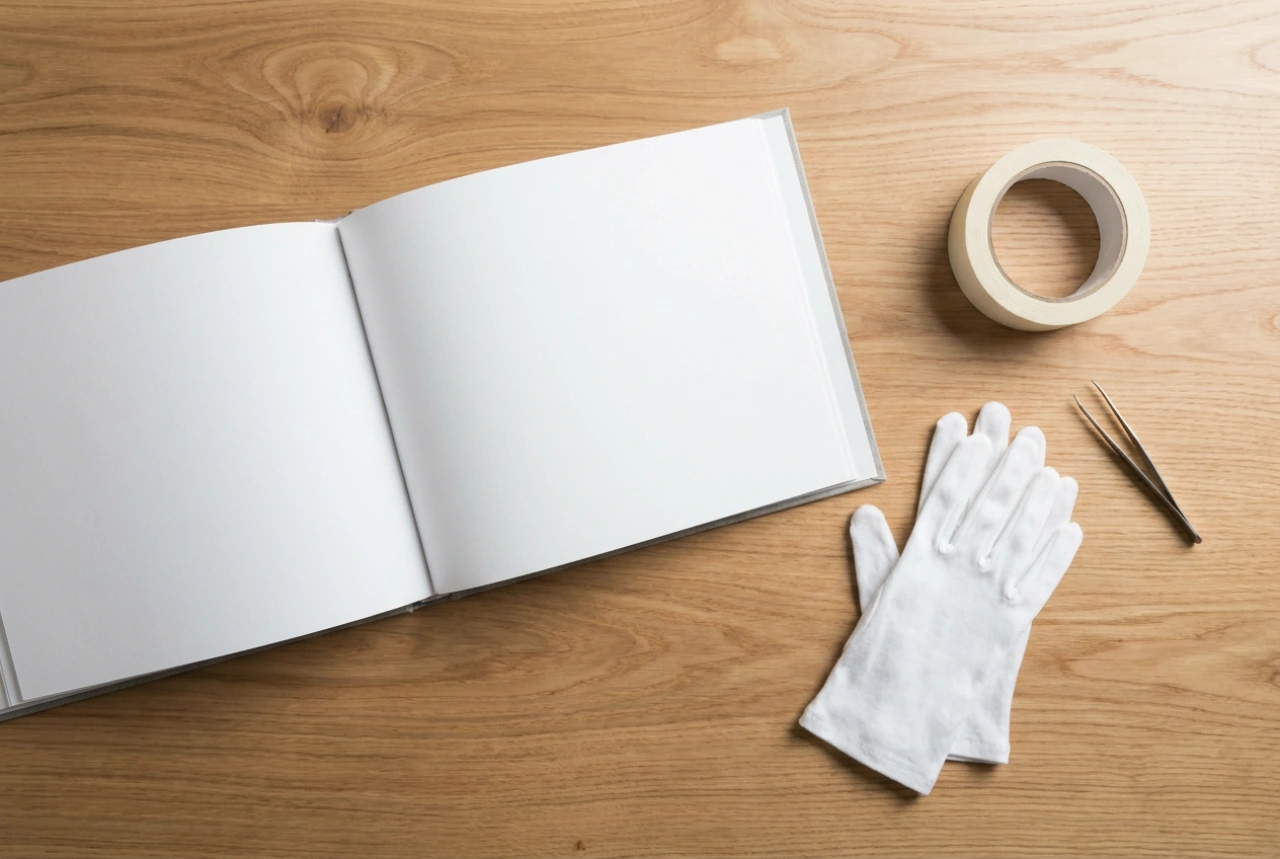
To prevent this, work on a dry, non-porous surface such as sealed hardwood or a clean tempered glass mat. Wear lint-free cotton or powder-free nitrile gloves to eliminate the transfer of skin oils. Furthermore, slip-in albums typically utilize polypropylene or polyethylene pockets. These plastics carry a static charge that acts as a magnet for dust particles; handling prints with gloves minimizes static transfer and keeps both the prints and the plastic sleeves pristine.
The Batch-Sorting Workflow: Organizing Before Inserting
The most common cause of mess and frustration during album assembly is sorting photos directly while holding the album open. This leads to bent corners and stretched plastic pockets. Instead, establish a strict pre-sorting sequence on a large, flat surface:
- Phase 1: Categorization: Group your prints into primary chronological blocks (by decade or year) or major thematic categories (events, travels) before touching the album.
- Phase 2: Sub-Sorting: Within each primary block, organize the prints sequentially. Face all prints in the same orientation (landscape or portrait) to match the layout of your target slip-in pages.
- Phase 3: Sizing and Verification: Confirm that the print sizes (typically 10x15 cm or 13x18 cm) precisely match the pocket dimensions. Forcing an oversized print into a smaller pocket will rupture the welded seams.
Pocket Mechanics: Safe Insertion Techniques
Slip-in pockets are constructed from ultra-thin plastic sheets joined by thermal welds. These welds have high tensile strength along the seam but low resistance to peeling or shearing forces. Inserting a photo improperly can easily split these seams. To insert photos safely, hold the print gently by its edges between your thumb and forefinger. Slightly flex the print to create a subtle arch; this reduces surface contact and friction between the print emulsion and the inner plastic sleeve. Slide the photo into the pocket at a shallow angle, leading with one corner to guide the edge smoothly past the opening lip.
If you encounter resistance due to static cling inside the pocket, do not force the photo. Instead, insert a thin, acid-free cardstock buffer slightly larger than the photo into the pocket first, slide the photo in flush against the card, and then gently slide the cardstock out. Never place two thick prints back-to-back in a single-sided pocket unless the album specifically features a central divider, as the friction between two chemical emulsions can cause them to fuse permanently under pressure.
Spine Tension and Structural Balance
An organized album must also remain physically stable. Slip-in albums have a fixed spine capacity. Overfilling pockets or distributing photos unevenly can cause the spine to warp, which exerts uneven pressure on the prints, leading to indentation lines. Distribute prints evenly throughout the album, starting from both ends and working toward the middle, or fill pages sequentially while monitoring the spine's expansion. Ensure the closed album sits flat without the covers bowing outward.