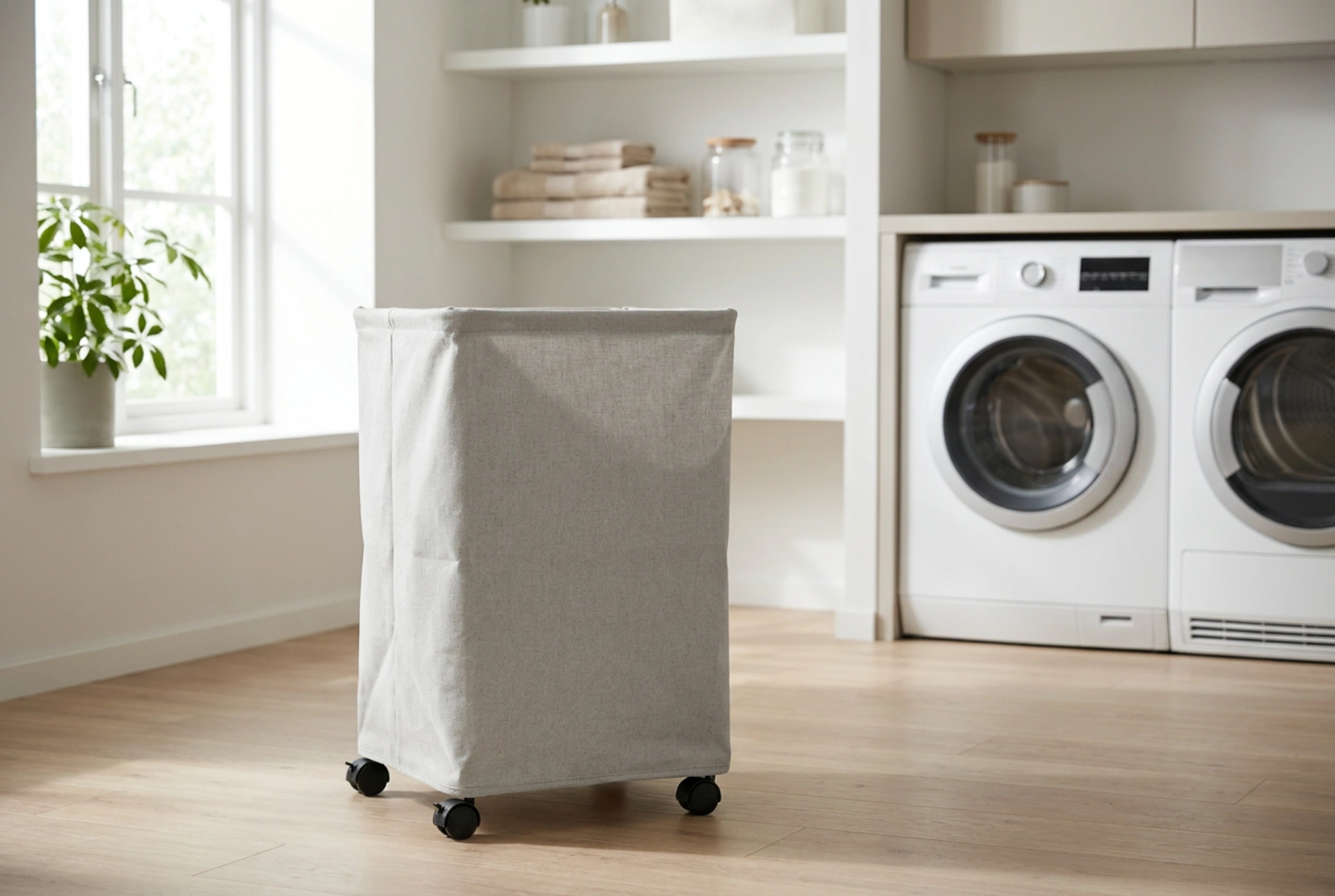


Transporting heavy loads of damp or dry laundry across the home places unnecessary physical strain on the body, which can be easily mitigated by using a rolling laundry hamper. Understanding the mechanics of load distribution, wheel composition, and ergonomic handling allows for a seamless transition of textiles from the bedroom to the washing machine.
The Physics of Rolling Resistance and Wheel Selection
The primary advantage of a rolling hamper lies in the reduction of friction. Carrying a standard basket requires constant vertical lifting force to counteract gravity, whereas a rolling hamper converts this effort into a simple horizontal pushing or pulling force. To achieve maximum efficiency, the choice of wheel material is critical. Hard plastic wheels work well on perfectly flat, carpeted surfaces but transfer vibrations and noise on tiled or hardwood floors. For domestic environments, thermoplastic rubber or polyurethane wheels are superior. These materials offer elastic deformation, meaning they absorb microscopic floor irregularities, reduce rolling noise, and prevent damage to delicate timber finishes.
Load Distribution and Structural Stability
The physical stability of a rolling hamper depends heavily on its center of gravity. Textiles should always be loaded strategically to prevent tipping during transit. Heavy items, such as bath towels, denim, and bed linens, must be placed at the very bottom of the hamper. Lightweight synthetic shirts and delicate garments should occupy the top layers. This deliberate loading pattern keeps the center of mass low and positioned directly over the wheel axle base, ensuring stable tracking when navigating thresholds, rugs, or tight corners.
Material Science of the Hamper Body
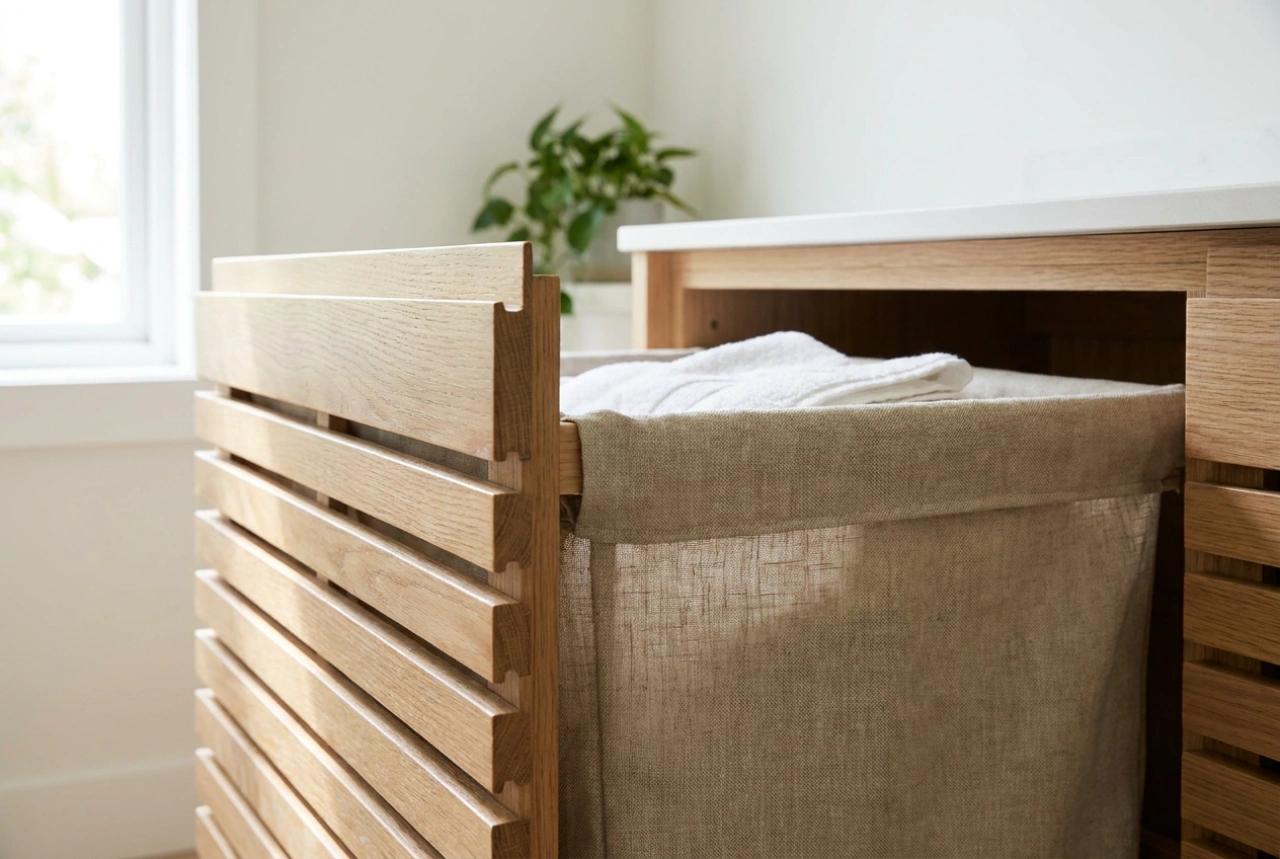
The container itself must strike a balance between structural rigidity and breathability. Dense canvas or synthetic polyester weaves provide the necessary tensile strength to support heavy laundry loads without tearing. However, dirty laundry often retains residual moisture and organic material, creating a microclimate prone to bacterial growth. Selecting a hamper with a breathable fabric liner or a ventilated mesh structure prevents the accumulation of stagnant, humid air, thereby slowing down the enzymatic breakdown of organic matter that causes unpleasant odors.
Ergonomics and Kinetic Movement
To prevent repetitive strain injuries, the height of the hamper handle must align with natural human kinetics. When moving the hamper, the wrist should remain in a neutral, unbent position, and the elbow should maintain a slight flexion of approximately fifteen to thirty degrees. Pushing the hamper in front of the body is biomechanically superior to pulling it behind. Pushing utilizes the larger muscle groups of the chest and legs, whereas pulling forces the shoulder girdle into hyperextension and subjects the lumbar spine to asymmetrical rotational forces.