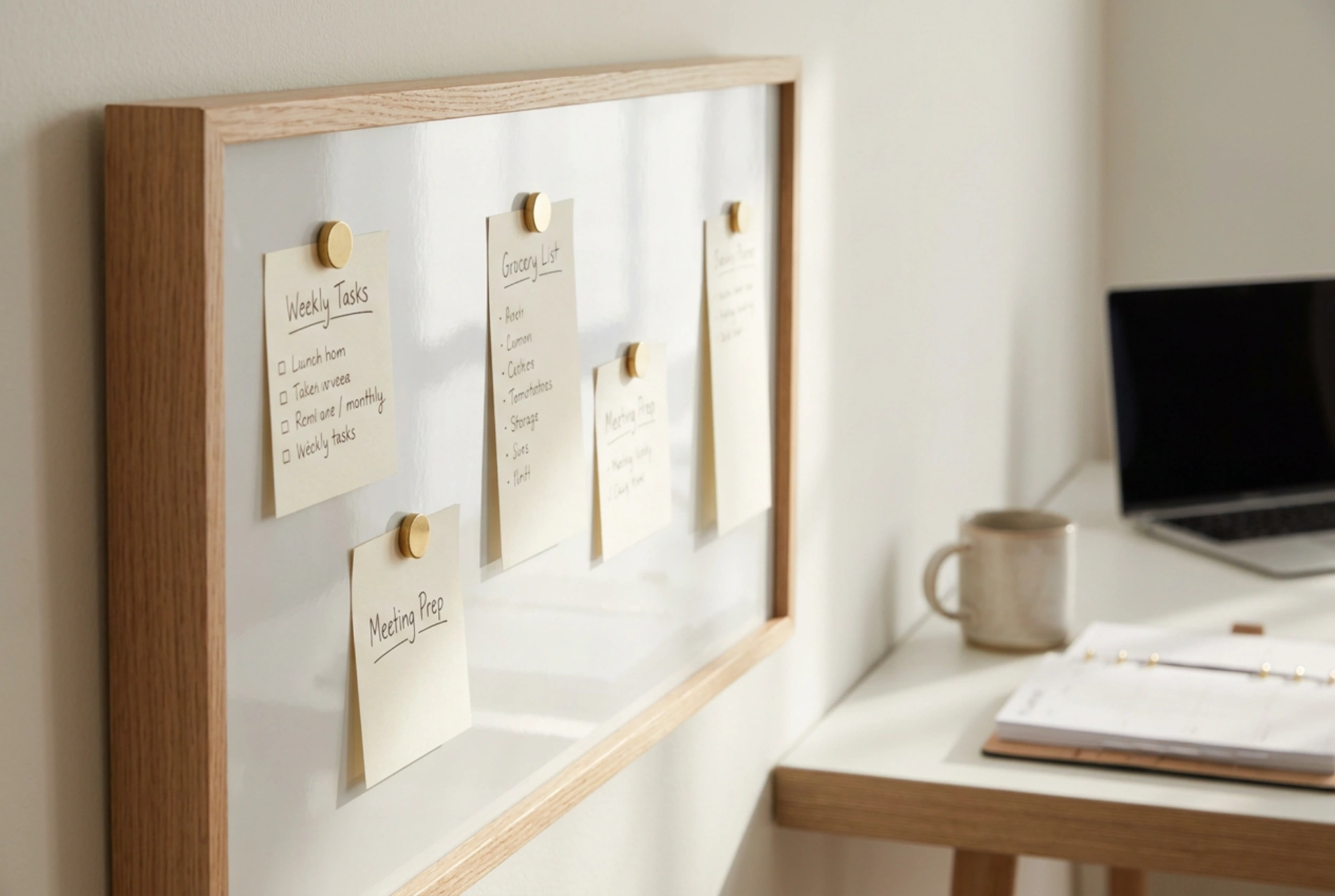


A framed magnetic board is more than a simple writing surface; it is a dynamic hub for organizing household logistics and family communication using physics and spatial design.
The Science of Visual Organization and Spatial Mapping
Our brains process visual information significantly faster than text-based digital lists. By utilizing a physical magnetic board, you create a dedicated spatial map where the placement of information dictates its urgency and category. The human mind naturally associates the upper-left quadrant with primary, high-priority tasks, while the lower-right area is reserved for long-term or low-priority references. This natural scanning pattern allows family members to absorb critical updates in seconds. Using physical magnets adds a tactile dimension to planning, which reinforces memory retention and psychological commitment to the tasks displayed.
Selecting the Right Magnets and Materials
The functionality of your planning board relies heavily on the physical properties of the materials used. Standard flexible refrigerator magnets often lack the magnetic pull required to hold thick cardstock or multiple layers of paper. For a reliable setup, utilize neodymium magnets. These rare-earth magnets offer a high magnetic flux density relative to their small size, ensuring that notes remain securely anchored without blocking the text underneath. When selecting paper for your notes, choose a consistent weight, such as 120 gsm cardstock. This thickness prevents curling caused by ambient humidity and maintains a clean, professional aesthetic within the frame.
Establishing a Color-Coded Information Hierarchy
To prevent visual clutter, establish a strict system of color coding based on functional categories rather than aesthetic preferences. Assign specific colors to distinct household domains:
- Urgent Tasks and Deadlines: Use high-contrast colors like bright yellow or orange to immediately draw the eye to critical dates.
- Routine Maintenance and Chores: Neutral tones such as kraft paper or pale gray work best for recurring weekly tasks.
- Meal Planning and Shopping: Soft green or blue notes help segment kitchen logistics from administrative duties.
- Family Messages and Reminders: Dedicate a specific color to personal notes or general household announcements.
By limiting your palette to three or four colors, you prevent cognitive overload and ensure that the board remains an efficient tool rather than a chaotic distraction.
Optimal Layout Structures for Household Logistics
The structure of your board should reflect the flow of your weekly routine. Divide the surface into clear zones using thin, self-adhesive magnetic tape or subtle hand-drawn grid lines. A highly effective layout is the three-column system. The first column represents incoming tasks and pending notes. The middle column displays active, ongoing schedules for the current week. The final column serves as a reference zone for recurring information, such as emergency contacts, weekly meal rotations, or waste collection schedules. Placing this reference zone at the bottom or far right keeps the central visual area free for daily updates.
Maintenance and Surface Preservation
Over time, magnetic boards can accumulate dust, oils from fingers, and ink residue. To preserve the surface finish, avoid using abrasive scrubbing pads or harsh chemical solvents that can degrade the protective lacquer of the board. Clean the surface bi-weekly using a microfiber cloth slightly dampened with isopropyl alcohol. This quickly dissolves greasy residues and evaporates without leaving streaks or causing the metal substrate to rust. Ensure the surface is completely dry before reattaching magnets or paper notes to prevent moisture from becoming trapped underneath, which can lead to paper degradation and surface oxidation.