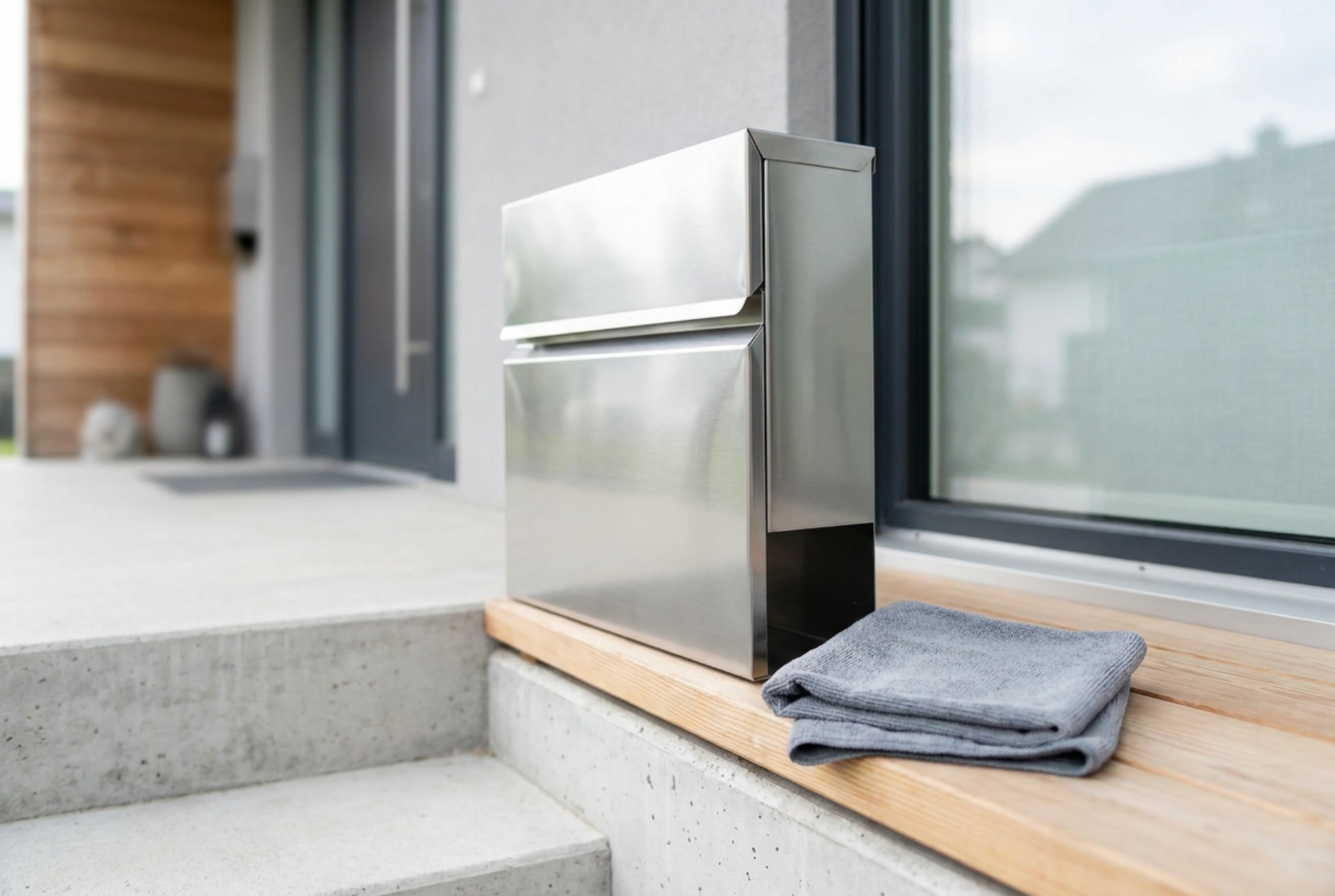


Stainless steel mailboxes are durable and elegant, but outdoor exposure quickly leads to unsightly rain spots, fingerprints, and dullness that ruin their metallic luster.
The Science of Stainless Steel and Soil Accumulation
To clean stainless steel effectively, you must understand its surface. Unlike plated metals, stainless steel is protected by a microscopic passive layer of chromium oxide. This layer resists rust, but it easily traps skin oils, mineral deposits from rainwater, and airborne particulate matter. Standard glass cleaners or abrasive scrubs can permanently scratch this delicate surface or strip the protective oxide barrier, leading to corrosion over time. Removing stubborn grease and hard water minerals requires a systematic approach using surfactants and weak acids that dissolve bonds without degrading the alloy.
Step 1: Removing Dust and Loose Debris
Never apply a wet cloth directly to a dry, dusty mailbox. Dust contains tiny silica particles that act like sandpaper under pressure. Begin by gently brushing the surface with a dry, clean microfiber cloth or a soft-bristled brush to lift loose pollen, dirt, and dust. This preparatory step prevents micro-scratches during the deep cleaning phase.
Step 2: Neutralizing Minerals and Cutting Grease
To dissolve stubborn hard water spots and grease without harsh chemicals, prepare a mild cleaning solution. Mix equal parts of warm distilled water and white vinegar (acetic acid) in a spray bottle. The mild acidity of the vinegar breaks down alkaline mineral deposits left behind by rain and evaporating tap water. Spray the solution generously over the mailbox surface and let it sit for two minutes to allow the chemical reaction to break down the crust.
Step 3: The Directional Wiping Technique
Stainless steel has a distinct "grain" or brushed pattern. Wiping against or across this grain pushes dirt deeper into the microscopic grooves and creates visible, permanent micro-scratches. Always wipe in straight lines parallel to the grain. Using a clean, damp microfiber cloth, apply moderate pressure and swipe from top to bottom. For persistent spots, use a soft non-abrasive sponge, moving strictly along the grain direction until the residue is fully lifted.
Step 4: Rinsing and Immediate Drying
Residue from cleaning solutions will dry into cloudy white streaks if left to evaporate. Rinse the mailbox thoroughly with a clean cloth dampened with pure water. Immediately afterward, dry the surface completely using a thick, dry microfiber cloth. Work quickly and in circular motions only during the drying phase if the grain is highly polished, but stick to linear strokes for brushed finishes. Immediate mechanical drying prevents dissolved minerals in the rinse water from depositing back onto the steel.
Step 5: Applying a Protective Barrier
To prevent future fingerprints, water spots, and atmospheric acid degradation, apply a micro-thin protective barrier. Place a few drops of generic mineral oil or liquid paraffin onto a dry microfiber cloth. Buff the oil into the stainless steel surface, always following the direction of the grain. This hydrophobic layer repels rainwater, prevents oils from sticking, and restores a deep, uniform metallic sheen without attracting dust.