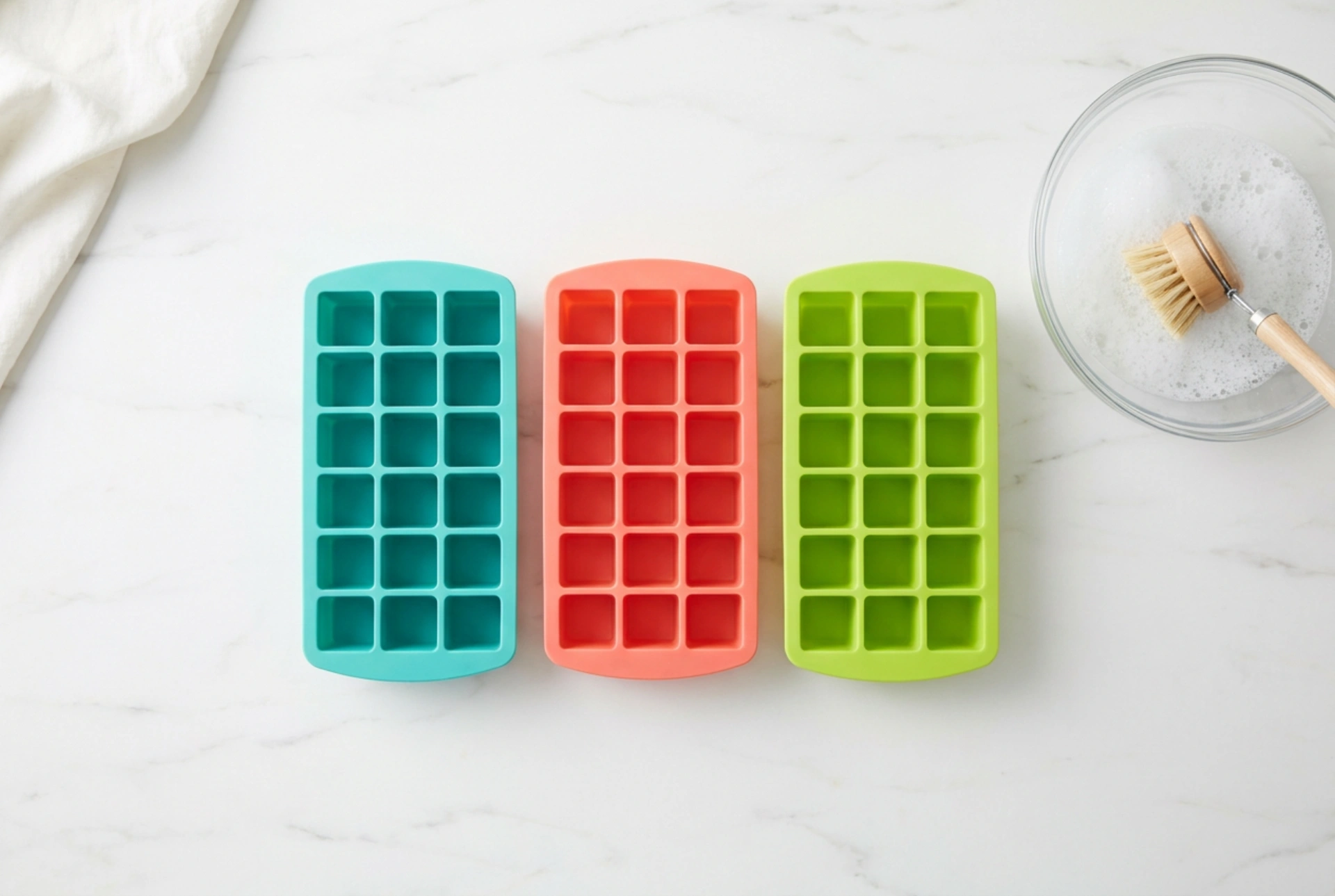


Silicone ice cube trays are highly flexible and durable, but their porous surface easily absorbs freezer odors and leaves white mineral deposits over time.
The Chemistry of Silicone and Odor Absorption
Polydimethylsiloxane (silicone) is a synthetic polymer that is hydrophobic but lipophilic. While it repels water, it readily absorbs fats, oils, and volatile organic compounds circulating in your freezer's air. When left uncovered, ice trays act like chemical sponges, trapping food molecules from nearby leftovers. This molecular bonding is why simple rinsing with cold water fails to eliminate that distinct, stale freezer smell.
The Thermal Stripping Technique to Remove Stubborn Odors
To release trapped volatile compounds from the silicone matrix, you must use heat. This process, known as thermal stripping, relaxes the polymer chains, allowing trapped gasses to escape. Preheat your household oven to 100 degrees Celsius. Wash the trays thoroughly to remove any surface debris, dry them completely, and place them on a clean baking sheet. Bake the empty silicone trays for 30 to 40 minutes. The dry heat gently forces the volatile food molecules to evaporate, leaving the silicone completely odorless. Ensure your kitchen is well-ventilated during this process.
De-scaling White Mineral Crusts with Acid Chemistry
White, powdery residue on your trays is calcium carbonate left behind by evaporating tap water. Because silicone has a high surface friction, these mineral crystals cling tightly to the mold cavities. To dissolve them, leverage a simple acid-base reaction. Submerge the dry trays in a warm solution of equal parts water and white vinegar (acetic acid). The acetic acid reacts with calcium carbonate to form water-soluble calcium acetate and carbon dioxide gas. Let the trays soak for 30 minutes, then scrub gently with a soft microfiber cloth. Avoid abrasive nylon sponges, which can create microscopic scratches that harbor bacteria and trap even more minerals in the future.
The Correct Washing Sequence and Drying Protocol
For routine maintenance, always wash silicone molds in hot water using a highly concentrated, unscented dish soap. Heavily scented soaps contain synthetic oils that will bond with the silicone, imparting a soapy taste to your next batch of ice. Wash using a firm, circular motion with a soft cloth to reach into the sharp corners of the mold. Once clean, rinse with hot water. Dry the trays immediately with a clean, lint-free tea towel, or let them air dry upside down on a clean rack. Leaving droplets of tap water to evaporate naturally inside the molds will simply reintroduce mineral scaling.
Proper Storage to Prevent Environmental Contamination
Where and how you store your trays determines their cleanliness. Never store silicone trays in the freezer empty, as they will continuously absorb ambient odors. If they are not actively freezing water, clean them, dry them thoroughly, and store them in a closed kitchen cabinet. Keep them away from high-heat areas like the space above the oven or next to the stove, as grease particles suspended in cooking vapors will settle on the silicone and create a sticky, difficult-to-remove layer.