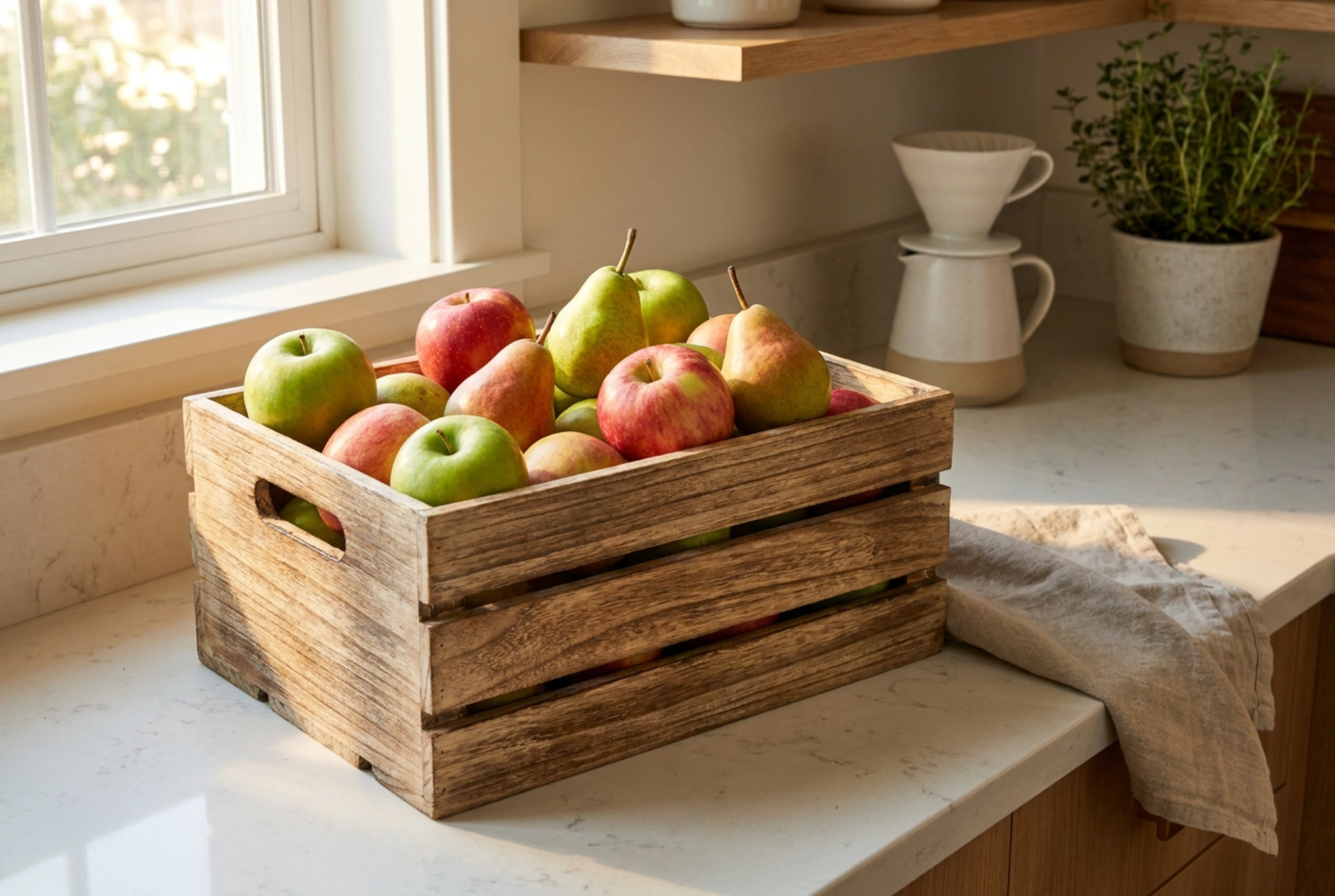


Storing fruit in wooden crates is an excellent way to prolong their shelf life, provided you understand the physical and chemical principles of post-harvest ripening.
The Science of Ethylene and Air Circulation
The primary driver of fruit spoilage in storage is ethylene, a natural gaseous hormone emitted by ripening fruits. In closed plastic containers, ethylene concentrates rapidly, accelerating decay and mold growth. Wooden crates offer a distinct thermodynamic advantage: their slatted construction allows for continuous passive ventilation, which dilutes ethylene gas and regulates humidity levels around the produce.
Wood is also a hygroscopic material. It naturally absorbs excess ambient moisture from the air, preventing the formation of condensation on the fruit skins, which is the primary breeding ground for fungal spores. To maximize this effect, crates must be placed in a cool, dark environment with consistent airflow, away from direct sunlight and heat sources.
The Art of Sorting and Stratification
Proper arrangement within the crate is critical to prevent bruising and pressure damage, which compromise the cellular structure of the fruit. When preparing your wooden crates, always follow a strict system of layering and physical separation:
- Weight Distribution: Place heavier, firmer fruits like apples or unripe pears at the bottom of the crate. Delicate fruits, such as peaches, plums, or soft berries, must always sit in a single layer at the very top.
- The Stem Rule: When storing apples and pears, arrange them with the stems pointing upward. The stem area is structurally rigid; placing fruit upside down can cause the stem to puncture neighboring fruits, leading to rapid rot.
- Physical Barriers: Prevent direct skin-to-skin contact between fruits. Wrapping individual specimens in clean, unprinted packing paper or placing clean cardboard dividers between them limits the spread of mold spores if one piece begins to decay.
Managing Incompatible Fruit Groups
Not all fruits cohabitate well. Some are high ethylene producers, while others are highly sensitive to it. Mixing these categories in a single wooden crate will lead to premature softening and spoilage.
High Ethylene Producers
Apples, pears, bananas, and peaches release significant amounts of ethylene gas. These should ideally have their own dedicated wooden crates. If you must store them near other produce, ensure they are placed in the upper crates of a stacked system, as ethylene gas rises.
Ethylene-Sensitive Produce
Berries, leafy greens, and root vegetables are highly sensitive to ethylene. Storing these in the same compartment as apples will cause them to rot, yellow, or turn bitter within days. Keep these groups physically separated in different parts of your pantry or cellar.
Maintenance and Crate Hygiene
The organic nature of wood means it can harbor mold spores from previous storage cycles. Before reusing a wooden crate, it must be thoroughly cleaned and sanitized. Scrub the wood with a stiff brush using a solution of warm water and oxygen bleach, which effectively kills fungal spores without leaving harmful chemical residues. Allow the crate to dry completely in the sun for at least 24 hours before introducing fresh fruit, as any remaining moisture in the wood fibers will trigger premature mold growth.