

Managing a family’s laundry requires a systematic approach to sorting, especially when handling children’s garments which are prone to specific types of organic stains and moisture retention.
The Physics of Airflow and Material Selection
Children’s clothing often holds residual moisture from sweat, spills, or damp outdoor play. Storing these garments in an airtight container creates a high-humidity microclimate that accelerates the growth of mold spores and mildew. To prevent this, the primary consideration for a laundry basket must be ventilation.
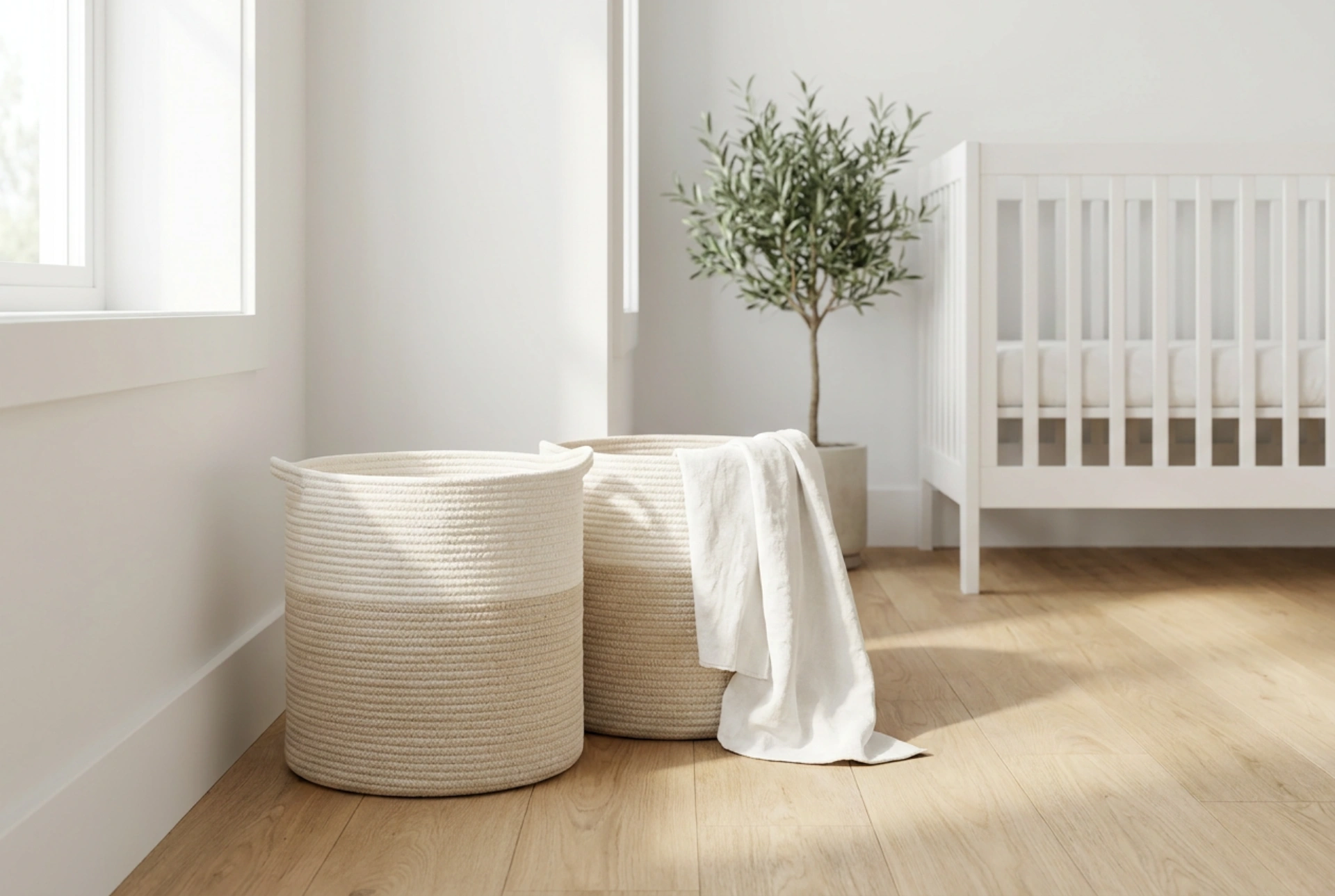
- Woven Natural Fibers: Cotton rope, rattan, or seagrass baskets feature microscopic gaps in their structure that allow continuous air circulation. This helps evaporate surface moisture from fabrics, reducing bacterial breakdown that causes sour odors.
- Perforated Synthetics: High-density polyethylene baskets with engineered ventilation holes offer a non-porous alternative. These are highly resistant to chemical absorption and can be sanitized easily, making them suitable for heavily soiled sportswear or damp towels.
- Washable Fabric Liners: If choosing a woven basket, ensure it has a removable, washable cotton liner. This barrier prevents delicate knitwear from snagging on rough natural fibers and can be laundered at high temperatures to kill lingering bacteria.
Optimizing Ergonomics and Autonomy for Children
Encouraging children to participate in household organization relies heavily on physical accessibility. The height, weight, and opening mechanism of a laundry basket dictate how easily a child can use it independently.
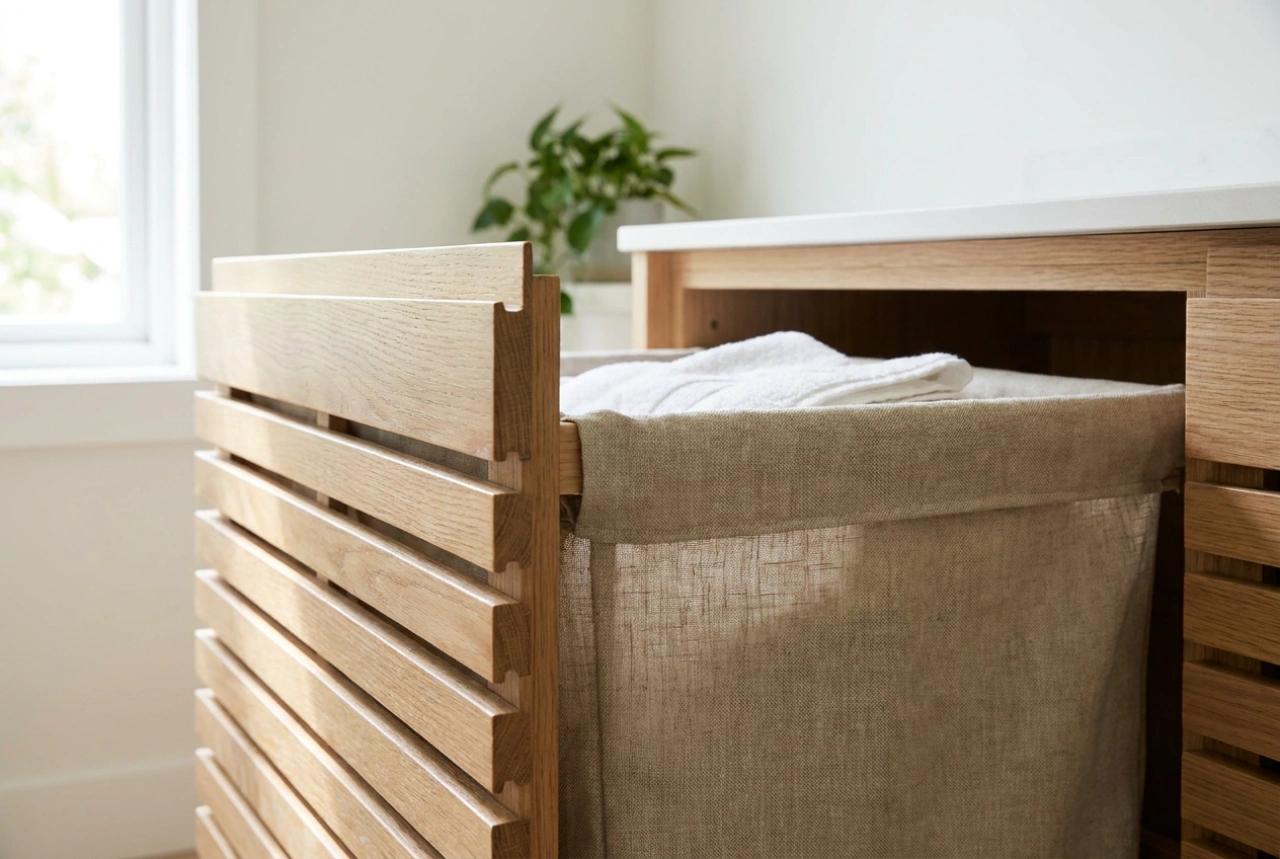
Baskets should not exceed the average waist height of the child, allowing them to drop clothes inside without straining. Lightweight, flexible structures, such as woven cotton bins with integrated handles, are safer and easier for children to drag or carry to the washing area. Avoid heavy wooden chest designs with heavy hinged lids, which pose a pinch hazard and create physical barriers that discourage use.
Implementing a Visual Sorting System
Sorting laundry at the point of disposal saves significant time during washing preparation. By setting up a multi-compartment system, children can learn to categorize garments before they reach the laundry room.
Color-Coded Classification
Using visual cues is the most effective way to teach sorting. Implementing a two-basket system—one in a light shade (for whites and pastels) and one in a dark shade (for deep colors and denim)—creates an intuitive sorting process. This prevents dye transfer accidents during the wash cycle by stopping red or black garments from mixing with light cottons at the collection stage.
Texture and Fabric Separation
For older children, a third compartment can be introduced for heavily soiled outdoor gear, woolens, or delicate fabrics. Keeping heavily stained clothes separate prevents the cross-contamination of grease, mud, or food proteins onto lightly soiled daily wear, reducing the need for aggressive pre-treatments on clean items.
Maintenance and Sanitization of Laundry Containers
Laundry baskets themselves accumulate dust, skin cells, and bacteria over time. Establish a regular cleaning routine based on the material of the container. Plastic baskets should be wiped down bi-weekly with a dilute solution of oxygen-based bleach or warm water and mild detergent. Woven baskets should be vacuumed with a brush attachment to remove dust from the crevices, and the fabric liners should be laundered at 60 degrees Celsius to eliminate dust mites and odor-causing bacteria.