

Storing wine at home requires more than just finding an empty shelf; it demands an understanding of how temperature, light, and bottle positioning affect the chemical aging process of the liquid.
The Science of Horizontal Storage and Cork Hydration
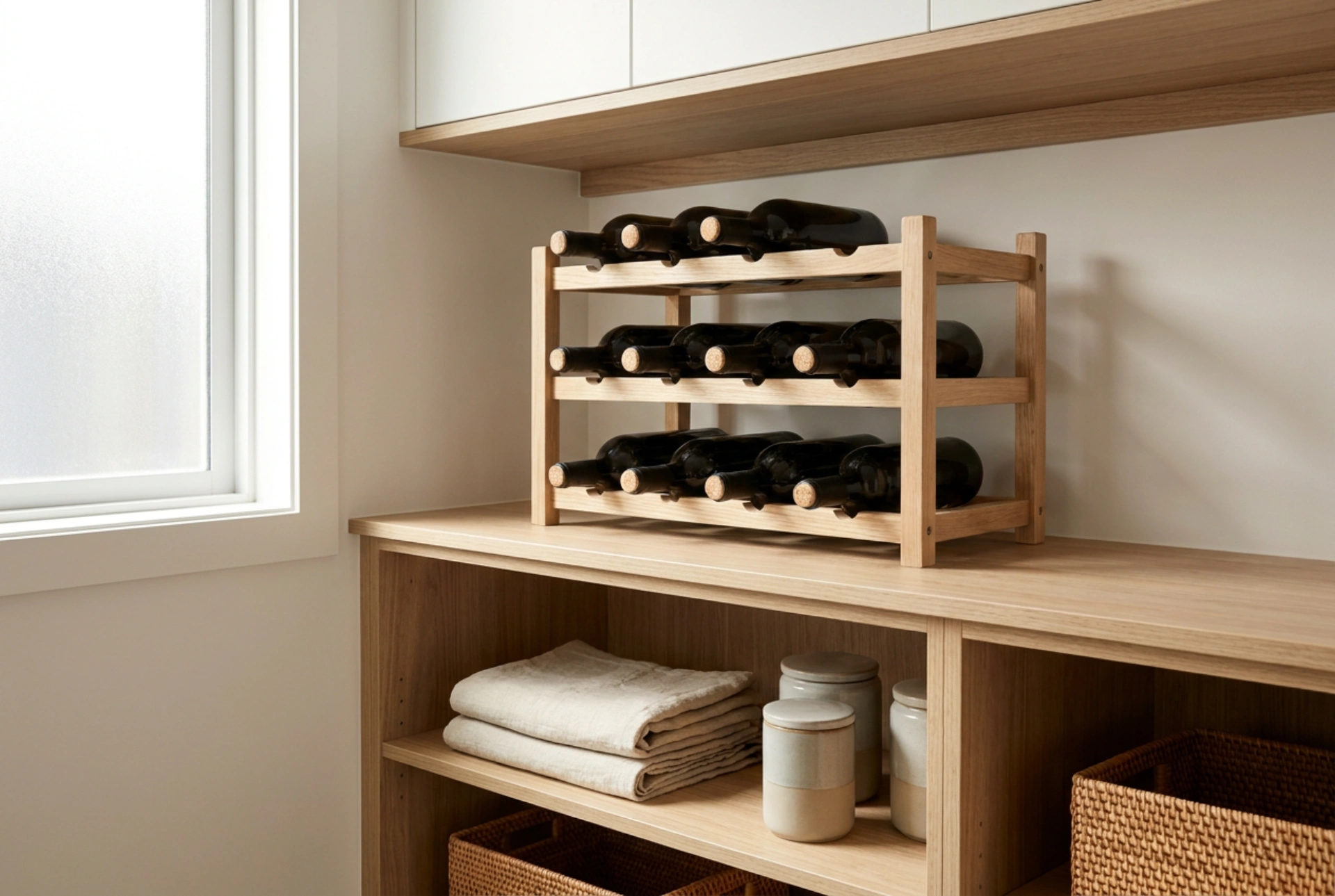
The primary reason for utilizing a dedicated wooden wine rack is to keep the bottles lying horizontally. This position is not merely for space efficiency; it is a fundamental requirement of material physics. When a bottle is stored flat, the wine remains in constant contact with the natural cork stopper. This contact keeps the cork saturated and swollen, preventing it from drying out, shrinking, and allowing oxygen to seep into the bottle. If oxygen enters, it triggers rapid oxidation, turning aromatic compounds into acetic acid and ruining the vintage. For bottles sealed with synthetic corks or screw caps, horizontal storage is less critical for preservation but remains highly efficient for space organization.
Why Wood is the Ideal Material for Wine Storage
Wood is not just an aesthetic choice for wine storage; it possesses physical properties that protect the bottles. Wood acts as a natural dampener against micro-vibrations, which can disturb the sediment in older wines and accelerate chemical reactions that degrade the flavor profile. Unlike metal racks, which transmit environmental vibrations from appliances or footsteps, wood absorbs these subtle shocks. Additionally, timber does not conduct heat rapidly, helping to buffer the bottles against minor, sudden fluctuations in ambient room temperature.
Optimizing the Microclimate of Your Storage Space
To maintain the quality of your collection, the wooden rack must be positioned strategically. The ideal environment requires specific conditions:
- Temperature Stability: Aim for a constant temperature between 10°C and 15°C. Rapid fluctuations cause the liquid inside the bottle to expand and contract, which can push the cork out or draw air in.
- Relative Humidity: Maintain humidity levels between 50% and 70% to prevent the exterior of the cork from drying out while avoiding mold growth on labels.
- Light Shielding: Ultraviolet (UV) light degrades organic compounds in wine, leading to "lightstruck" aromas. Always position your wooden rack away from direct sunlight, preferably in a dark pantry, cellar, or cupboard.
Organizing Your Wine Rack for Efficiency and Safety
A systematic approach to organizing your wooden wine rack prevents physical damage and minimizes the need to disturb other bottles. Place heavier, larger bottles on the bottom shelves to lower the center of gravity and ensure the rack remains stable. Group your collection by style or aging potential: keep everyday wines on the upper, most accessible levels, and reserve the cooler, lower shelves for bottles intended for long-term aging. Always handle bottles by the body rather than the neck to maintain a secure grip and prevent accidental drops.