

Wooden laundry baskets add natural warmth to a bathroom, but the high-humidity environment poses a constant threat of warping, structural degradation, and mould growth if the wood is left unprotected.
The physics of wood and bathroom humidity
Wood is a hygroscopic material, meaning it naturally absorbs and releases moisture from the surrounding air to reach equilibrium. In a bathroom, steam from hot showers raises the relative humidity rapidly. As the wood fibres absorb this airborne moisture, they swell. When the bathroom dries out, the fibres shrink. This continuous cycle of expansion and contraction creates internal stress, eventually leading to warping, splitting, and the failure of glued joints. Furthermore, trapped moisture inside damp laundry creates a microclimate inside the basket, offering the perfect breeding ground for mould and mildew spores that feed on organic compounds in the wood.
Selecting and applying the right protective barriers
To shield a wooden laundry basket from moisture, you must apply a finish that either seals the surface or penetrates the pores to repel water. The choice of finish determines both the durability and the maintenance routine of the basket:
- Penetrating oils: Natural oils, such as tung oil or linseed oil, penetrate deep into the wood fibres and cure to form a water-resistant barrier from within. This method preserves the natural, matte texture of the wood. To apply, sand the basket thoroughly, apply a generous coat of oil, let it soak for twenty minutes, and wipe away any excess. Multiple thin coats are required for optimal protection.
- Hardwax oils: Combining natural oils with waxes (such as carnauba or candelilla wax), these finishes offer a higher level of surface protection than oil alone. The wax creates a thin, hydrophobic layer on the surface that causes water to bead up rather than penetrate.
- Polyurethane sealants: For complete isolation from moisture, a water-based or oil-based polyurethane coating creates a hard, impermeable plastic-like film over the wood. While highly durable and easy to wipe clean, polyurethane can peel or crack over time if moisture manages to penetrate through joints or scratches.
Physical design and airflow optimization
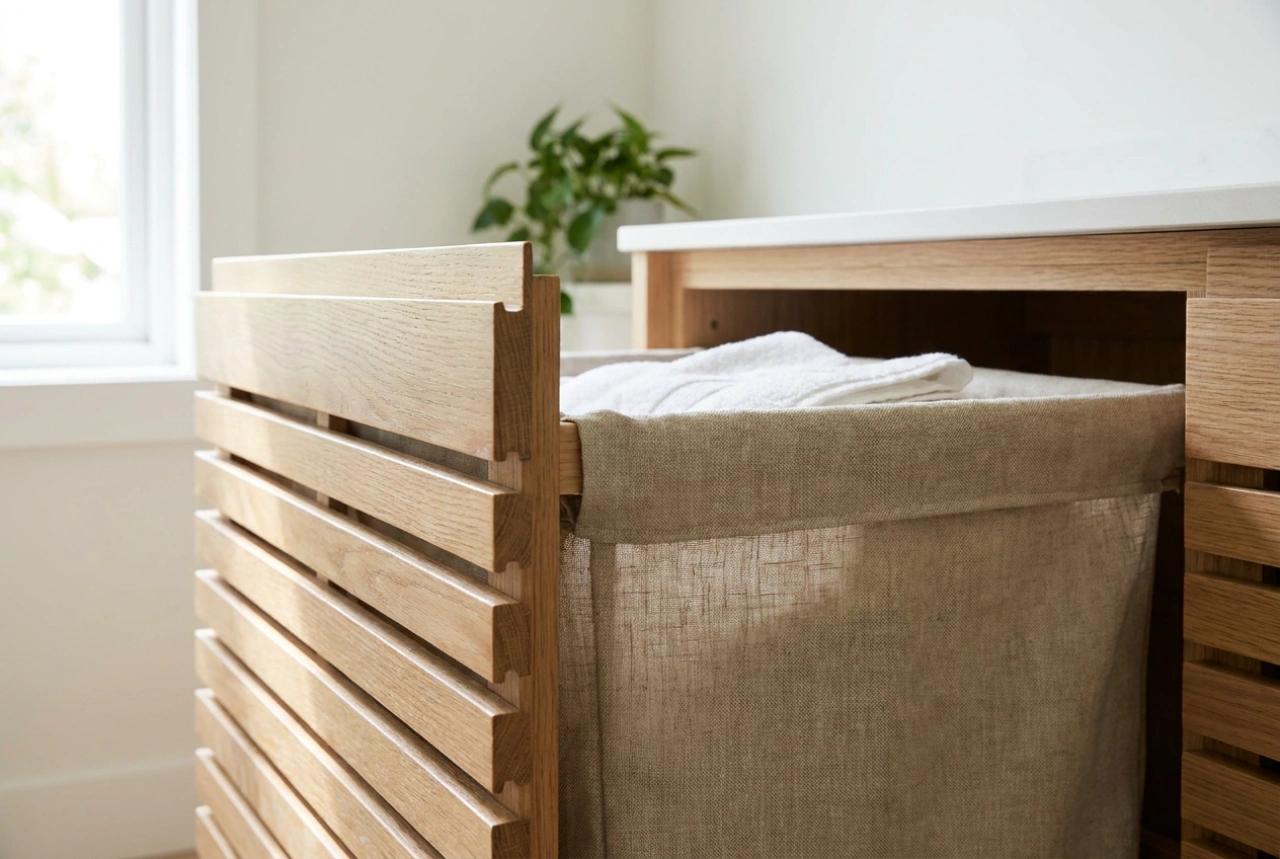
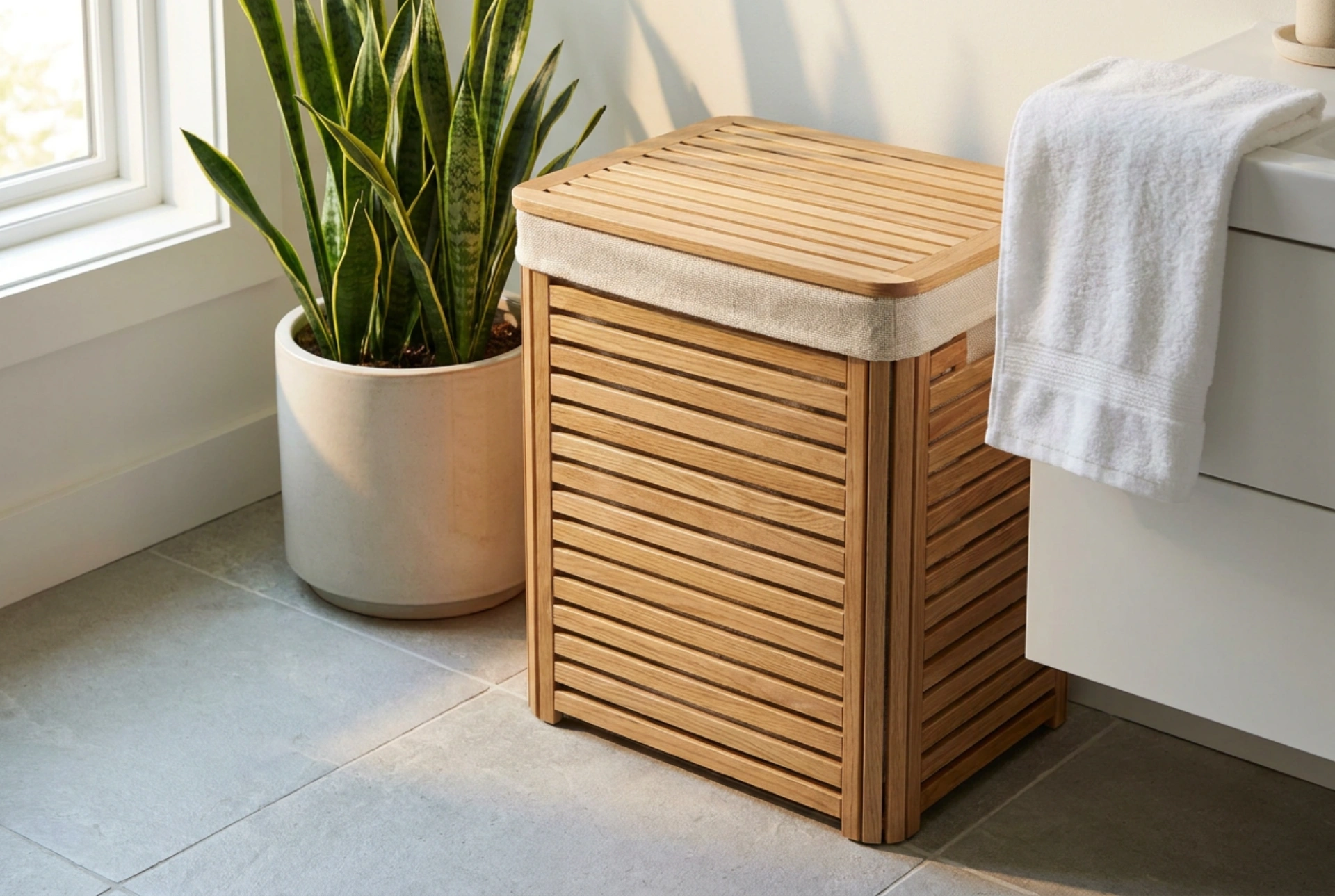
Chemical protection must be supported by physical airflow to prevent moisture accumulation. When selecting or positioning a wooden laundry basket, structural ventilation is critical. Slatted or woven designs allow air to circulate freely through the damp clothes, accelerating evaporation and preventing the relative humidity inside the basket from reaching saturation point. Additionally, always use a removable, machine-washable canvas or cotton liner. The fabric liner acts as a sacrificial barrier, absorbing the initial dampness from dirty clothes and preventing direct contact between wet textiles and the wooden interior.
Strategic placement and maintenance routines
Where and how you position the basket in your bathroom directly impacts its lifespan. Keep the basket elevated off the floor, especially if your bathroom has tiled floors prone to pooling water or condensation. Baskets fitted with small rubber feet or wooden legs prevent capillary action from drawing standing water up into the main structure. Position the basket away from direct splash zones, such as the immediate perimeter of the bathtub or shower enclosure. Regularly ventilate the bathroom using mechanical extraction fans during and after showers to lower the ambient humidity quickly, preventing the wood from remaining in a saturated state for extended periods.