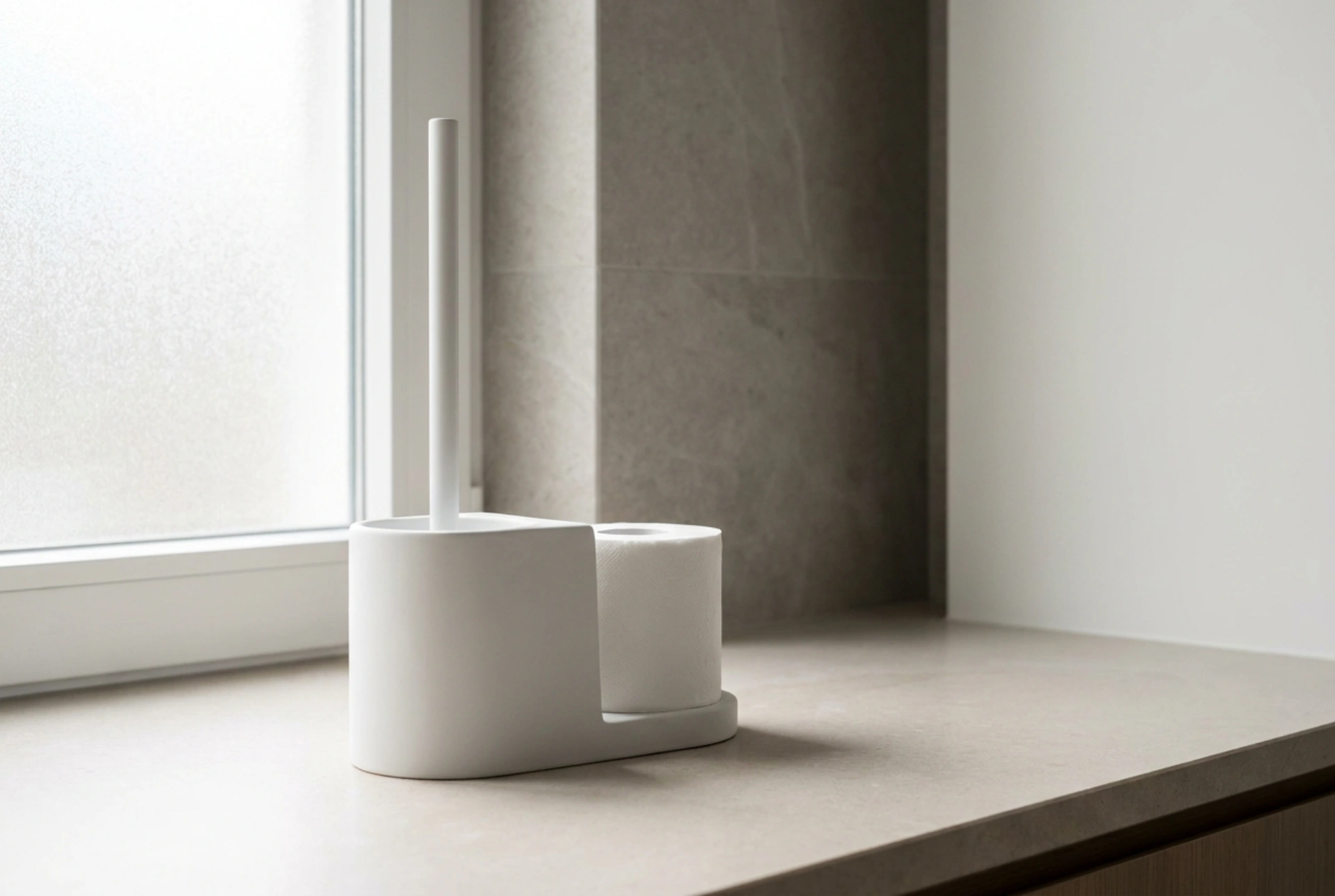


Combining a toilet brush and paper holder into a single freestanding unit saves space, but positioning it incorrectly or neglecting its maintenance can lead to cross-contamination and bacterial growth in your bathroom.
The physics of placement: Distance and reach
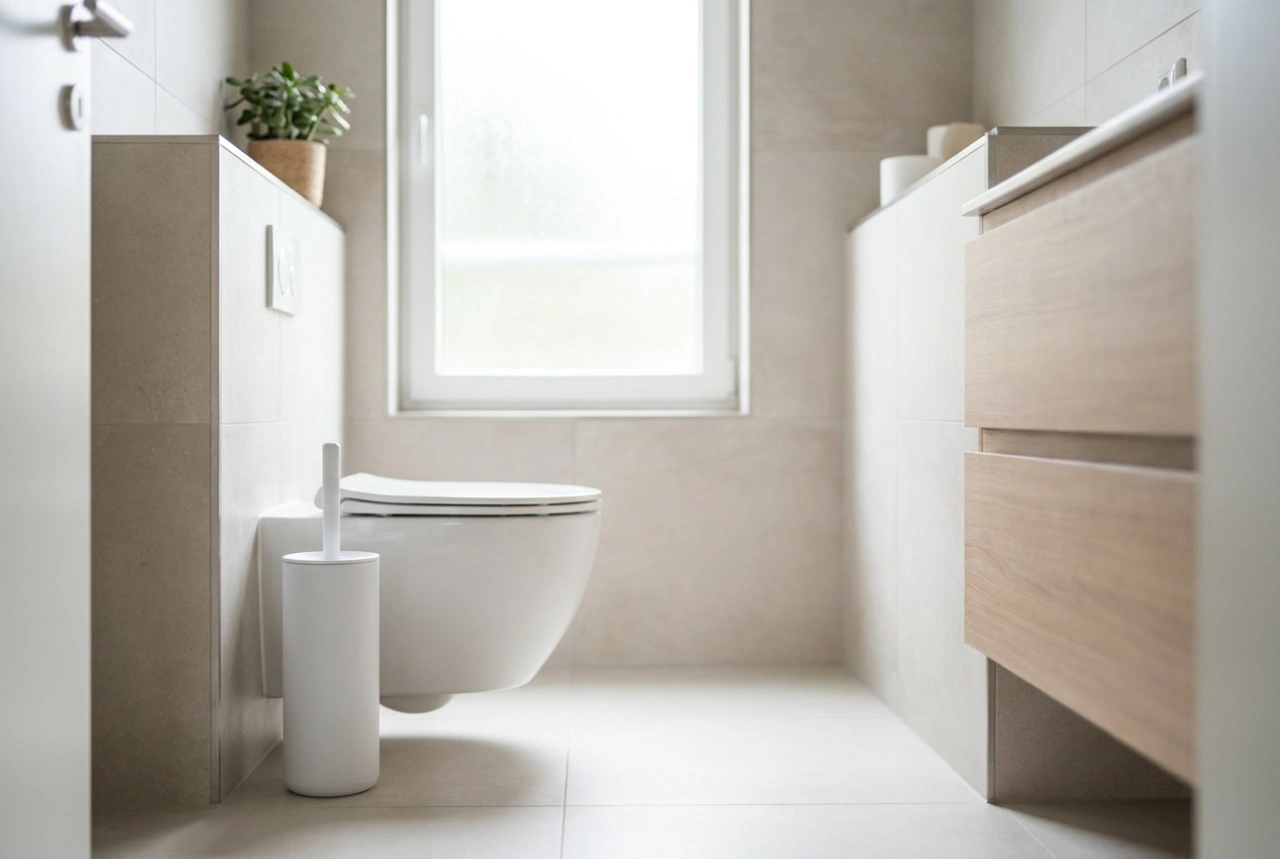
The positioning of a combined stand must balance ergonomic accessibility with physical hygiene barriers. Ideally, the unit should stand between 10 to 15 centimeters away from the outer edge of the toilet bowl, slightly forward of the seat. Placing it too close increases the risk of splashing during toilet use, which can deposit micro-droplets onto the clean toilet paper roll stored directly above the brush container.
Furthermore, ensure the toilet paper hangs so that the sheet pulls from the front (over, not under). This orientation reduces the physical contact between your knuckles and the metal or plastic stand, preventing the transfer of dermal bacteria onto the structure that holds the brush. If the unit features a built-in partition between the paper holder and the brush canister, position this shield facing the toilet bowl to act as a physical splash guard.
The mechanism of dripping and moisture control
The primary hygienic failure of toilet brushes is the accumulation of stagnant water at the bottom of the canister. When a wet brush is returned directly to its holder, it creates a dark, humid microenvironment that fosters the rapid proliferation of pathogens. To prevent this, implement a strict mechanical drying protocol before returning the brush to the stand.
After cleaning the bowl, rest the plastic handle of the brush across the toilet rim, suspending the wet bristles directly over the water. Lower the toilet seat onto the handle to pinch it in place. Leave the brush in this position for approximately ten minutes, allowing gravity to pull the water droplets off the hydrophobic plastic bristles into the bowl before you slide the dry brush back into the container.
Chemical maintenance of the holder and brush
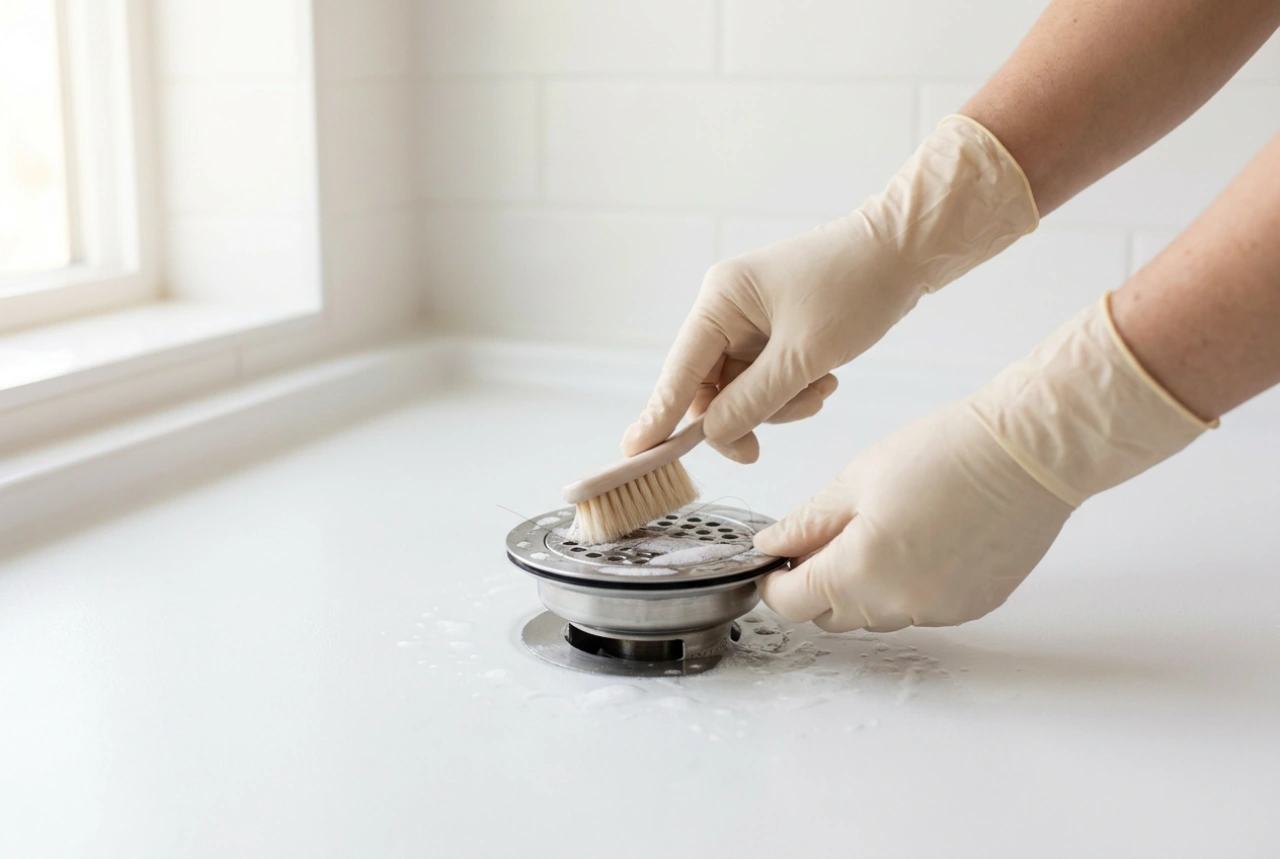
Even with careful drying, the canister requires active chemical disinfection to remain sanitary. Avoid using heavy abrasive powders that scratch plastic or chrome finishes, as micro-scratches provide excellent anchorage points for biofilm. Instead, utilize a solution of active oxygen bleach or a diluted chlorine-based disinfectant to sanitize the components.
- Weekly disinfection: Pour hot water (around 60 degrees Celsius to avoid warping plastic parts) into the brush canister, adding a tablespoon of oxygen bleach. Submerge the brush bristles in this solution and let it sit for thirty minutes.
- Canister drying: Empty the container into the toilet, rinse it with clean water, and wipe the interior dry using a disposable paper towel. Never leave standing liquid at the bottom of the holder.
- Surface wiping: Wipe the entire vertical stand, including the toilet paper dispenser arm, with a microfiber cloth dampened with a mild disinfectant, working from the top (cleanest area) to the bottom (dirtiest area).
Material selection and airflow
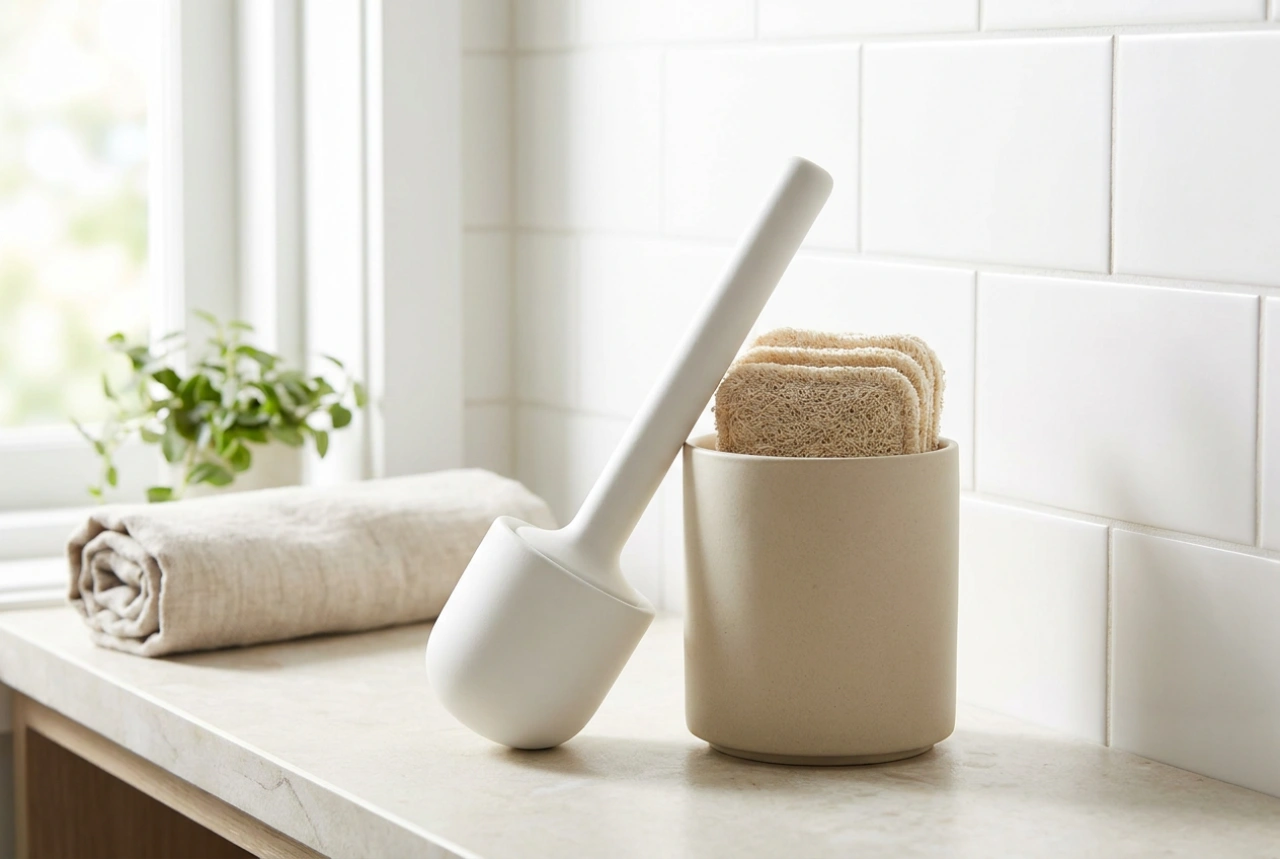
When selecting or organizing your combined unit, the physical design plays a critical role in sanitation. Opt for models with suspended canisters where the brush does not rest on the very bottom of the cup, or those with open-air slotted holders that encourage evaporation. If your unit is completely sealed, you must dry the brush manually every single time to prevent anaerobic bacterial growth which causes unpleasant odors.