

Aluminium is a highly functional but delicate metal that requires a precise balance of chemistry and gentle mechanical action to clean without causing permanent scratches or chemical etching.
The Chemistry of Aluminium and Its Vulnerabilities
Aluminium is a relatively soft metal with a Mohs hardness of approximately 2.75, making it highly susceptible to physical scratching from abrasive tools like steel wool or scouring powders. In nature, aluminium instantly reacts with oxygen to form a microscopic, protective barrier of aluminium oxide (Al2O3). This passive layer shield prevents deeper corrosion but is highly sensitive to pH extremes. Because aluminium is amphoteric, it reacts with both strong acids (pH below 4) and strong alkalis (pH above 8.5). Using harsh chemical cleaners can strip this protective layer, leading to dulling, dark grey discolouration, or pitting corrosion. Therefore, any cleaning protocol must respect the metal’s chemical boundaries.
Safe Cleaning Agents: Neutralising Grease and Limescale
To safely dissolve everyday contaminants, you must choose substances that target specific residues without destabilising the aluminium oxide layer. For greasy films, fingerprints, and oily residues, a neutral surfactant solution is ideal. Standard liquid dishwashing detergent contains non-ionic and anionic surfactants that lower water surface tension, emulsifying lipids so they can be easily rinsed away. For mineral deposits, water spots, and limescale, a mild organic acid is necessary. Diluted white vinegar (acetic acid) or a weak citric acid solution dissolves calcium carbonate deposits. However, contact time must be strictly controlled—never leave acidic solutions to dwell on raw aluminium for extended periods, and always rinse thoroughly with clean water to halt the reaction.
The Safe Cleaning Protocol: Order of Operations
Physical technique is just as crucial as chemical selection. To prevent scratching, always follow a structured process that minimises friction on the metal surface.
- Pre-rinsing: Always rinse or wipe the surface with warm water first to remove loose, abrasive dust particles that could act as sandpaper under your cleaning cloth.
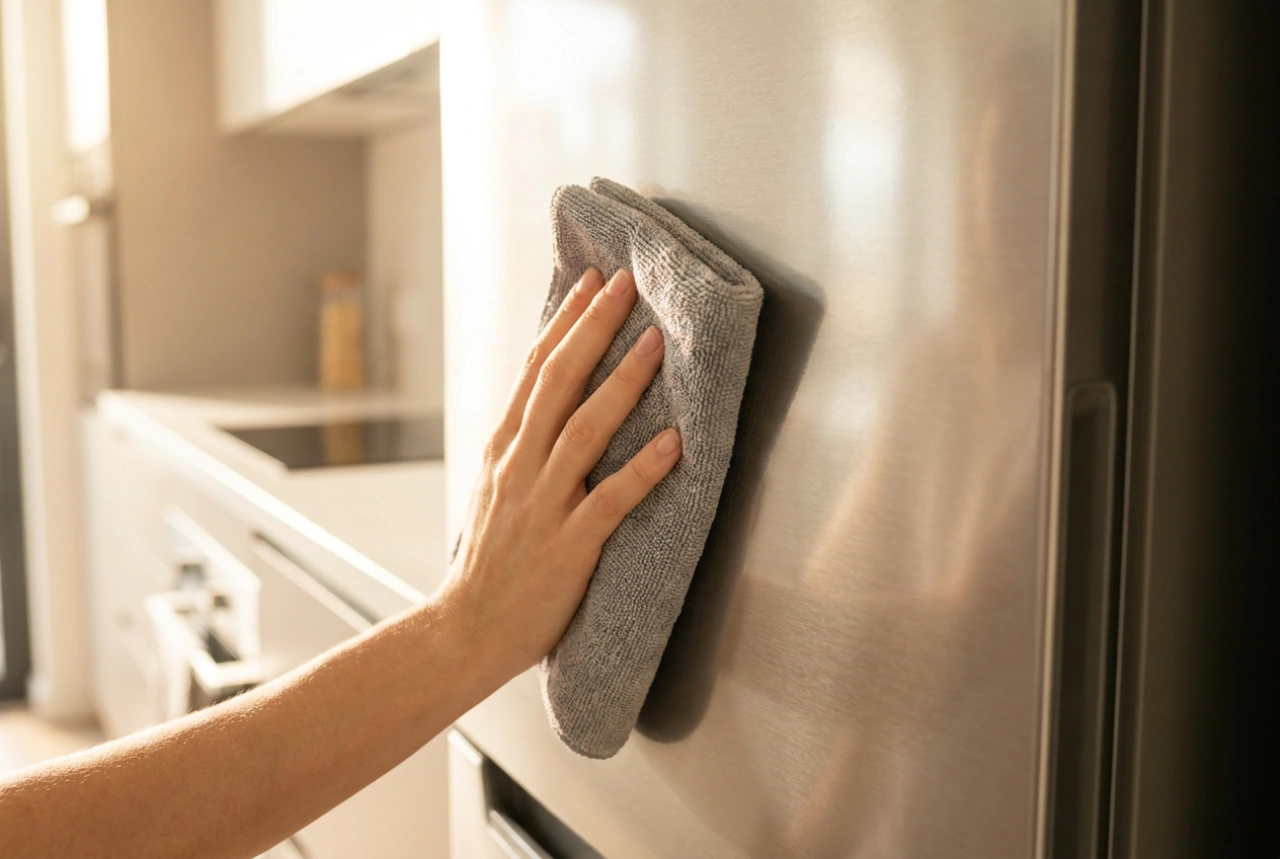
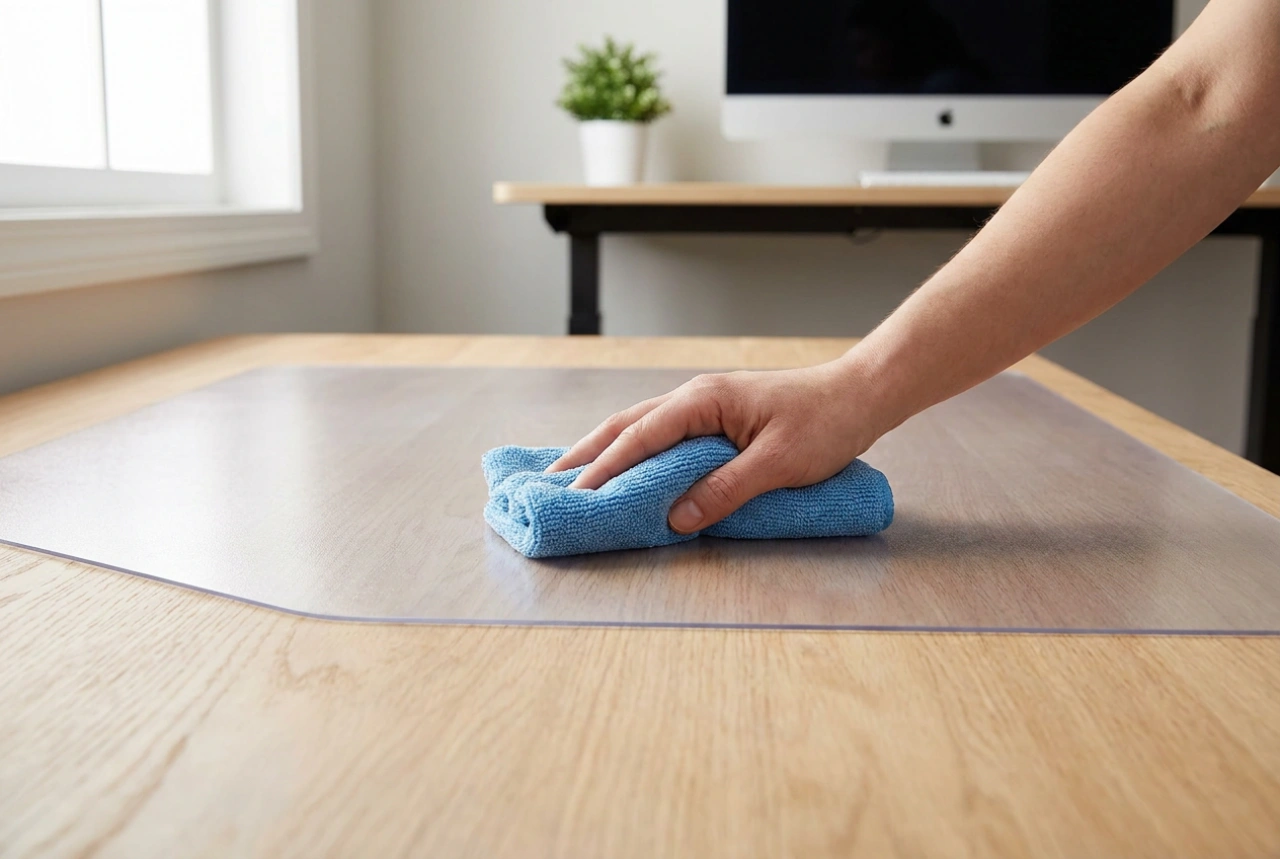
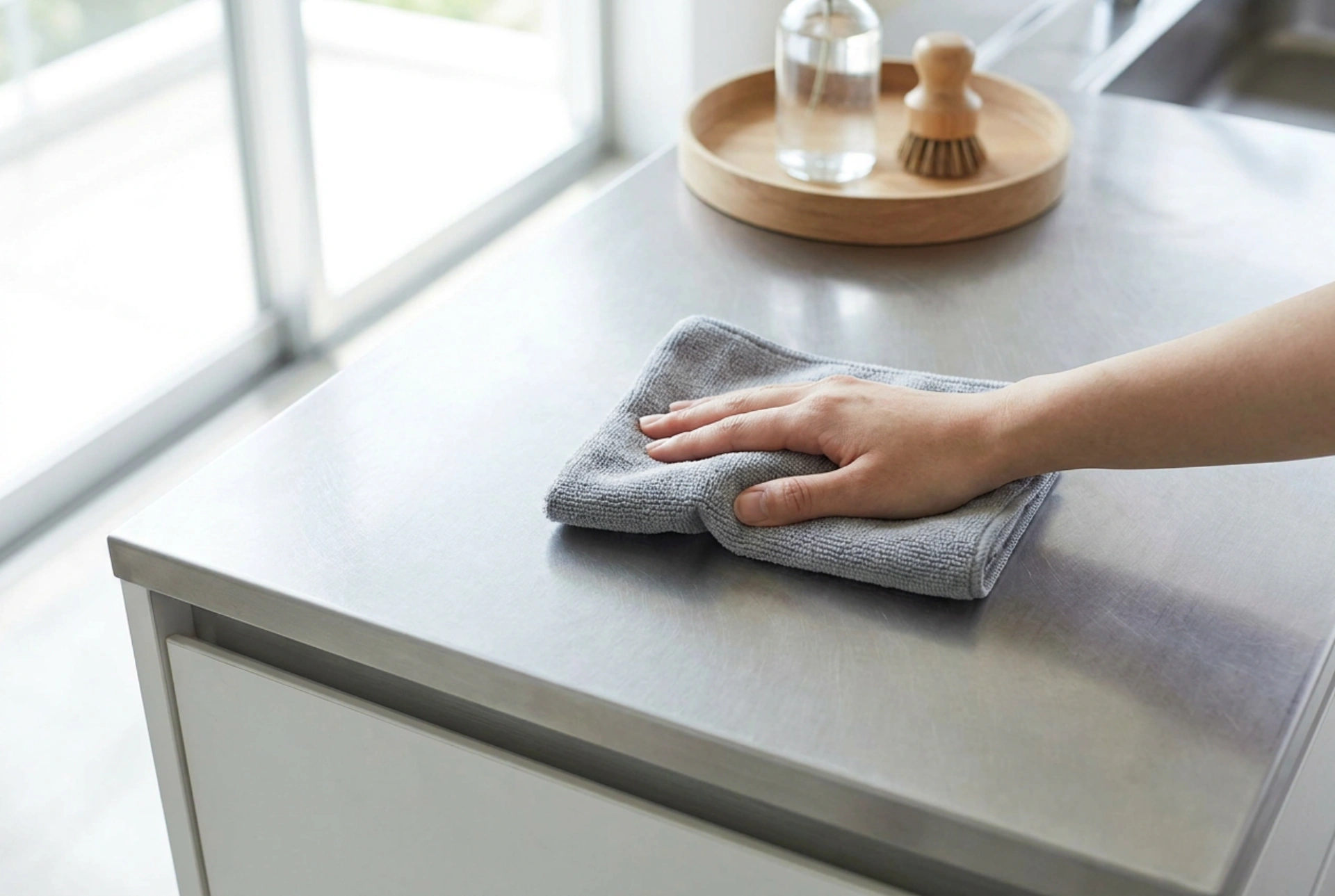
- Application: Apply your chosen mild surfactant or weak acid solution using a clean, high-density microfibre cloth. Microfibre has split polyester and polyamide fibres that trap soil particles within the fabric rather than dragging them across the metal.
- Wiping Motion: If the aluminium has a brushed grain, always wipe parallel to the grain lines. Wiping across the grain can force microscopic debris into the ridges, causing micro-scratches and dulling the finish.
- Rinsing: Flush the surface completely with clean, lukewarm water to remove all chemical residues. Residual surfactants or acids can attract dirt or slowly corrode the surface over time.
- Drying: Dry the surface immediately with a clean, dry microfibre cloth to prevent mineral deposits from reforming as droplets evaporate.
Restoring Dull Aluminium and Removing Stubborn Oxidation
When aluminium has already begun to oxidise, presenting a dull, chalky white residue, mechanical scrubbing is not the solution. Instead, utilise thermal energy and mild acidity to break down the oxide safely. A paste made of potassium bitartrate (cream of tartar) and warm water is highly effective. Potassium bitartrate is a mild, non-toxic acid that gently chelates metallic oxides. Apply the paste to the affected area, let it react for five to ten minutes, and gently wipe it away in circular motions using a soft sponge. The warmth of the water accelerates the chemical dissociation of the oxidation layer, allowing it to lift off without requiring hard physical scrubbing that would damage the underlying soft metal.