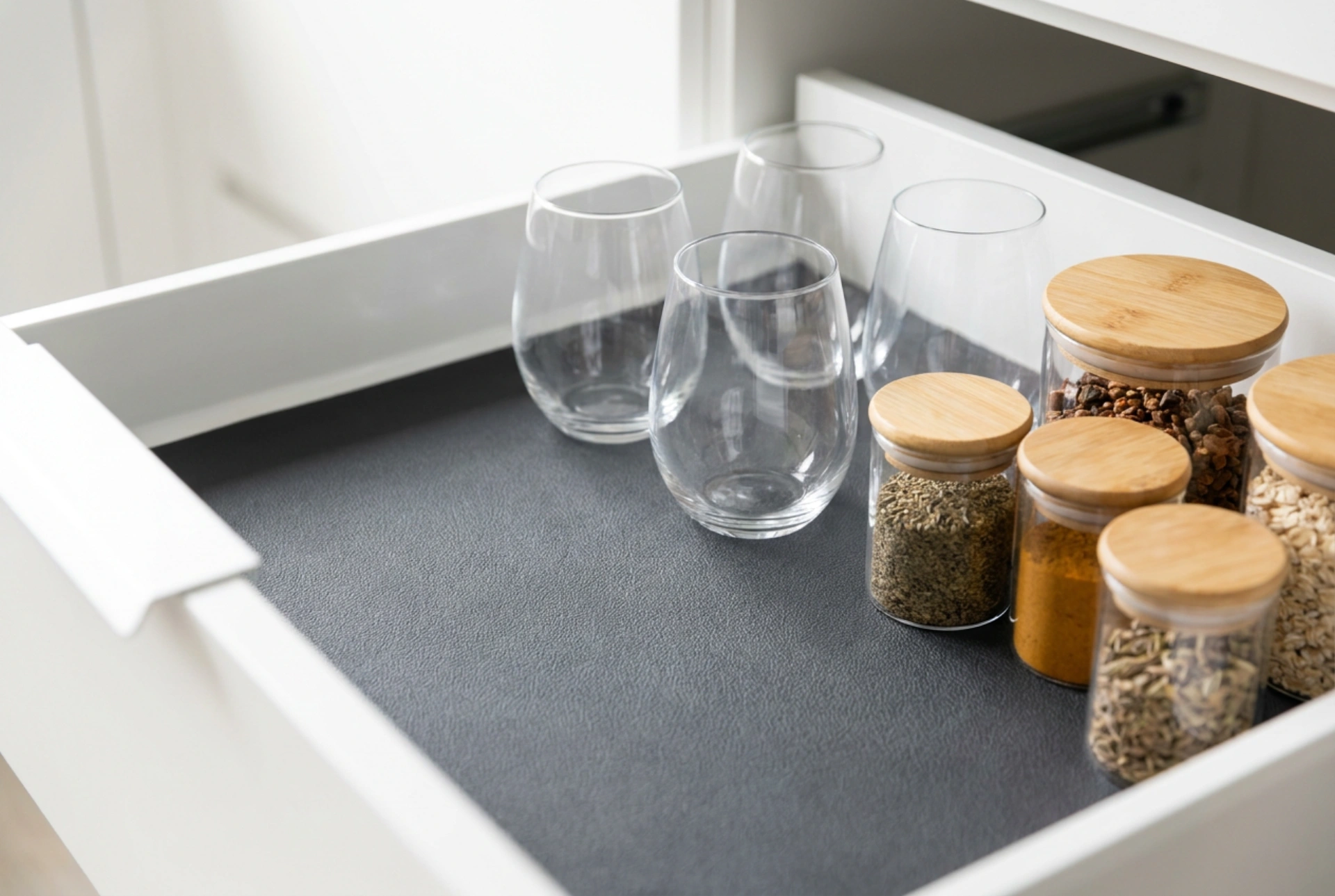


An unstable kitchen drawer is more than just an annoyance; every slide and sudden stop subjects delicate glassware to micro-impacts and causes dry food packaging to spill. Installing a high-quality anti-slip liner creates a high-friction barrier that absorbs kinetic energy and protects both your cabinetry and its contents.
The Physics of Friction: How Liners Prevent Movement
The primary function of an anti-slip liner lies in its coefficient of friction. When drawers are opened and closed, the force of acceleration transfers to the items inside. On bare wood, laminate, or painted surfaces, the low resistance allows objects to slide freely, leading to collisions. Modern elastomer and silicone liners provide a high-traction surface that grips both the bottom of the drawer and the bases of your containers, effectively neutralizing lateral forces.
Furthermore, these materials act as shock absorbers. The micro-textured surface of the liner compresses slightly under the weight of glassware, distributing the downward pressure evenly and dampening the vibrations that travel through the cabinetry during daily kitchen activity.
Protecting Glassware from Micro-Fractures
Glass is highly sensitive to point-impact stress. When stemware or tumblers slide into one another, they develop microscopic cracks that weaken the structure over time, eventually leading to spontaneous breakage in the dishwasher or during manual washing.
- Cushioning the base: A soft, textured liner prevents the rigid base of the glass from scraping against hard drawer bottoms, preserving the structural integrity of the glass.
- Maintaining spacing: By gripping the bottom of each glass, the liner ensures that even tall, top-heavy stemware remains exactly where you place it, eliminating the risk of tipping.
- Reducing noise: The dampening effect of the polymer material silences the clinking of glass and ceramics, creating a quieter, more premium kitchen environment.
Stabilizing Pantry Goods and Preventing Spills
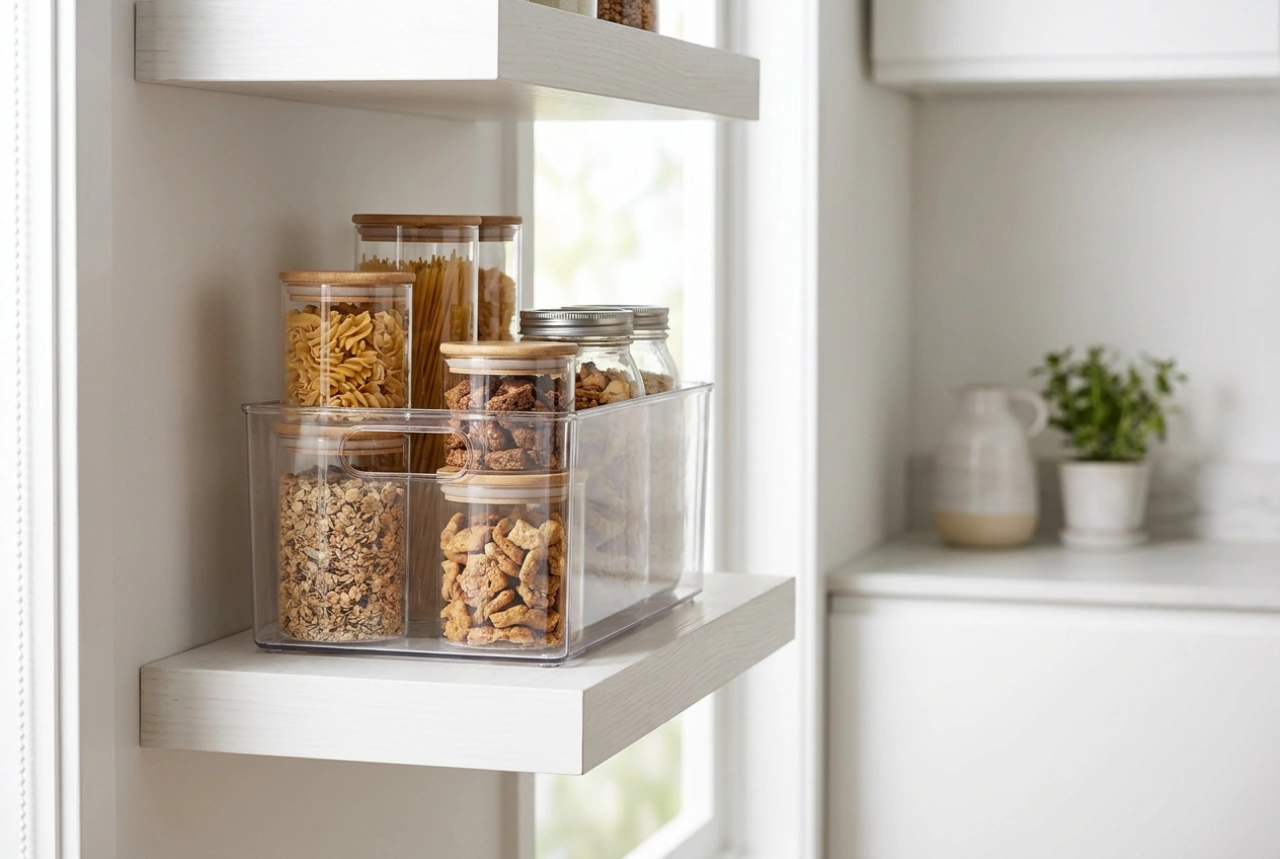
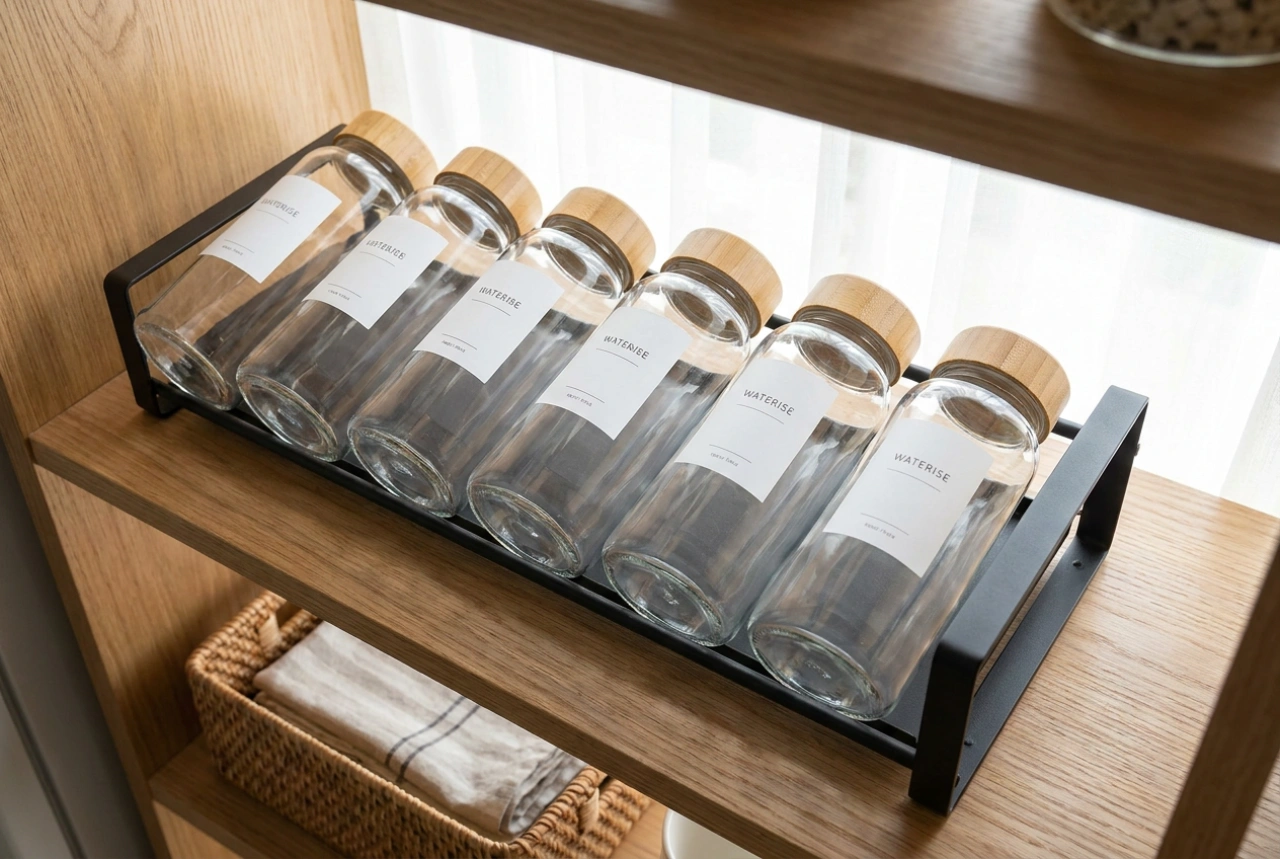
Pantry organization relies on stable positioning. Lightweight plastic containers and top-heavy spice jars are particularly prone to tipping over when deep drawers are pulled open. Installing a textured liner solves this by creating a reliable grip for various material types, including glass, metal, and polyethylene. This stability keeps dry goods upright, preventing messy spills of flour, grains, or liquid oils that can stain drawer interiors.
Material Science: Selecting and Maintaining the Right Liner
Not all cabinet liners are created equal. For kitchen applications, material composition is critical for long-term performance and hygiene. Ethylene-vinyl acetate (EVA) and high-quality silicone are the preferred choices because they are non-adhesive, food-safe, and highly resistant to moisture and oils.
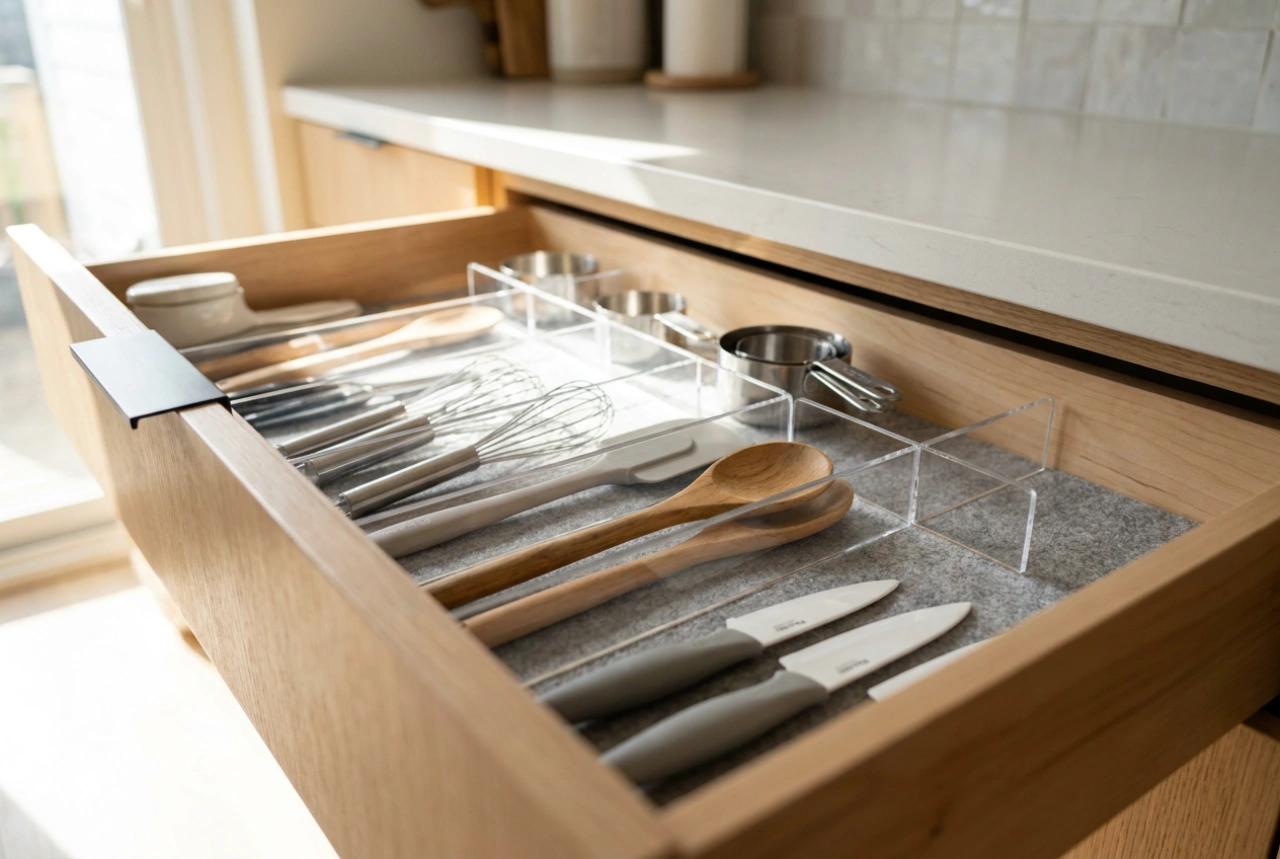
Unlike old-fashioned adhesive shelf paper, modern non-adhesive liners do not leave a sticky residue that damages wood finishes or attracts pests. They can be easily removed, washed with mild dish soap and warm water, air-dried, and reinserted. When cutting the liner to size, use a sharp utility knife and a straight edge to ensure a perfect edge-to-edge fit, which prevents the corners of the liner itself from curling up over time.