

Positioning plastic storage bins in the wrong environment can compromise both the structural integrity of the container and the preservation of its contents. Choosing the optimal location requires a basic understanding of polymer chemistry, thermal mechanics, and microclimates inside your home.
The Chemistry of Plastic: Heat and UV Vulnerabilities
Most household storage bins are manufactured from thermoplastics, specifically polypropylene (PP) or high-density polyethylene (HDPE). While durable and flexible, these polymers are highly susceptible to photo-degradation and thermal oxidation. When exposed to direct sunlight, ultraviolet (UV) radiation breaks the molecular bonds within the polymer chain, leading to embrittlement, discolouration, and cracking. Therefore, placing plastic bins on sunny window ledges or open outdoor balconies must be avoided.
Temperature fluctuations also play a critical role. High heat, such as that found in uninsulated attics during summer, can reach temperatures well above 40°C. At these temperatures, the polymer chains begin to relax, leading to warping under load. Conversely, extreme cold in unheated garages can make plastics brittle and prone to shattering under physical impact. For long-term stability, select environments where the temperature remains consistent, ideally between 15°C and 23°C.
Managing Microclimates and Condensation Risks
Plastic is non-porous, meaning it acts as an absolute barrier to moisture. While this makes plastic bins excellent for protecting contents from external liquid spills, it also risks trapping moisture inside. In unheated areas like basements or crawl spaces, ambient temperatures can drop rapidly. When warm, humid air inside a sealed bin cools, the temperature may fall below the dew point, causing moisture to condense on the inner walls. This trapped humidity creates a perfect breeding ground for mould and mildew.
To prevent this, follow a specific protocol: never pack items in humid conditions, and place your bins in areas with active air circulation. If storing in a basement is necessary, elevate the bins off concrete floors using wooden pallets or shelving. Concrete is porous and absorbs moisture from the ground, which then evaporates directly underneath the bin, creating a high-humidity microclimate that can damage the exterior and eventually seep into poorly sealed containers.
Physics of Load Distribution and Stacking Mechanics
Stacking plastic bins is a space-saving necessity, but improper stacking can lead to mechanical failure. Polypropylene bins deform under constant stress, a physical phenomenon known as creep. When weight is applied continuously over months, the plastic will slowly deform even if the load is well below the material's sudden breaking point.
- The Rule of Descending Weight: Always place the heaviest bins at the bottom of the stack to maintain a low centre of gravity and prevent the lower containers from buckling.
- Even Load Distribution: Ensure the upper bin sits securely on the reinforced rim of the lower bin. The weight must be transferred directly down the vertical walls of the container, which are designed to handle compressive force, rather than resting on the flexible centre of the lid.
- Shelf Alignment: When using shelving units, ensure the shelf surface is flat. Point-loading on uneven surfaces can cause localized stress concentrations, leading to stress-cracking over time.
An Actionable Protocol for Placing Bins
To maximize the lifespan of your storage bins, follow this systematic placement checklist:
1. Evaluate the Ambient Conditions
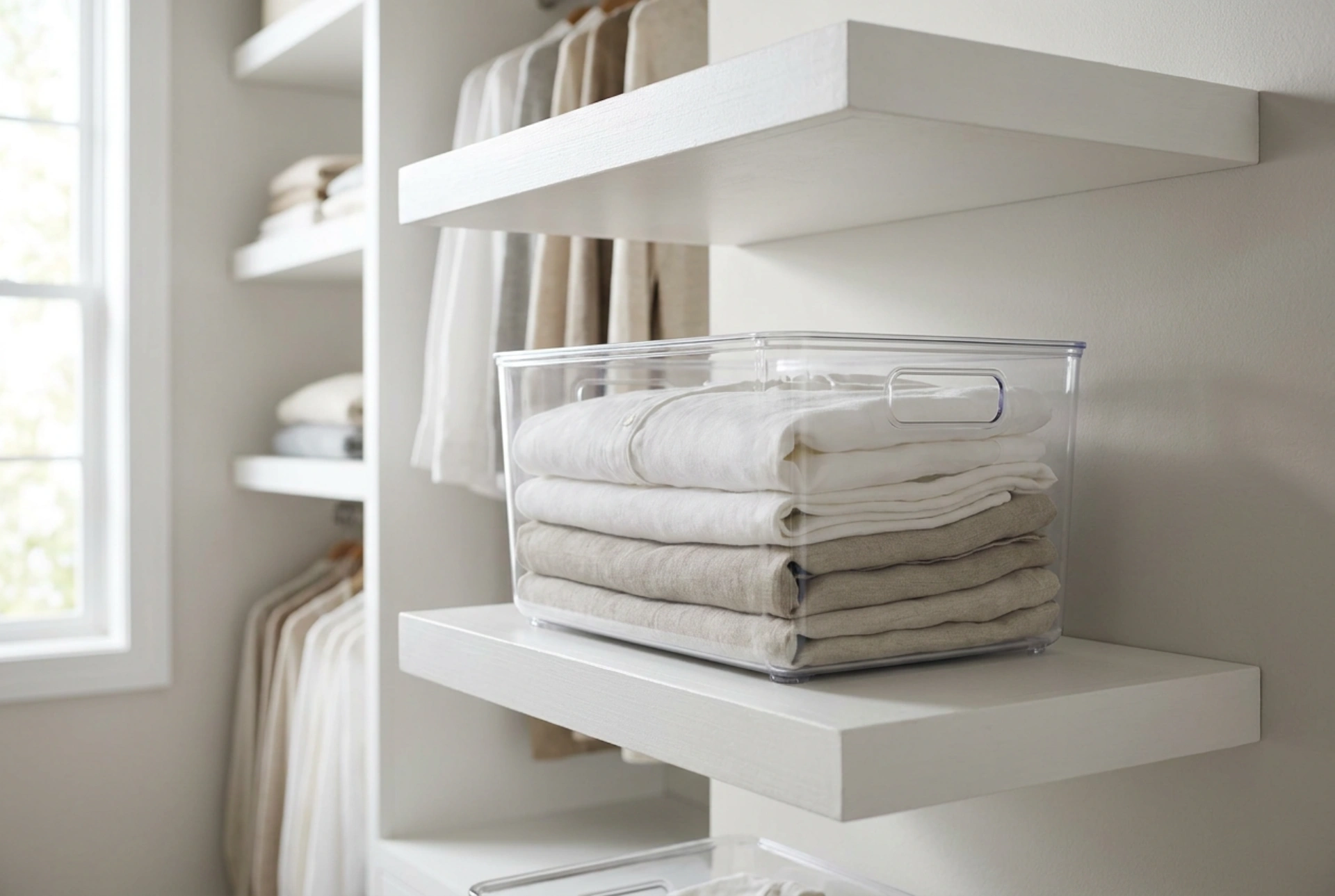
Ensure the chosen room maintains stable humidity (below 60%) and is shielded from direct sunlight. Internal wardrobes, dry utility closets, and temperature-controlled storage rooms are ideal.
2. Keep Away from Heat Sources
Maintain a minimum distance of one metre from radiators, boilers, and heating vents to avoid localized thermal degradation of the plastic.
3. Implement Air Gaps
Leave a gap of at least five centimetres between the back of the storage bin and the wall. This gap prevents stagnant air pockets from forming and allows ambient air circulation to regulate temperature and humidity naturally.