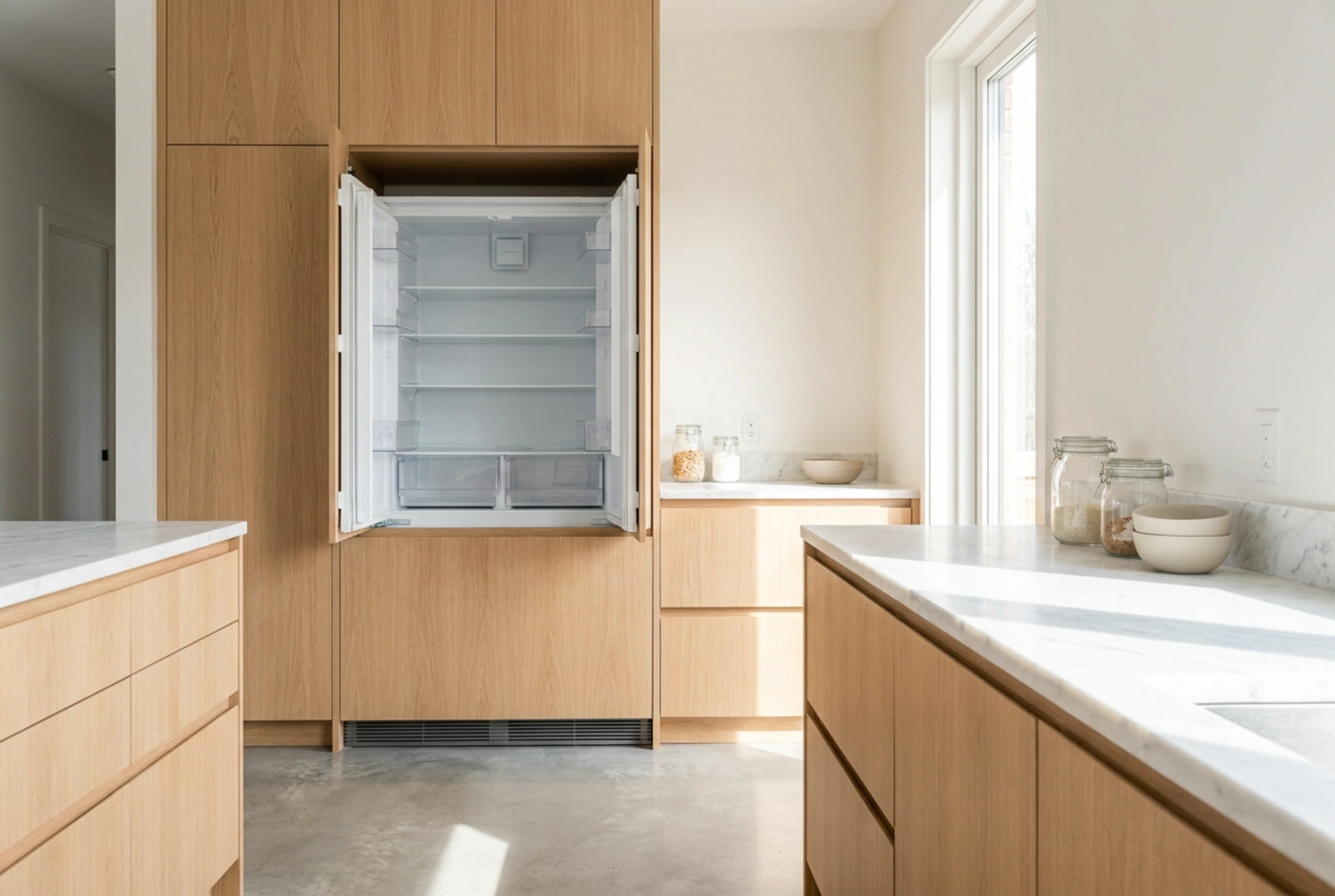


Choosing a built-in larder refrigerator without an integrated freezer compartment maximizes fresh food storage capacity and optimizes energy efficiency within modern kitchen layouts.
The Thermal Mechanics of Dedicated Cooling
Standard combination fridge-freezers rely on shared cooling loops or complex damper systems to distribute chilled air between two zones with vastly different temperature requirements. By eliminating the sub-zero freezing compartment, a dedicated larder refrigerator operates on a single, highly efficient thermodynamic cycle. The compressor and evaporator coil work solely to maintain a stable range between 2 and 8 degrees Celsius. This single-zone operation minimizes temperature fluctuations, reduces frost formation on the rear evaporator plate, and prevents the dehumidifying effect often caused by the intense cooling cycles of a shared freezer unit.
Evaluating Interior Volume and Airflow Dynamics
Without the physical barrier and insulation layer required for a freezer box, a built-in larder model offers significantly more usable space within the same external niche dimensions. When selecting a unit, look for internal layout configurations that facilitate natural thermodynamic convection. Cool air naturally sinks, while warmer air rises. High-quality larder models feature dynamic cooling systems, which use small internal fans to circulate air gently. This mechanical circulation prevents static microclimates, ensuring that food stored on the top door shelves remains at virtually the same temperature as items kept in the lower drawers.
Material Science of Shelving and Drawers
The choice of interior materials directly affects thermal retention and hygiene. Tempered safety glass shelves act as thermal mass; they absorb cold energy and help maintain the cabinet temperature when the door is opened. Look for shelves with solid plastic or metal retention trims to prevent liquid spills from cascading down to lower levels. Humidity-controlled drawers are essential for vegetable preservation. These compartments use physical sliders to adjust the ventilation openings. Closing the vents traps the moisture transpired by leafy greens, while opening them allows ethylene gas to escape, preventing delicate fruits from ripening too quickly.
Integration Requirements and Ventilation Physics
Successful installation of a built-in appliance depends entirely on proper airflow behind the unit. A refrigerator extracts heat from its interior and expels it via the condenser coils located at the back. Without a clear path for this hot air to escape, the appliance will overheat, leading to increased energy consumption and premature compressor failure. Ensure the kitchen cabinetry design includes a minimum ventilation intake of 200 square centimeters at the base plinth and a corresponding exhaust gap of the same size at the top of the cabinet column. Additionally, verify the cabinet door mounting system: sliding guide systems attach the wooden furniture front to the cabinet while allowing it to slide on rails during opening, whereas door-on-door systems fix the furniture panel directly to the appliance door for a wider opening angle and tighter seal.