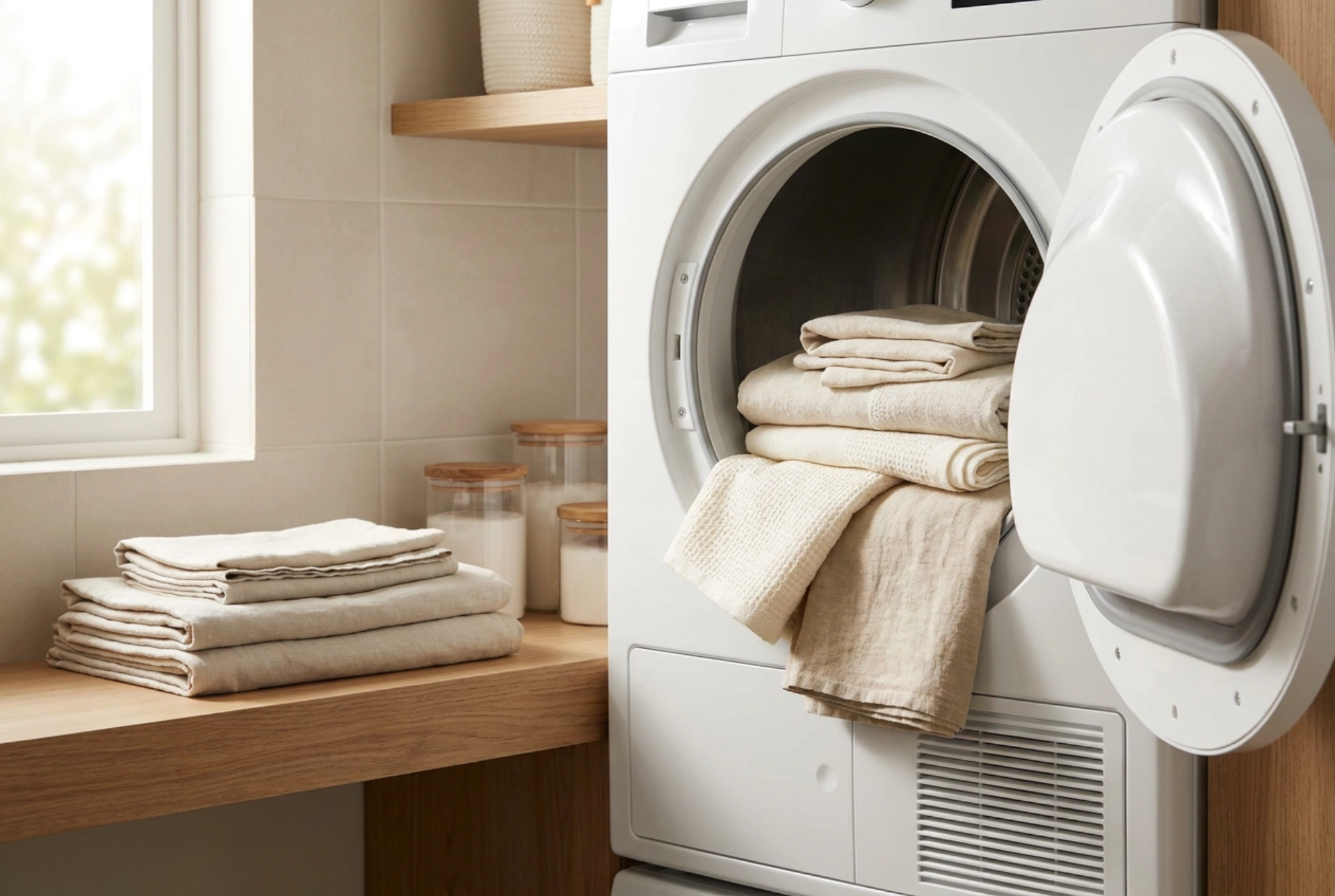


Condensation and heat pump dryers might look identical from the outside, but their internal thermodynamic processes differ significantly, impacting energy consumption, cycle times, and fabric longevity. Understanding how these systems manipulate temperature and moisture allows you to optimize your laundry routine and protect your textiles.
The Physics of Standard Condensation Drying
A conventional condenser dryer operates on a straightforward thermal cycle. The appliance draws in ambient air from the room, passes it over an electric heating element to raise its temperature, and forces this hot, dry air into the rotating drum. As the hot air circulates through the wet laundry, it accelerates the evaporation of water, absorbing moisture from the fibers. This highly humid air is then directed to a heat exchanger, often called the condenser.
Inside the condenser, the warm, moist air meets a stream of cooler ambient air drawn from the laundry room. This temperature differential causes the airborne moisture inside the dryer circuit to reach its dew point, condensing into liquid water droplets. The water either drains away or accumulates in a collection drawer, while the cooled, dry air is reheated by the heating element to start the cycle again. Because this system relies on a constant temperature differential between the hot internal air and the cooler room air, it continuously radiates heat into your living space, requiring adequate ventilation to prevent humidity buildup.
The Closed-Loop Thermodynamics of Heat Pump Technology
Heat pump dryers represent an evolutionary leap in household thermodynamics by utilizing a closed-loop refrigeration system. Instead of relying on an energy-intensive electric heating element to constantly generate new heat, a heat pump system recycles existing thermal energy. The system consists of a compressor, a condenser, an expansion valve, and an evaporator, through which a specialized refrigerant circulates.
The process begins when the damp air leaving the drum enters the evaporator. Here, the cold refrigerant absorbs heat from the air, causing the water vapor in the air to rapidly cool and condense out of the stream. Next, the dry, cool air is directed to the condenser. At this stage, the compressor compresses the gaseous refrigerant, raising its temperature significantly. This recycled heat is transferred directly back to the dry air stream before it re-enters the drum to absorb more moisture. By continuously recycling the heat within a sealed loop, heat pump dryers consume up to fifty percent less electrical energy than conventional condenser models.
Fabric Preservation Through Temperature Management
The choice between these two technologies has direct consequences on the molecular structure of your clothing. Standard condenser dryers operate at relatively high temperatures, often reaching 70°C or more. While this rapid heating speeds up evaporation, it also subjects delicate textile fibers to thermal stress. Natural fibers like wool, cotton, and silk can suffer from fiber degradation, shrinkage, and loss of elasticity when exposed to excessive heat, as the high temperatures disrupt the hydrogen bonds stabilizing the fiber structures.
In contrast, heat pump dryers operate at much lower, gentler temperatures, typically hovering around 50°C. This lower thermal threshold minimizes the risk of shrinkage and fabric wear, making it safe for a wider variety of textiles, including synthetics and woolens. Though the lower temperatures mean that heat pump cycles generally take longer to complete, the physical protection offered to your garments significantly extends their wearable lifespan.
Installation and Ambient Room Conditions
When planning your laundry space, the ambient environment plays a vital role in machine performance. Standard condenser units vent warm, slightly humid air, meaning they require a room with good air circulation to prevent condensation from forming on walls. Heat pump dryers are self-contained and emit minimal heat, making them suitable for enclosed spaces like closets. However, because they rely on a refrigerant cycle, they are sensitive to external temperatures and perform best in rooms maintained above 10°C.