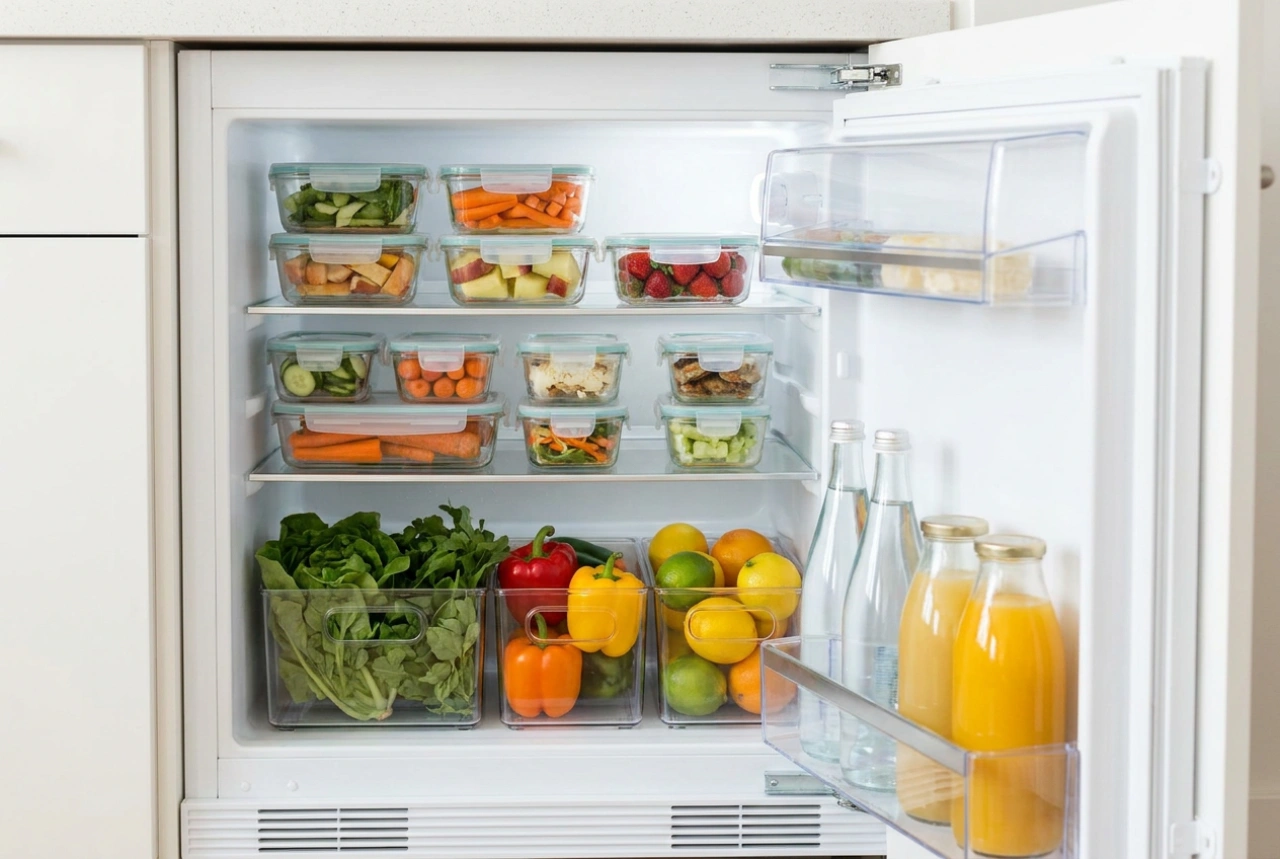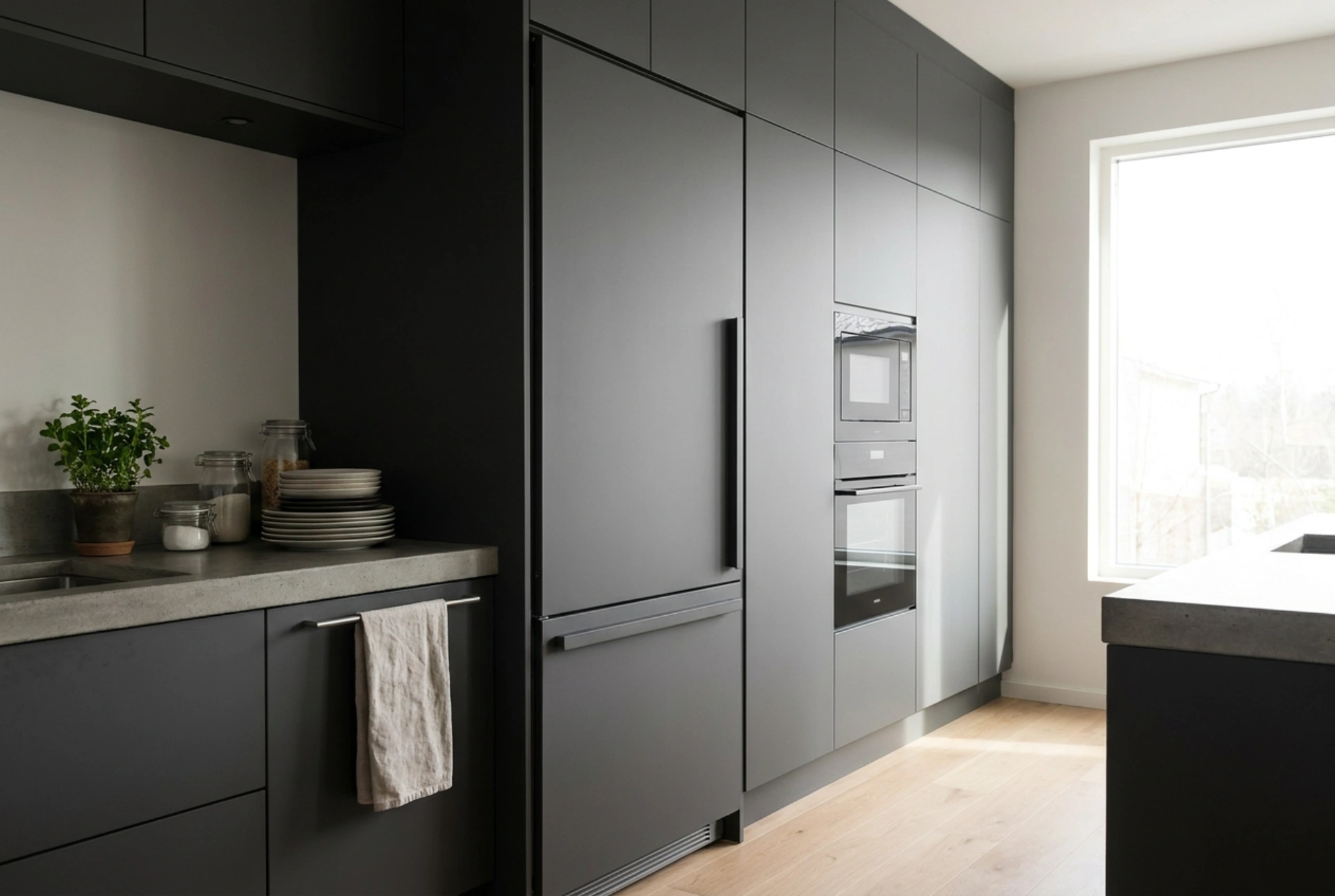


Integrating a tall built-in refrigerator requires balancing spatial ergonomics with thermodynamics to ensure efficient cooling and seamless aesthetic alignment. Proper planning prevents premature compressor wear and guarantees that your cabinetry doors operate smoothly without catching on adjacent panels.
The Thermodynamics of Built-In Cooling: Ensuring Airflow
Unlike freestanding appliances that dissipate heat through their exterior walls, a built-in refrigerator relies entirely on channeled convection to release thermal energy. As the compressor runs, it extracts heat from the interior and radiates it from the condenser coils at the rear of the unit. Without adequate ventilation, this heat accumulates, forcing the compressor to run continuously, which dramatically shortens the appliance's lifespan and increases energy consumption.
To establish a functional chimney effect, you must provide a clear path for air intake and exhaust. Cool air must enter through a ventilation grille in the cabinet plinth beneath the refrigerator, boasting a minimum cross-sectional area of 200 square centimetres. This air travels upward behind the appliance, absorbing heat from the condenser. It must then escape freely at the top of the housing unit through another grille or an open gap of at least 200 square centimetres. Restricting this path by even a few centimetres can raise the ambient temperature behind the appliance, reducing its thermodynamic efficiency.
Door Mechanics: Fixed vs. Sliding Hinge Systems
When integrating a tall refrigerator, the interface between the appliance door and the wooden cabinet front is a critical mechanical junction. There are two primary systems used to mount the furniture door, each affecting how you plan the surrounding clearances.
- Sliding Hinge System: The furniture door is mounted directly to the cabinet carcass using standard kitchen hinges, while the refrigerator door is connected to it via sliding runners. When opened, the furniture door slides along these runners. This system requires precise alignment and a small lateral gap to prevent binding.
- Fixed Hinge (Door-on-Door) System: The furniture door is mounted directly onto the refrigerator door, supported entirely by the heavy-duty hinges of the appliance itself. This system eliminates the need for cabinet-side hinges, allowing for a tighter fit and wider opening angles, often up to 115 degrees.
Regardless of the system, you must account for the door thickness and handle profile when positioning the refrigerator next to a wall. If the appliance is placed directly against a corner wall, the door must open past 90 degrees to allow internal vegetable drawers and glass shelves to be pulled out. Planning a filler panel of at least 50 to 80 millimetres between the cabinet carcass and the wall prevents the cabinet door from striking the wall and limiting access.
Structural Stability and Cabinet Alignment
A tall built-in refrigerator is a heavy structural component, especially when fully loaded with food. The housing cabinet must be constructed from high-density materials, such as moisture-resistant particleboard or medium-density fibreboard (MDF), with a thickness of at least 18 millimetres. The base shelf supporting the unit must be perfectly level and reinforced to prevent sagging over time, which would misalign the cabinet doors.
Securing the housing cabinet to the structural wall behind it is non-negotiable. The high centre of gravity of a tall integrated unit, combined with the pulling force exerted when opening magnetic door seals, creates a tipping hazard. Heavy-duty brackets should anchor the top of the cabinet to the masonry or wall studs to guarantee absolute stability.
Optimal Placement within the Kitchen Workflow
From an ergonomic standpoint, the refrigerator represents the starting point of the kitchen work triangle (Storage, Prep, Cooking). For maximum efficiency, position the tall cooling column at the edge of the kitchen layout rather than in the middle of a continuous worktop run. This prevents the tall cabinet from breaking up valuable preparation surfaces.
Additionally, thermal isolation is crucial. Avoid placing the refrigerator directly adjacent to heat-emitting appliances like ovens or hobs. If layout constraints force them to be side-by-side, ensure the cabinet partition features high-performance thermal insulation to prevent the heat of the oven from transferring through the cabinet wall and overloading the refrigerator's cooling system.