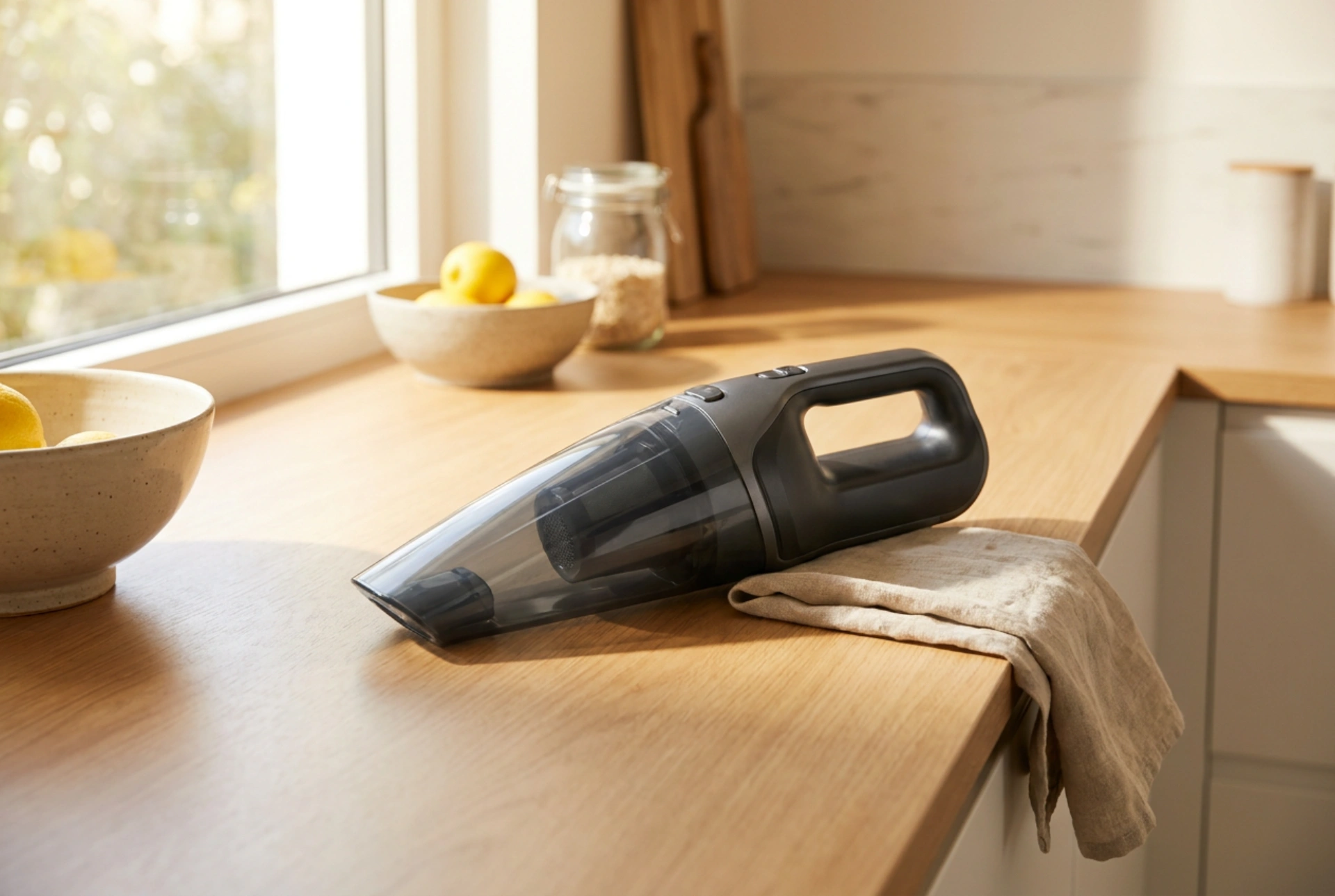


A compact handheld vacuum with high static pressure bridges the gap between daily spot cleaning and deep-cleaning maintenance, eliminating the need to deploy heavy, corded equipment for isolated tasks.
The Mechanics of High Suction: Why It Matters for Micro-Debris
To understand the utility of a high-suction handheld vacuum, it is essential to look at the physics of dust extraction. Standard portable units often rely on high airflow (measured in cubic feet per minute, or CFM) but lack static pressure (measured in pascals or millimeters of water lift). Static pressure is the force that overcomes resistance, pulling debris out of dense matrices like woven upholstery, carpet fibers, and narrow gaps.
When debris settles into a textile, mechanical interlocking and static electricity hold the particles in place. Low-suction devices merely glide over these fibers, leaving embedded dander, silica sand, and hair untouched. A high-suction motor creates a powerful pressure differential at the nozzle tip. This force breaks the physical adhesion between the dust particles and the textile fibers, lifting them into the airflow stream. This capability is especially critical for dense materials like wool, heavy denim, and automotive carpeting, where dirt particles nestle deep within the pile.
Targeted Cleaning Scenarios and Techniques
The efficiency of a high-power handheld vacuum is best demonstrated in specific, high-friction environments where traditional upright vacuums cannot maneuver effectively.
Deep Crevice Extraction
In household furniture, debris accumulates in structural seams, joint junctions, and underneath seat cushions. Standard nozzles lose pressure because they cannot seal against irregular surfaces. A narrow crevice tool paired with a high-suction motor concentrates the pressure differential into a microscopic area. By holding the crevice tool at a 45-degree angle to the seam, you create an optimal balance of airflow and seal, drawing out heavy sand grains, food crumbs, and dried organic matter from deep within the framework.
Upholstery and Fibrous Surfaces
Pet hair and lint do not just sit on fabrics; they weave into the threads. To extract them, you require a combination of mechanical agitation and high-pressure suction. Using a motorized mini-brush attachment or a rubber-toothed nozzle creates friction that pulls the hair free from the weave, while the high static pressure immediately pulls the released fibers into the collection bin before static electricity can re-attract them to the surface.
Matting and Textured Flooring
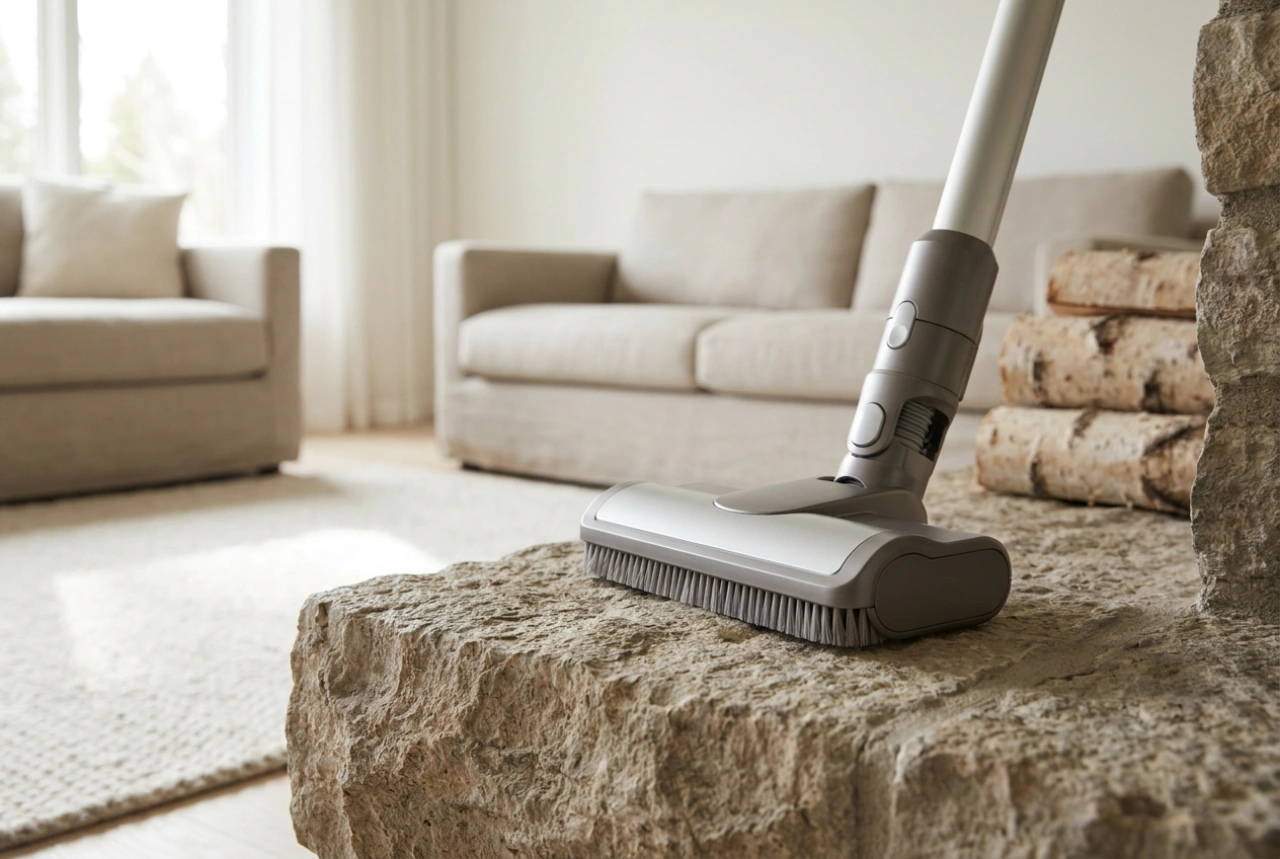
Door mats, car footwells, and textured stone thresholds feature deeply recessed grooves designed to trap grit. A weak vacuum cannot lift heavy silica particles from these recesses because the weight of the sand exceeds the carrying capacity of low-velocity air. A high-suction unit accelerates the air at the nozzle opening to a velocity sufficient to suspend and transport these denser mineral particles upward against gravity.
Optimizing the Vacuuming Motion and Angle
To maximize the efficiency of a handheld vacuum, physical technique must match the tool's specifications. Rapid, frantic sweeping motions reduce effectiveness. Instead, use slow, deliberate strokes. This allows the localized vacuum pocket to exist over a specific area long enough to overcome the inertia of settled dust.
- The Flush Seal: When vacuuming flat, non-porous surfaces, ensure the nozzle rim makes flat contact to maximize static pressure.
- The Airflow Gap: On dense, soft fabrics, tilt the nozzle slightly (about 15 degrees) to allow a controlled slipstream of air to enter. A total seal on soft fabric will choke the motor, reducing airflow to zero and halting debris transport.
- Top-Down Progression: Always work from the highest point of the furniture down to the floor, allowing any dislodged, uncaptured particles to settle onto surfaces you have yet to clean.
Maintaining Peak Suction Performance
A high-suction handheld vacuum relies on a delicate balance of motor power, battery output, and filtration efficiency. Over time, micro-dust clogs the pores of the internal filter, increasing resistance and dropping suction power. Regular maintenance is crucial to maintain physics-based performance.
Most modern high-power units utilize a multi-stage cyclonic separation system to spin heavy debris outward, protecting the fine filter. However, fine dust eventually reaches the HEPA or fabric barrier. Clean this filter according to manufacturer guidelines—typically by tapping out loose dust or washing it under cold water without detergents, ensuring it is completely dry before reinsertion. Additionally, keeping the battery charged prevents voltage drops, which directly correlate with motor RPM and suction consistency.