

Maximising the space inside a compact fridge-freezer requires a solid understanding of thermodynamics and airflow. Efficient storage is not merely about fitting items in, but about positioning them where temperature and humidity zones match their preservation needs.
The Physics of Temperature Zones and Convection
Every refrigerator relies on convection currents to distribute cold air. Because cold air is denser than warm air, it naturally sinks to the bottom of the cavity. Consequently, the lowest shelves, directly above the vegetable crisper, are the coldest zones of the fridge, typically resting at around 2°C. In contrast, the top shelf is the warmest, maintaining a temperature of approximately 5°C to 8°C. The door shelves experience the most significant temperature fluctuations due to frequent opening, making them a volatile microclimate.
Understanding these zones is crucial for food safety. High-risk items, such as raw poultry, meat, and fish, must always be placed on the lowest shelf. This positioning serves two scientific purposes: it subjects the raw proteins to the coldest available temperature, slowing bacterial reproduction, and it eliminates the risk of gravity-driven cross-contamination from dripping juices. Dairy products, eggs, and cooked leftovers belong on the middle shelves, where temperatures are stable and moderate.
The Humidity Factor: Managing the Crisper Drawers
Crisper drawers are designed to manage moisture levels, which is vital for preserving plant tissues. Fruits and vegetables have different physiological needs after harvest. Many fruits, such as apples, pears, and tomatoes, release ethylene gas, a natural plant hormone that accelerates ripening and decay. Vegetables, particularly leafy greens, require high humidity to prevent transpiration—the process where water evaporates from plant cells, causing wilting.
In a small fridge, use the crisper drawer specifically for high-humidity items like leafy greens, broccoli, and carrots, keeping them enclosed to retain their cellular moisture. Keep ethylene-producing fruits separate on a shelf if your drawer lacks a dual humidity control slider. Do not wash produce before storing it; excess surface water promotes fungal growth and bacterial rot by creating a moist microclimate on the skin of the produce.
Container Geometry and Airflow Optimization
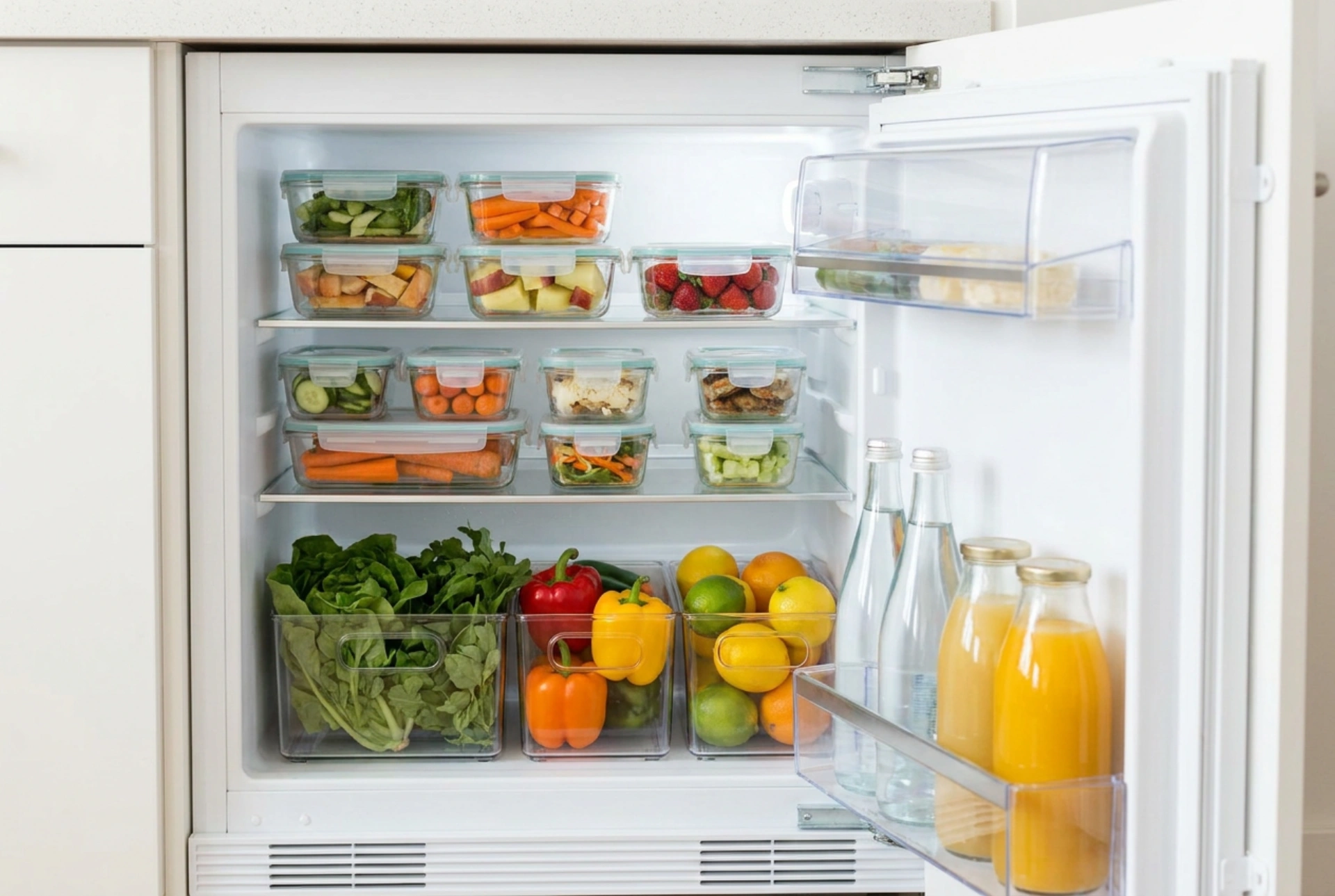
The physical shape of your storage containers directly dictates both space efficiency and the thermodynamic performance of your refrigerator. Round containers are highly inefficient in small spaces, creating empty, unusable gaps at their corners. Opt for square or rectangular borosilicate glass containers. These can be stacked neatly, utilizing vertical space while maximizing horizontal contact.
However, overpacking is the primary enemy of a small fridge. When a refrigerator is packed to 100% capacity, the internal air vents become blocked. This halts the convection currents, causing the compressor to run continuously, which can freeze items near the cooling element while leaving items at the front too warm. Always maintain a minimum of two to three centimetres of clear space between items and away from the back wall to allow cold air to circulate freely around every container.
Maximizing the Compact Freezer Compartment
Small freezer compartments easily become chaotic piles where food is lost to freezer burn. To prevent this, transition from horizontal stacking to vertical filing. When freezing liquids, soups, or chopped vegetables, use reusable silicone bags. Lay them completely flat on a baking sheet to freeze. Once solid, file them vertically like books in a library. This technique increases storage density by up to forty percent and ensures every item is visible at a glance, minimizing the time the freezer door remains open.