

Maintaining a home air conditioning system is essential for preserving indoor air quality, ensuring optimal thermal heat exchange, and preventing the growth of harmful microbial pathogens.
The Physics and Biology of Air Conditioning Systems
An air conditioner operates by drawing warm indoor air over a cold evaporator coil containing refrigerant. As the air cools, its relative humidity rises until it reaches the dew point, causing moisture to condense onto the coil surfaces. This damp environment, combined with household dust particles that bypass basic filtration, creates a fertile breeding ground for mold spores, bacteria, and fungi. Without regular cleaning, the accumulation of organic matter acts as an insulating barrier on the heat exchanger. This reduces thermal efficiency, forces the compressor to run longer cycles, and circulates airborne allergens throughout the living space.
Cleaning the Mechanical Components
Before performing any maintenance, disconnect the electrical power supply to the air conditioning unit at the main circuit breaker. To access the internal components, gently release the plastic clips securing the front cover panel of the indoor unit. Once open, remove the primary dust filters. Underneath these filters lies the evaporator coil, characterized by fragile, closely spaced aluminum fins. Use a soft-bristled brush or a vacuum cleaner fitted with a brush attachment to remove loose dust, moving strictly in the vertical direction of the fins to prevent bending them. To sanitize the coil and neutralize biological growth, apply a specialized, non-rinse chemical foam cleaner formulated for HVAC systems. This foam penetrates the fins, dissolves organic buildup, and liquefies, draining naturally through the condensation line. For the external condensing unit, use a low-pressure garden hose to wash away outdoor debris, pollen, and leaves from the metal housing.
The Condensation Drainage Line
Stagnant water in the condensate pan can lead to blockages caused by algae buildup, resulting in water damage to walls. Locate the drip tray beneath the evaporator coil and pour a solution of warm water mixed with a small amount of active oxygen bleach down the drain hole. This solution oxidizes biological matter without damaging plastic pipes. Avoid using highly corrosive chlorine-based products, which can degrade the synthetic components and metallic fittings over time.
Understanding Filter Lifespans and Replacement Cycles
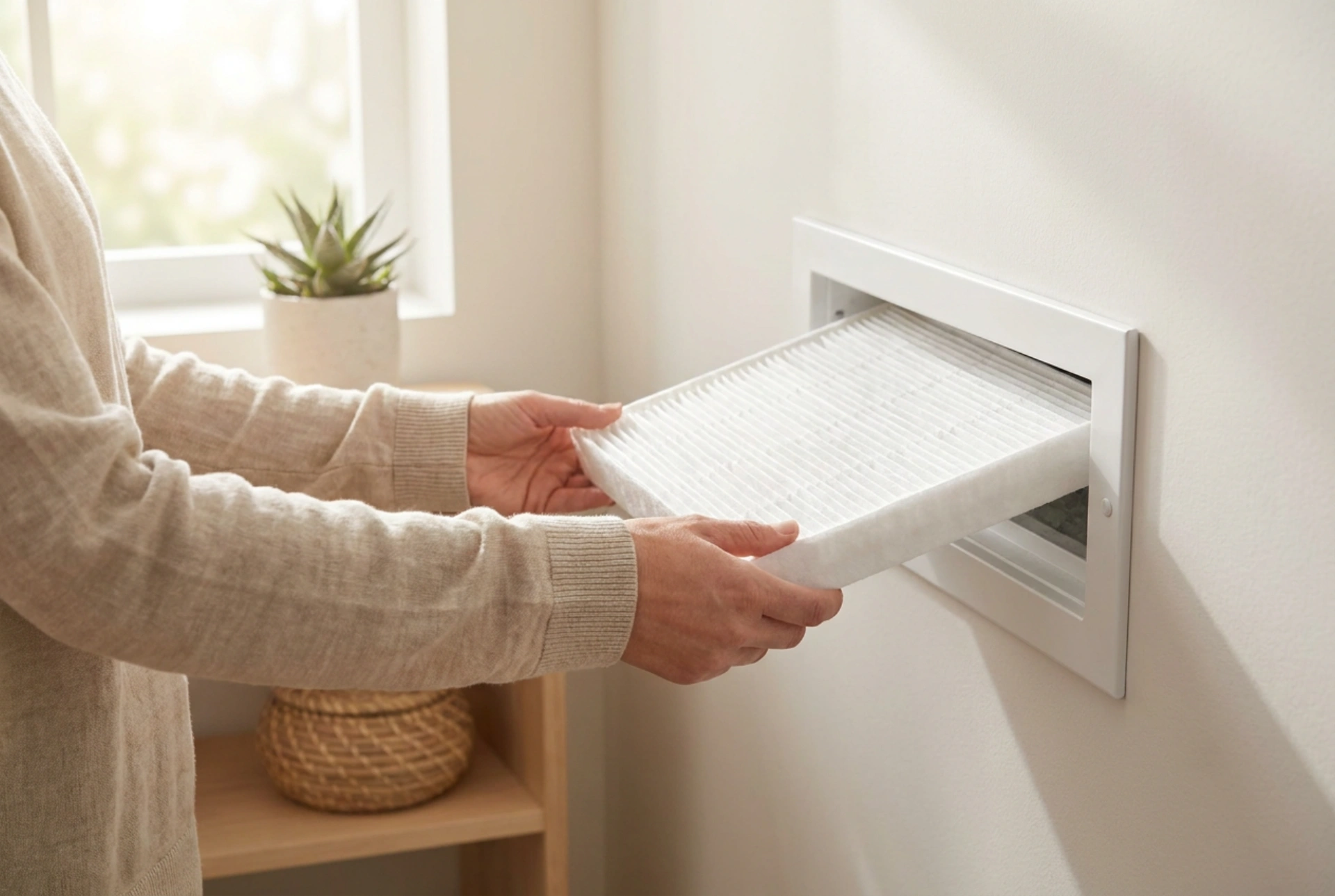
Air conditioning filters are categorized by their efficiency in trapping airborne particulates. Standard nylon mesh filters act as primary barriers against large dust fibers and must be washed in lukewarm water and dried completely every 30 days. However, advanced filtration layers, such as high-efficiency particulate air or activated carbon inserts, cannot be washed as moisture destroys their electrostatic properties and porous structures. These secondary filters must be replaced entirely. In standard household environments, replace these filters every 3 to 6 months. In homes with pets, high outdoor pollen levels, or residents suffering from respiratory conditions, shorten this replacement cycle to every 6 to 8 weeks to maintain unrestricted airflow and optimal purification performance.