

Optimizing a small wardrobe for children's clothing requires understanding how hanger design, material friction, and vertical spacing interact with miniature garment proportions.
Understanding the Physics of Hanger Span and Garment Distortion
Using adult-sized hangers for children's clothing stretches the shoulder seams, leading to permanent fabric deformation known as shoulder bumps. Conversely, hangers that are too small allow garments to slip off easily, creating clutter at the bottom of the wardrobe. For toddlers and young children, the ideal hanger width ranges from 28 to 30 centimeters. As children reach school age (around six to eight years old), their clothing requires a transition to hangers measuring 32 to 35 centimeters. Matching the hanger span precisely to the shoulder-to-shoulder measurement of the garments prevents unnecessary fabric tension and maintains the structural integrity of knitwear and cotton shirts.
Material Science: Friction vs. Usability
The material of the hanger directly influences how efficiently a small wardrobe operates, balancing the ease of sliding garments on and off with the grip required to keep them in place:
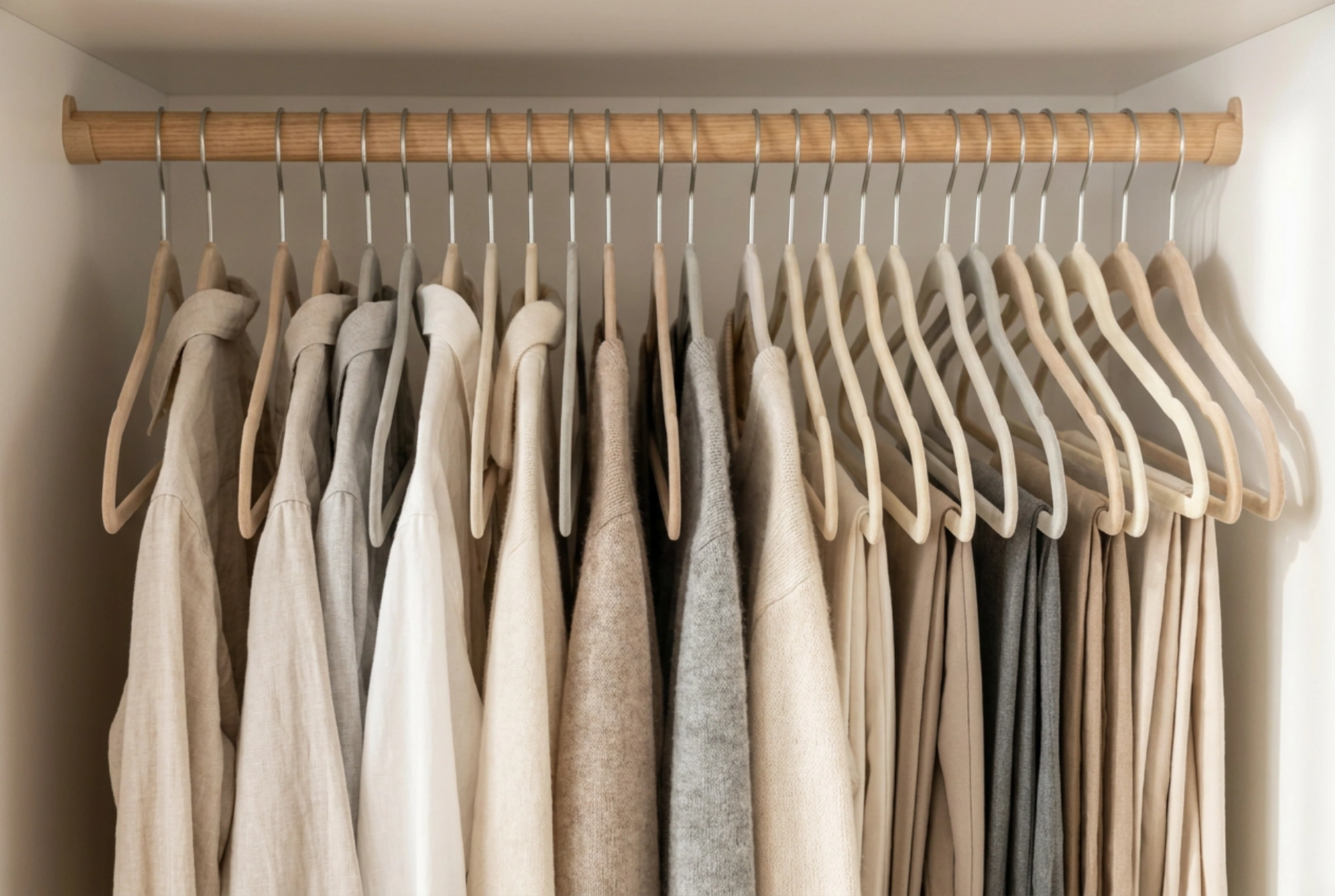
- Velvet and Flocked Hangers: These offer the highest coefficient of static friction. The micro-textures of the flocked surface grip lightweight fabrics, preventing wide-neck tops, silk dresses, and slippery synthetic materials from falling off. They are also exceptionally slim (often only 5 millimeters thick), allowing you to pack more garments into a tight horizontal rod space.
- Smooth Plastic Hangers: With a low coefficient of friction, these allow quick, effortless removal of everyday cotton t-shirts. However, they require molded shoulder notches or rubberized grip inserts to secure strap-based garments. They are thicker than velvet options, meaning they occupy more linear rod space.
- Untreated or Lacquered Wood: While structurally rigid and aesthetically pleasing, wooden hangers are thick (often 10 to 15 millimeters) and heavy. In a small wardrobe, they consume valuable horizontal space and can overload lightweight wardrobe rods. Save these exclusively for heavy outerwear like winter coats.
Vertical Optimization Techniques for Tight Spaces
When horizontal rod space is severely limited, the solution lies in exploiting vertical depth. Utilizing cascading or modular hangers allows you to suspend multiple garments from a single point on the wardrobe rod. Standard hangers can be retrofitted with connector hooks, or you can opt for built-in tiered hangers. This technique is highly effective for children's clothing because the short length of kids' tops and trousers leaves significant empty space between the bottom of the hanging garment and the wardrobe floor. By cascading three to four hangers vertically, you multiply the storage capacity of a single linear centimeter of rod space without causing clothes to drag on the bottom shelf.
Preventing Creases: Bar and Clip Mechanics
Hanging trousers, skirts, and matching sets presents unique challenges in small spaces. Standard hangers with a simple horizontal bar can cause trousers to slide and bunch, leading to deep creases. Look for hangers featuring a felted or rubber-coated trouser bar, which increases friction and prevents sliding. For skirts and delicate waistbands, adjustable metal clips lined with protective vinyl pads are essential. The vinyl lining prevents the metal from pinching and leaving permanent indentations on soft cotton or wool fabrics. Always position the clips at the outermost edges of the waistband to distribute the weight evenly and prevent sagging.