

Managing a household's footwear collection requires more than just storage space; it demands a systematic approach based on material properties, airflow dynamics, and ergonomics.
Understanding the Physics of Shoe Storage
Footwear accumulates moisture and organic residues during wear. Storing shoes in an enclosed space without adequate ventilation promotes the growth of bacteria and fungi, leading to unpleasant odours and material degradation. When planning a large family shoe cabinet, airflow is the primary technical consideration. Louvred doors, perforated back panels, or active mesh shelves ensure continuous air circulation, allowing damp materials to dry naturally. Additionally, gravity-fed air movement helps dissipate volatile compounds, keeping the cabinet environment fresh.
Material Science: Selecting the Right Shelving
The materials inside your cabinet dictate its durability and hygiene levels. Leather, canvas, and synthetic polymers react differently to their environment. For shelves, non-porous materials are highly recommended. Melamine-faced particleboard or powder-coated metal shelves resist moisture absorption and are easy to sanitise. If using natural wood, it must be sealed with a polyurethane or polyurethane-acrylic hybrid varnish to prevent water ingress from wet soles. Slanted wire shelves offer excellent ventilation and allow dirt to fall through to a cleanable tray at the bottom, protecting the footwear stored below.
Ergonomics and Spatial Zoning
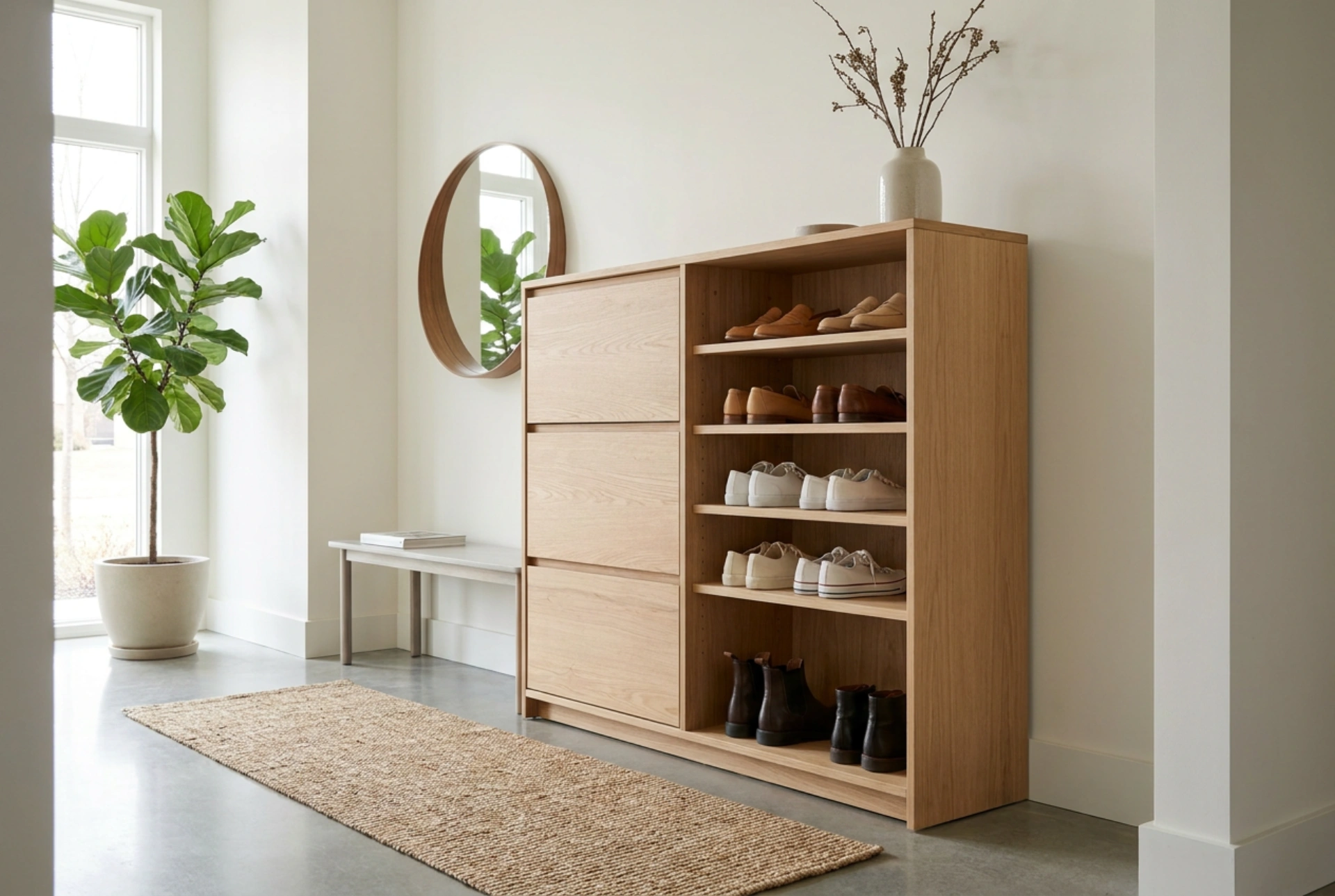
An efficient family shoe system relies on height zoning based on usage frequency and physical ergonomics. The human body naturally interacts with storage at different comfort levels:
- The Active Zone (Chest to Waist Height): This area is reserved for daily-wear shoes. Placing them here minimises bending and reaching, streamlining the morning routine.
- The Low Zone (Below Waist to Floor): Ideal for heavy boots, outdoor footwear, and children's shoes. Children can easily access and return their shoes without assistance.
- The High Zone (Above Shoulder Height): Reserved for seasonal footwear, formal shoes, or items awaiting repair. These should be stored in breathable, transparent containers to prevent dust accumulation while remaining visible.
Maintenance, Care, and Odour Prevention
Preventative care is essential to maintain both the cabinet and the footwear. Before placing any shoes into a shared cabinet, they must undergo a basic decontamination process. Mud and debris should be brushed off once dry using a stiff-bristled brush. Wet shoes must never be placed directly into an enclosed cabinet; they require at least twelve hours in a well-ventilated, open area to dry. To manage humidity and odour inside the cabinet, utilise natural desiccant bags filled with activated charcoal or silica gel. These materials physically adsorb moisture molecules and volatile organic compounds from the air, preventing cross-contamination between different pairs of shoes.
Seasonal Rotation Strategy
A family cabinet can easily become overloaded if seasonal items are not managed. Twice a year, perform a systematic rotation. Clean winter boots thoroughly, condition leather surfaces with beeswax or lanolin-based creams to prevent cracking, and insert cedar shoe trees to maintain their shape. Store them in the high zone or a separate archive space. This frees up the prime active zones for lightweight summer footwear, ensuring the system remains functional and uncluttered year-round.