

An efficient hallway layout minimizes physical steps and cognitive load, streamlining your transition from the indoor environment to the outside world.
The Physics of Flow: The Sequence of Movement
To optimize your entryway, you must design it around the natural physical sequence of arriving and departing. When leaving the house, the body moves through a specific order of operations: retrieving socks or footwear, putting on shoes, grabbing outerwear, and finally collecting keys, wallets, and bags. A poorly arranged cabinet forces you to backtrack, crossing your own path and wasting time.
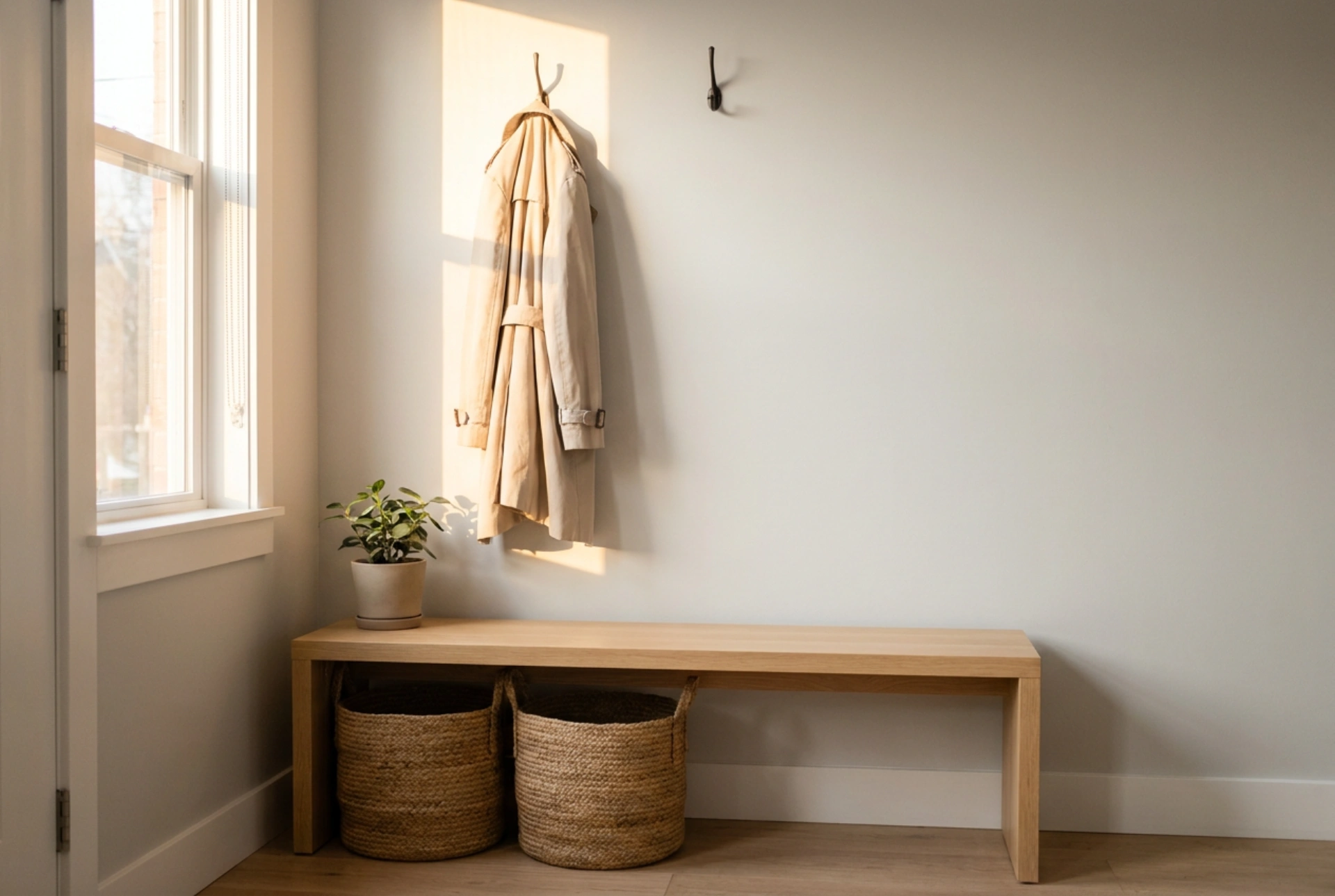
Position your shoe storage closest to the seating area. If you must sit to tie your shoes, the seating surface should be directly adjacent to or integrated on top of the shoe rack. Outerwear should hang immediately after the shoe zone in the direction of the exit door. Placing the coat rack before the shoe zone forces you to balance awkwardly on one foot while holding a heavy coat, or to walk across clean floors in outdoor footwear.
The Ergonomics of Storage Levels
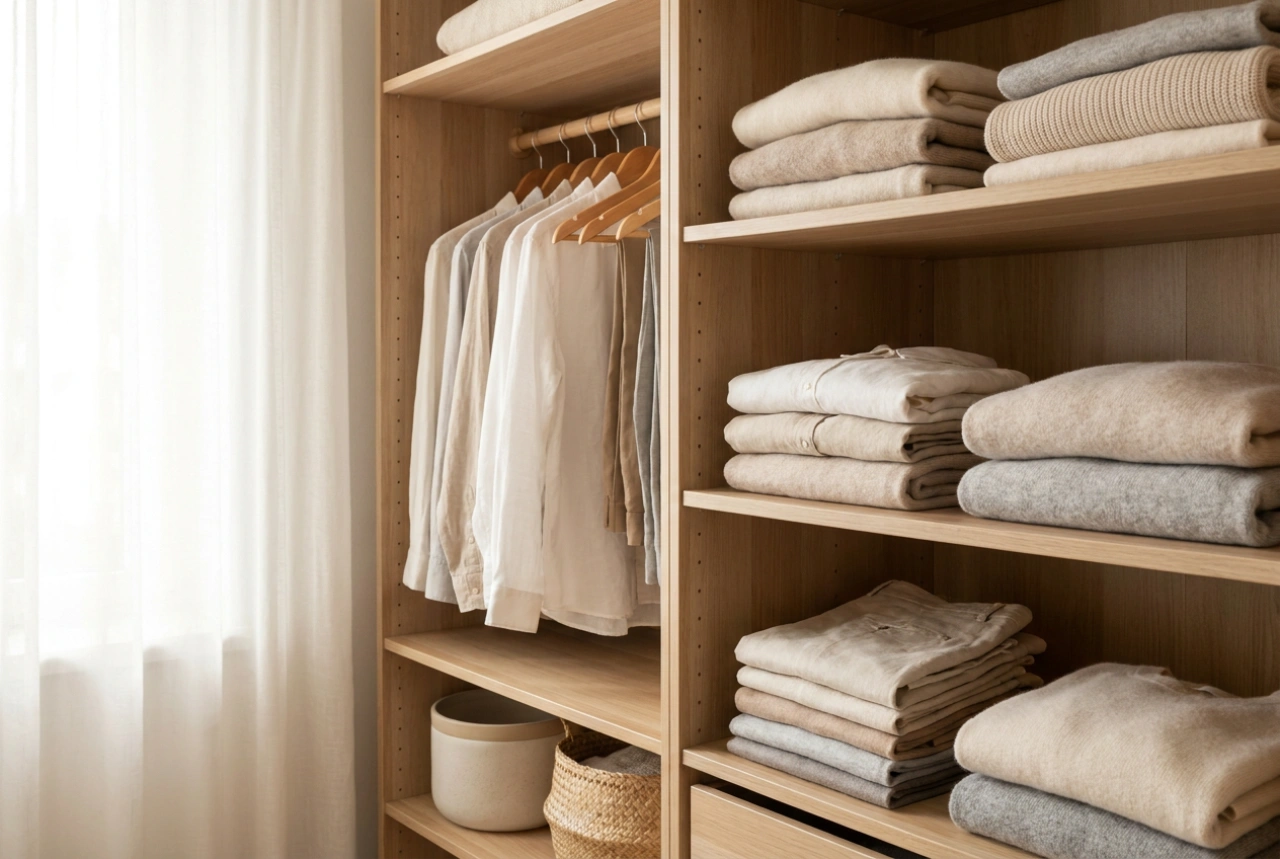
Human ergonomics dictates that items used daily should reside within the 'comfort zone'—the area between your hips and shoulders. Applying this to your hallway storage prevents unnecessary bending and stretching during busy mornings.
- The Active Zone (Chest to Eye Level): Reserved exclusively for the current day's coat, keys, and primary bag. These items must be visible and accessible without opening doors or sliding drawers.
- The Mid-Low Zone (Knee to Hip Level): Ideal for daily footwear. Storing shoes on slightly angled shelves or pull-out trays within this height range prevents the need to crouch fully to the floor.
- The Low Zone (Floor to Knee Level): Best for seasonal, less-frequently worn shoes, or heavy boots that require more structural support.
- The High Zone (Above Eye Level): Out-of-season garments, hats, and scarves stored in labeled, breathable containers. Keeping these out of sight reduces visual clutter, which directly lowers morning decision fatigue.
Thermal Dynamics and Footwear Care
An often overlooked aspect of hallway organization is how temperature and moisture affect materials. Damp shoes and coats brought in from rain or snow require proper air circulation to dry. Storing wet shoes immediately inside a sealed wooden cabinet traps moisture, leading to material degradation and bacterial growth that causes odors.
Ensure your shoe cabinet features slatted doors or open wire mesh shelves to promote continuous airflow. When arranging shoes, leave a gap of at least two centimeters between each pair. This spacing utilizes natural convection—warm indoor air rises, pulling cooler air through the damp shoes, accelerating the drying process overnight so they are ready for the morning.
The 'One-Touch' Rule for Accessories
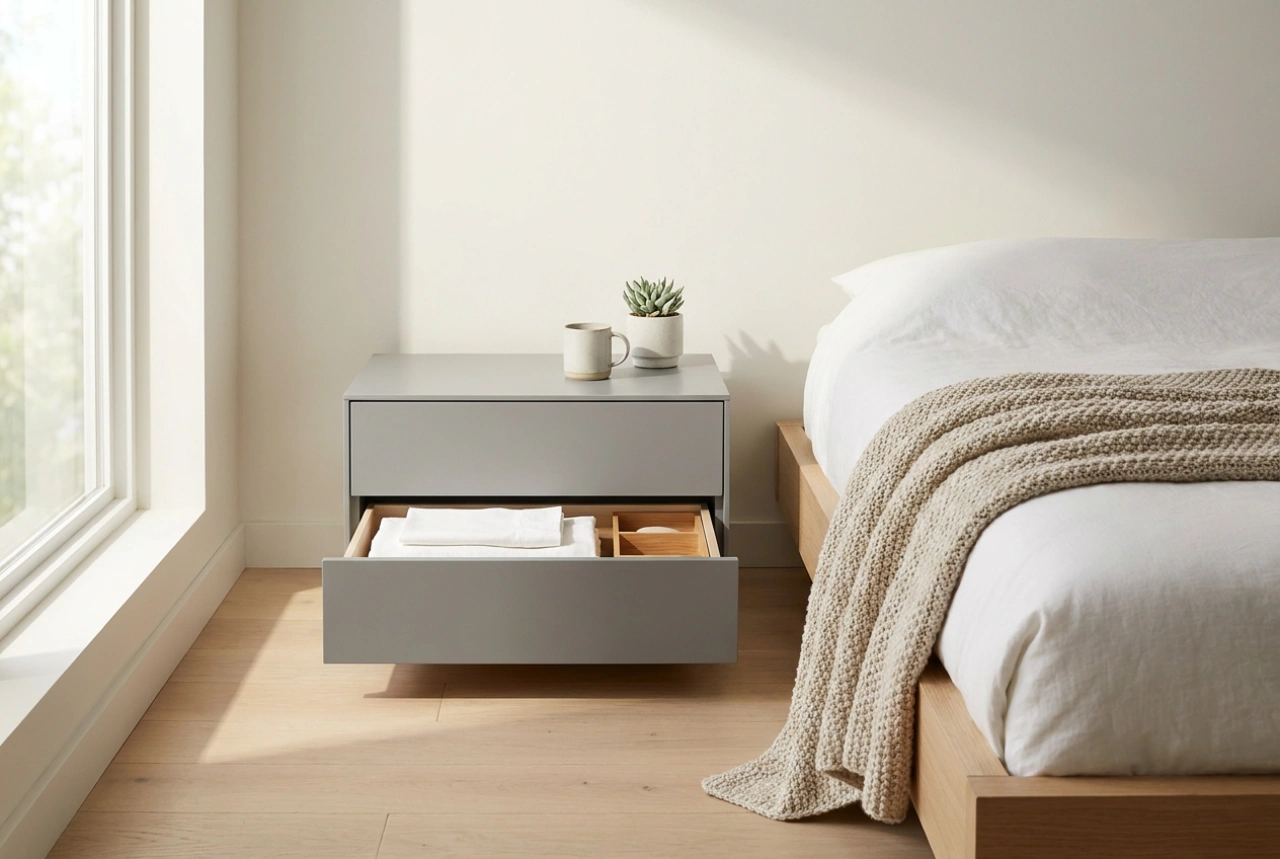
Small items like keys, transport cards, and sunglasses are the primary culprits for morning delays. To eliminate searching, implement a strict 'one-touch' drop zone. This is a small tray or shallow drawer positioned at elbow height right next to the door.
By dedicating a specific physical vessel for these essentials, you train muscle memory. The physical boundary of a tray prevents items from migrating across larger surfaces. For maximum efficiency, group these items by routine: keep your house keys, car keys, and work badge in the same compartment, ensuring they are grasped in a single physical motion.