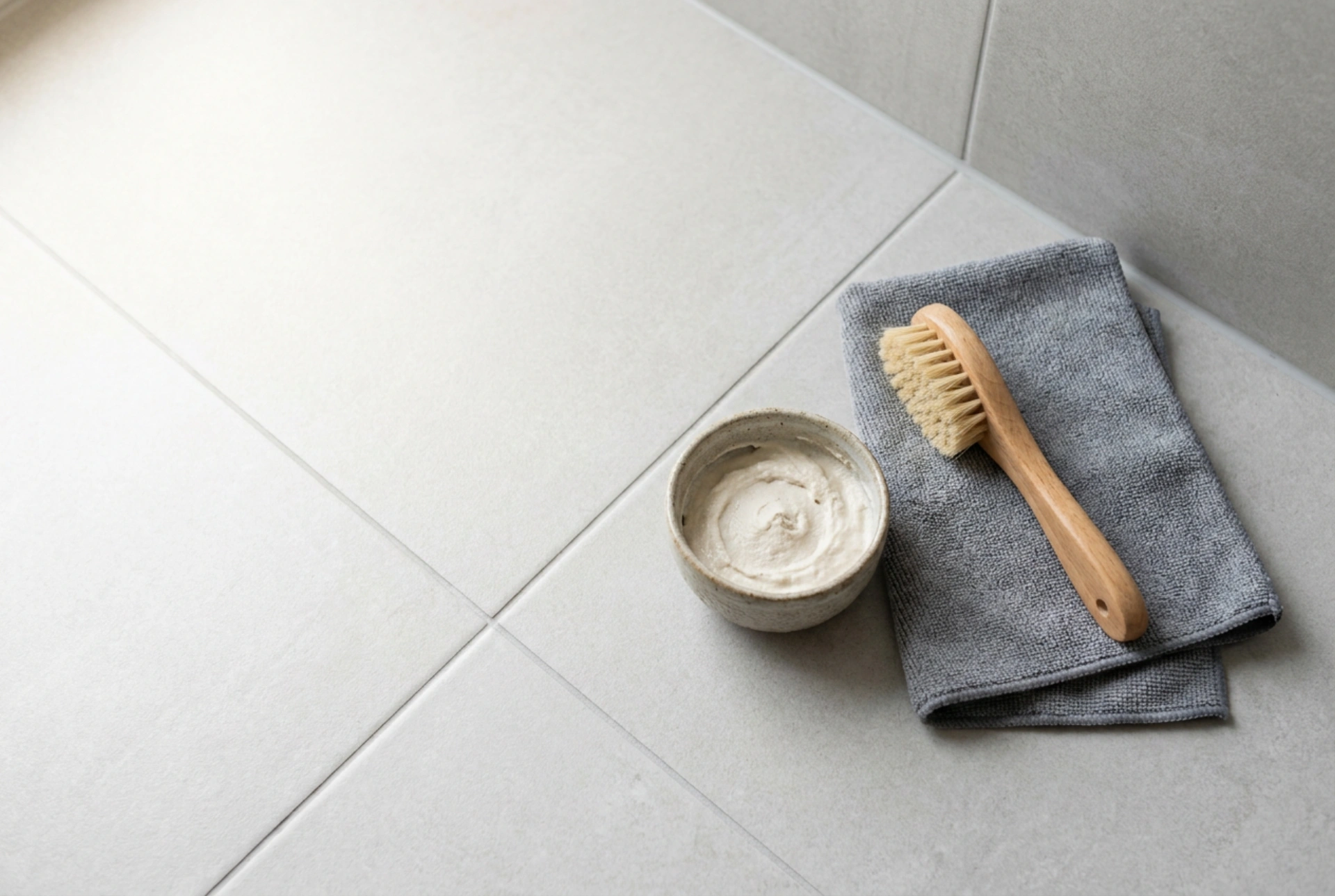


Restoring dirty tile grout requires understanding the chemical bond between mineral deposits, organic grime, and the porous cementitious structure of the grout itself.
The Chemistry of Grout Contamination
Grout is inherently porous, acting like a dense sponge that absorbs water, oils, and dissolved minerals. In bathrooms and kitchens, grout lines face two primary types of dirt: organic buildup (soap scum, skin lipids, and mold) and inorganic deposits (limescale from hard water calcium and magnesium carbonates). Effective cleaning requires breaking these specific chemical bonds without degrading the binder holding the grout together.
How Acidic Home Remedies Dissolve Limescale
Home methods using mild acids, such as citric acid or acetic acid (vinegar), target inorganic calcium carbonate. The chemical reaction between acetic acid and calcium carbonate produces calcium acetate, water, and carbon dioxide gas. This reaction dissolves the solid scale matrix, loosening the bound dirt.
- Acidity and Grout Degradation: Cement is highly alkaline. Frequent or highly concentrated acid applications dissolve the calcium silicate hydrate binder within the cement, causing the grout to crumble over time.
- The Buffer Solution: Mixing baking soda (a base) with vinegar (an acid) neutralizes both components, producing carbon dioxide gas and water. While the initial effervescence physically dislodges loose particles, the resulting neutral solution has diminished chemical cleaning power. For best results, use these agents sequentially rather than simultaneously.
The Mechanism of Alkaline Commercial Cleaners
Commercial grout cleaners are often formulated to be highly alkaline or neutral, relying on surfactants and oxygen bleach rather than acids. Alkaline agents (such as sodium carbonate or sodium silicate) excel at saponifying fats and breaking down organic proteins, making them highly effective against grease and soap scum without attacking the cement matrix.
- Oxygen Bleach (Sodium Percarbonate): When mixed with water, oxygen bleach releases hydrogen peroxide and sodium carbonate. The active oxygen breaks the chromophores responsible for stains, lifting discoloration without eroding the grout lines.
- Surfactants and Wetting Agents: Commercial formulas contain surfactants that lower the surface tension of water, allowing the active ingredients to penetrate deep into the microscopic pores of the grout rather than sitting on the surface.
Step-by-Step Grout Restoration Protocol
To clean effectively without causing structural damage, follow a methodical, chemical-first approach that minimizes harsh mechanical abrasion.
1. Deep Degreasing (Alkaline Phase)
Apply a solution of oxygen bleach dissolved in warm water (approximately 40 to 50 degrees Celsius to accelerate the release of active oxygen) to the grout lines. Allow it to sit for 15 minutes. This softens organic grime and emulsifies surface oils. Gently agitate with a soft-bristled brush using circular motions to lift the emulsified dirt, then rinse thoroughly with clean water.
2. Targeted Limescale Removal (Acidic Phase)
If hard water deposits remain, apply a mild 5% citric acid solution specifically to the affected areas. Avoid letting the acid pool on the tiles. Let it react for no more than 5 minutes. Scrub gently with a soft brush to dislodge the softened calcium, then immediately neutralize the area by rinsing with a dilute baking soda solution followed by clear water.
3. Drying and Sealing
Moisture trapped in clean grout encourages rapid mold recolonization. Dry the area completely with a microfiber cloth. Once entirely dry, apply a penetrating grout sealer. The sealer fills the microscopic pores in the cement with hydrophobic compounds, preventing water and oil absorption and simplifying future maintenance.