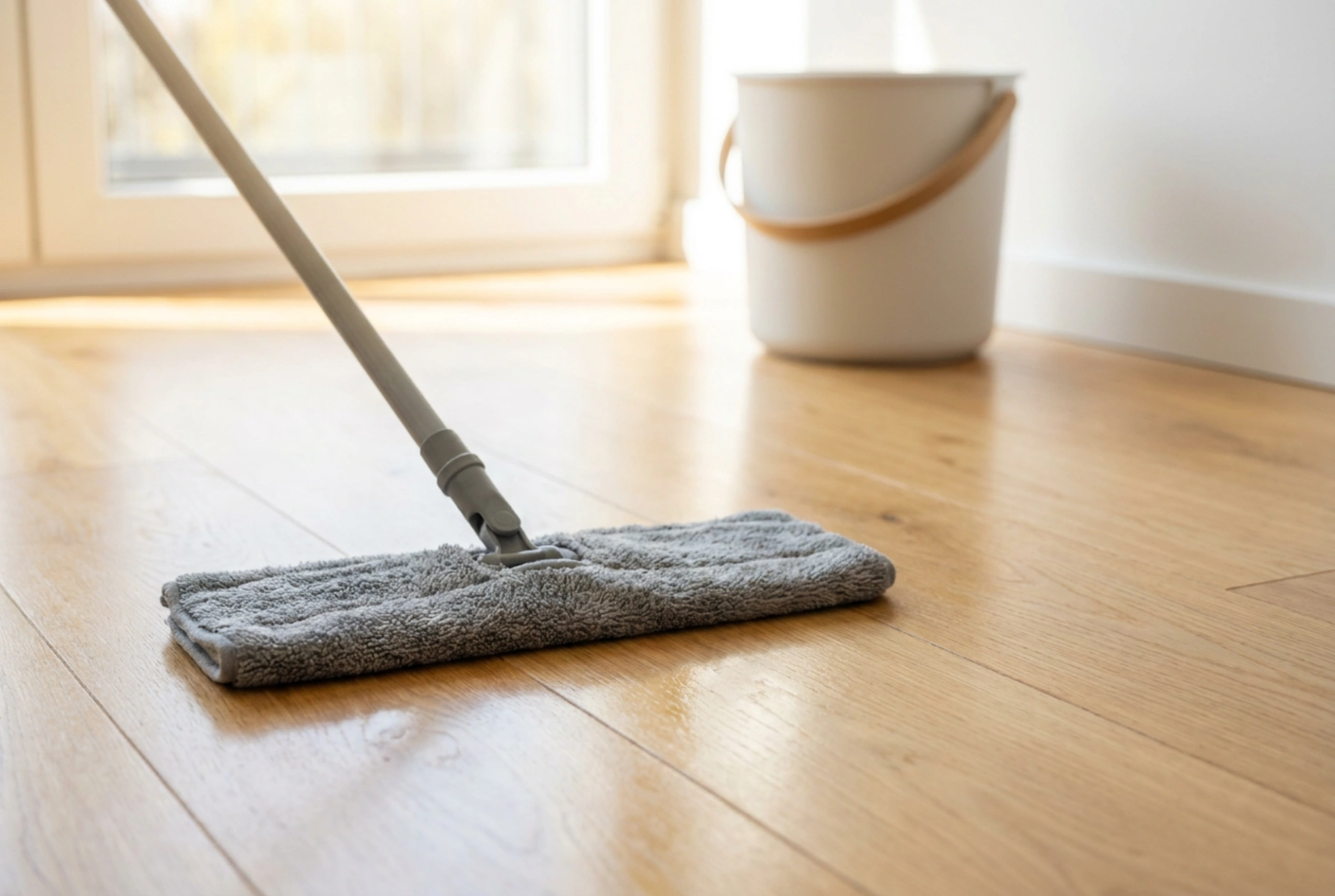


Achieving a streak-free finish on hard floors relies more on chemistry and physics than physical effort. Streaks are simply light-refracting deposits left behind when dirty water dries too slowly or when cleaning solutions leave an oily residue on the surface.
The Science Behind Floor Streaks
To eliminate streaks, it is crucial to understand what they actually are. When water evaporates from a floor, it leaves behind whatever was dissolved or suspended in it. This residue typically falls into two categories: mineral deposits from hard water (calcium and magnesium carbonates) and surfactant buildup from cleaning detergents. Traditional detergents contain surfactants—molecules with a hydrophilic head and a lipophilic tail—designed to bind dirt and oil to water. If the concentration of detergent is too high, or if the floor is not rinsed, these molecules remain on the surface after evaporation, creating a microscopically uneven film that scatters light and appears as streaks.
Why Water Quality and Chemistry Matter
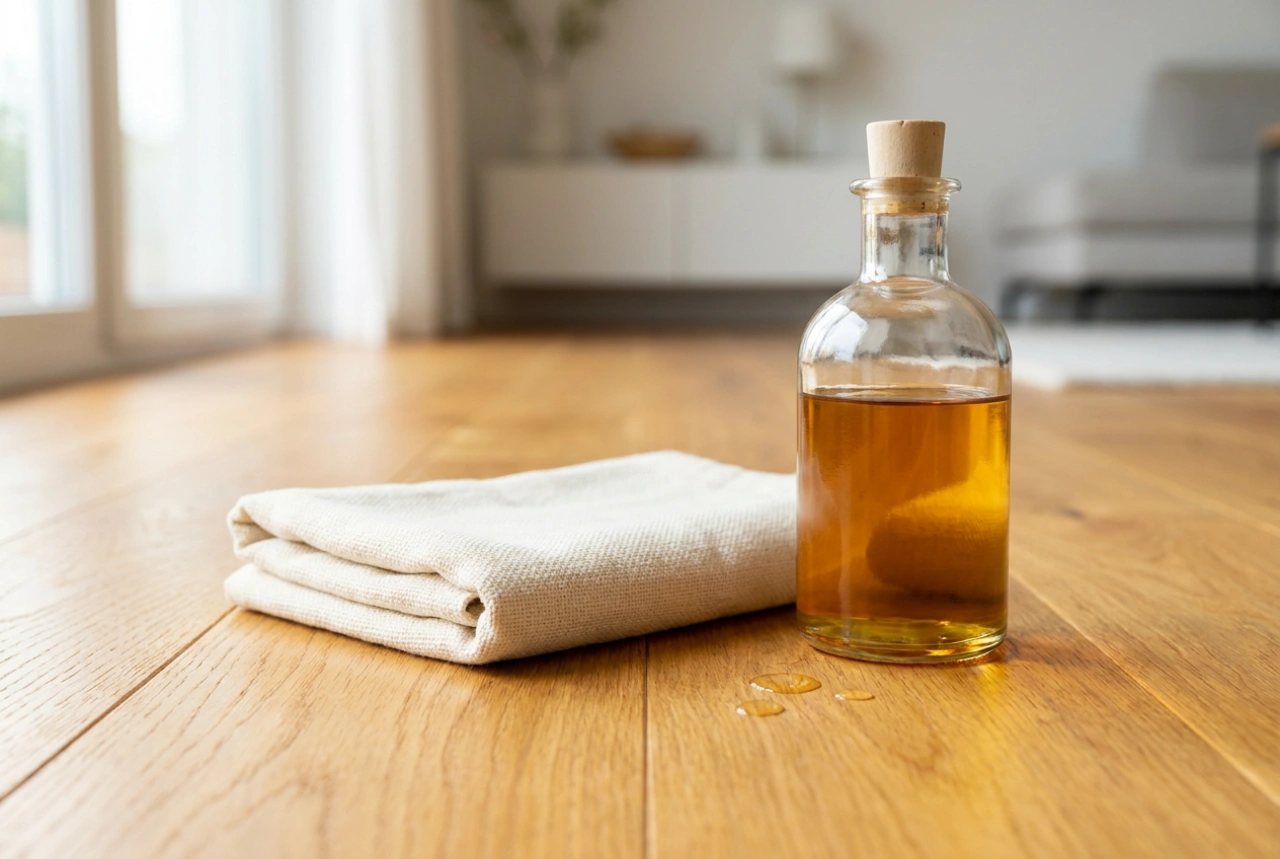
The type of water and the chemical composition of your cleaning solution dictate the final result. Standard tap water contains dissolved minerals that precipitate out as water dries. Using demineralised or distilled water completely eliminates this source of streaking. Additionally, the choice of cleaning agent affects the evaporation rate. Isopropyl alcohol (rubbing alcohol) is highly volatile, meaning it evaporates rapidly at room temperature. Adding a small amount of isopropyl alcohol to your cleaning solution lowers the overall boiling point of the liquid mixture and reduces surface tension, allowing the floor to dry quickly and uniformly before water droplets can pool and dry into spots. For greasy residues, a highly diluted neutral surfactant (with a pH of 7) is ideal, while a mild acid like diluted acetic acid (white vinegar) helps neutralise and dissolve alkaline mineral deposits on non-stone floors.
The Mechanics of Mopping: Tools and Techniques
The physical tool used to clean the floor plays an equally important role in preventing residue. Traditional cotton string mops tend to push dirty water around rather than absorbing it, leading to dirty pools that dry into streaks. Microfibre is the scientifically superior choice due to its structure. Microfibre strands are split, creating a vast network of microscopic hooks and channels. These channels use capillary action to lift and trap dirt and moisture deep within the fabric, rather than smearing it across the floor. To maximise this effect, employ the 'S-motion' technique. Instead of pushing the mop back and forth, glide it in a continuous figure-of-eight or 'S' pattern, always pulling the dirty edge of the mop backward. This keeps the debris trapped in the leading edge of the microfibre pad and prevents redeposition.
Optimising Temperature and Moisture Levels
The rate of evaporation is governed by thermodynamics. Warm water increases the kinetic energy of the molecules, causing the liquid to evaporate faster than cold water. However, excessively hot water should be avoided, as it can cause the cleaning solution to evaporate too rapidly on contact, leaving behind dry streaks before you have finished wiping the area. The ideal temperature is lukewarm to warm. Furthermore, controlling the volume of water is critical. A damp mop, thoroughly wrung out so it is merely moist to the touch, is sufficient to break the bonds of surface grime without flooding the floor. Minimal water means faster drying times and fewer opportunities for dissolved solids to settle into visible lines.
A Foolproof Streak-Free Protocol
To guarantee a flawless, reflective finish every time, follow this systematic order of operations:
- Dry prep: Thoroughly vacuum or sweep the floor to remove dry particulate matter, which can dissolve and smear during mopping.
- Solution formulation: Mix warm demineralised water with a tiny fraction of neutral surfactant or a 5% concentration of isopropyl alcohol. Avoid heavy, scented soap-based cleaners.
- Damp control: Saturate your microfibre mop pad, then wring it out until it is damp, not dripping.
- Systematic pathing: Work from the furthest corner of the room toward the exit, using the continuous 'S-motion' to trap soil.
- Dry buffing (optional): For high-gloss surfaces, follow immediately with a dry microfibre flat mop to absorb any remaining moisture instantly.