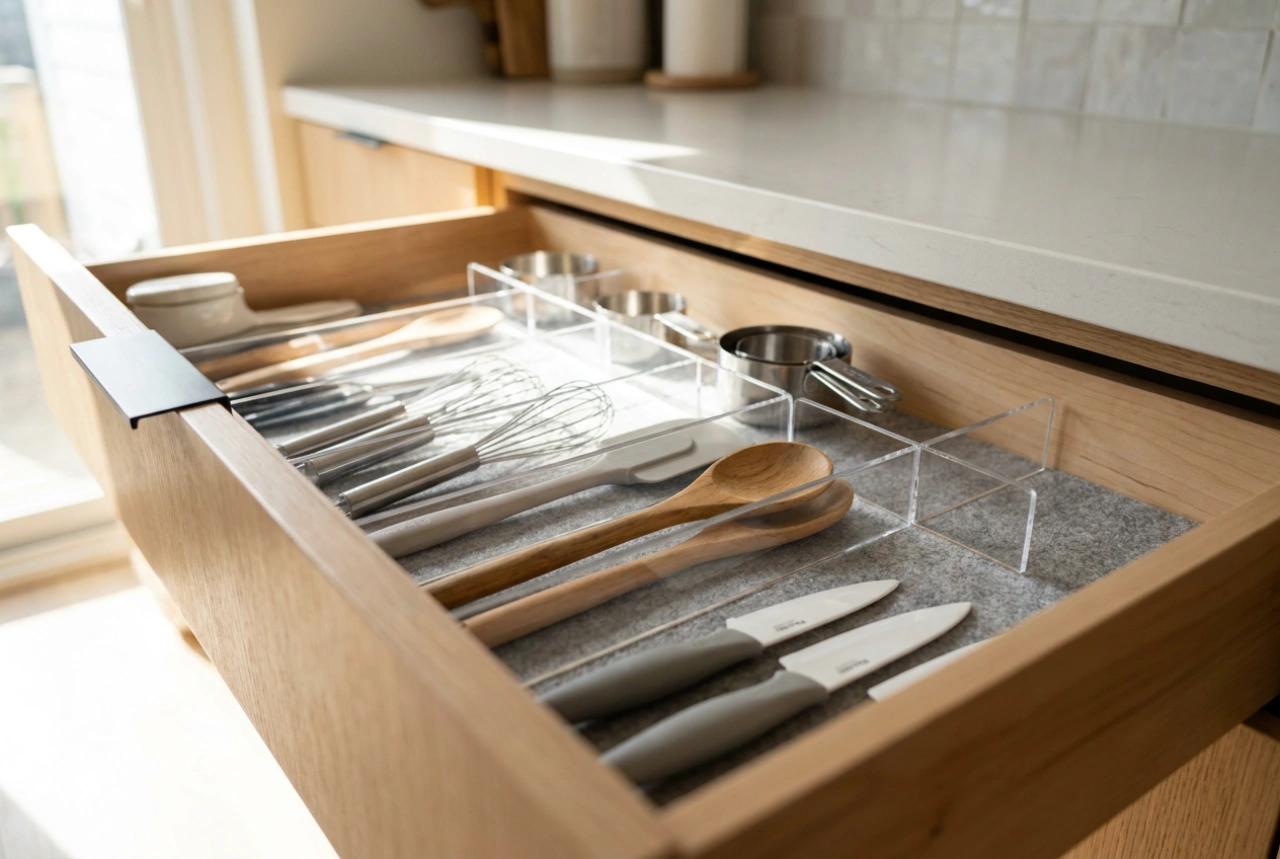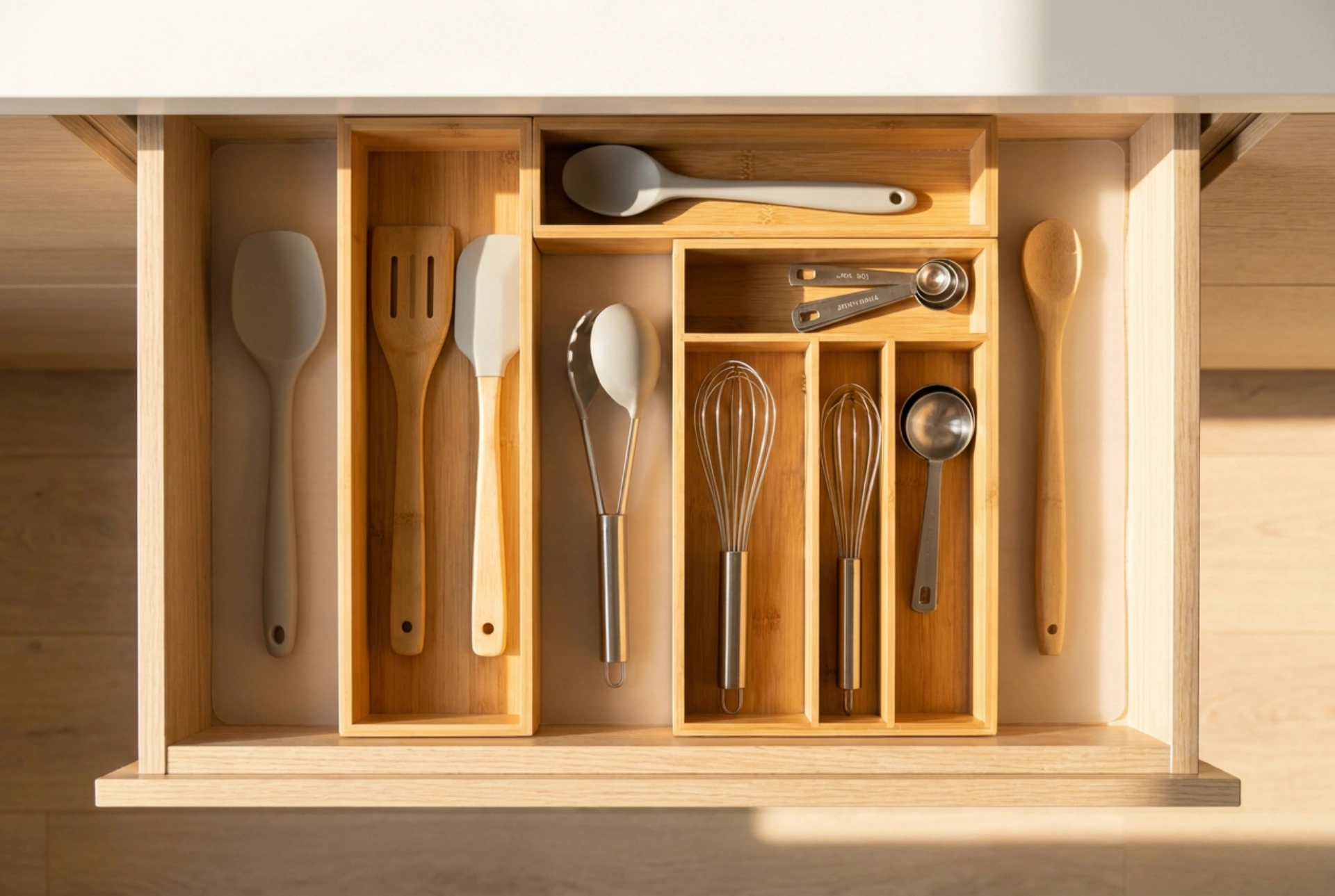


Cabinet drawer bottoms are highly vulnerable to friction, chemical degradation, and moisture, making high-quality protection liners an essential component of kitchen preservation.
The physics of surface friction and wear
Every time a drawer is opened or closed, its contents slide. This movement creates kinetic friction between the bases of utensils, heavy pots, or glass jars and the wood or laminate floor of the drawer. Over time, this constant abrasion wears down the protective lacquer or melamine coating of the cabinetry, exposing the raw fiberboard underneath to environmental humidity. A dedicated protection liner acts as a sacrificial barrier, absorbing the kinetic energy and distributing the impact of heavy items evenly across the surface. Non-slip materials typically utilize high-density polyethylene (HDPE) or ethylene-vinyl acetate (EVA), which offer a high coefficient of friction on the top side to keep items stationary, while remaining chemically inert to the drawer surface below.
Preventing moisture damage and chemical swelling
Kitchen drawers are frequently exposed to micro-droplets of water from freshly washed cutlery, as well as oils and acids leaking from stored food containers or spices. Wood-based materials like MDF or particleboard are highly hygroscopic; once moisture penetrates the outer laminate layer, the wood fibers swell, causing unsightly warping, bubbling, and permanent structural damage. An effective liner provides an impermeable hydrostatic barrier. Water, oils, and mild acids cannot penetrate the synthetic polymer structure, keeping the underlying cabinet material dry and free from staining or chemical degradation.
Selecting the right material and texture
Not all drawer liners are engineered equally. When choosing a protective layer, material science dictates the best performance based on your specific storage needs:
- EVA (Ethylene-Vinyl Acetate): Highly flexible, odorless, and resistant to cracking. Excellent for low-temperature environments like pantry drawers.
- Ribbed or studded textures: Liners with physical ridges create air gaps beneath stored items. This encourages airflow, which prevents residual condensation from trapping moisture against the bases of metal pots and pans, thereby reducing the risk of oxidation.
- Smooth non-stick surfaces: Ideal for spice drawers or areas prone to dry spills. These surfaces allow fine powders or sugar to be easily wiped or vacuumed away without getting caught in crevices.
Step-by-step installation and maintenance
Proper installation ensures the liner lies perfectly flat and does not curl or shift during use. Begin by thoroughly cleaning the empty drawer floor with a mild surfactant to remove dust and grease, then dry it completely with a lint-free cloth. Measure the interior dimensions using a steel ruler for precision, subtracting one millimeter from both the length and width to prevent the edges from pinching and bowing upward. Cut the liner using a sharp utility knife against a metal straightedge on a cutting mat. Lay the liner in place; if the material retains a curl from being stored on a roll, gently apply low heat with a hairdryer to relax the polymer chains, allowing it to settle perfectly flat. For cleaning, simply remove the liner, rinse it under warm water with a neutral liquid detergent, dry it thoroughly, and reinstall.