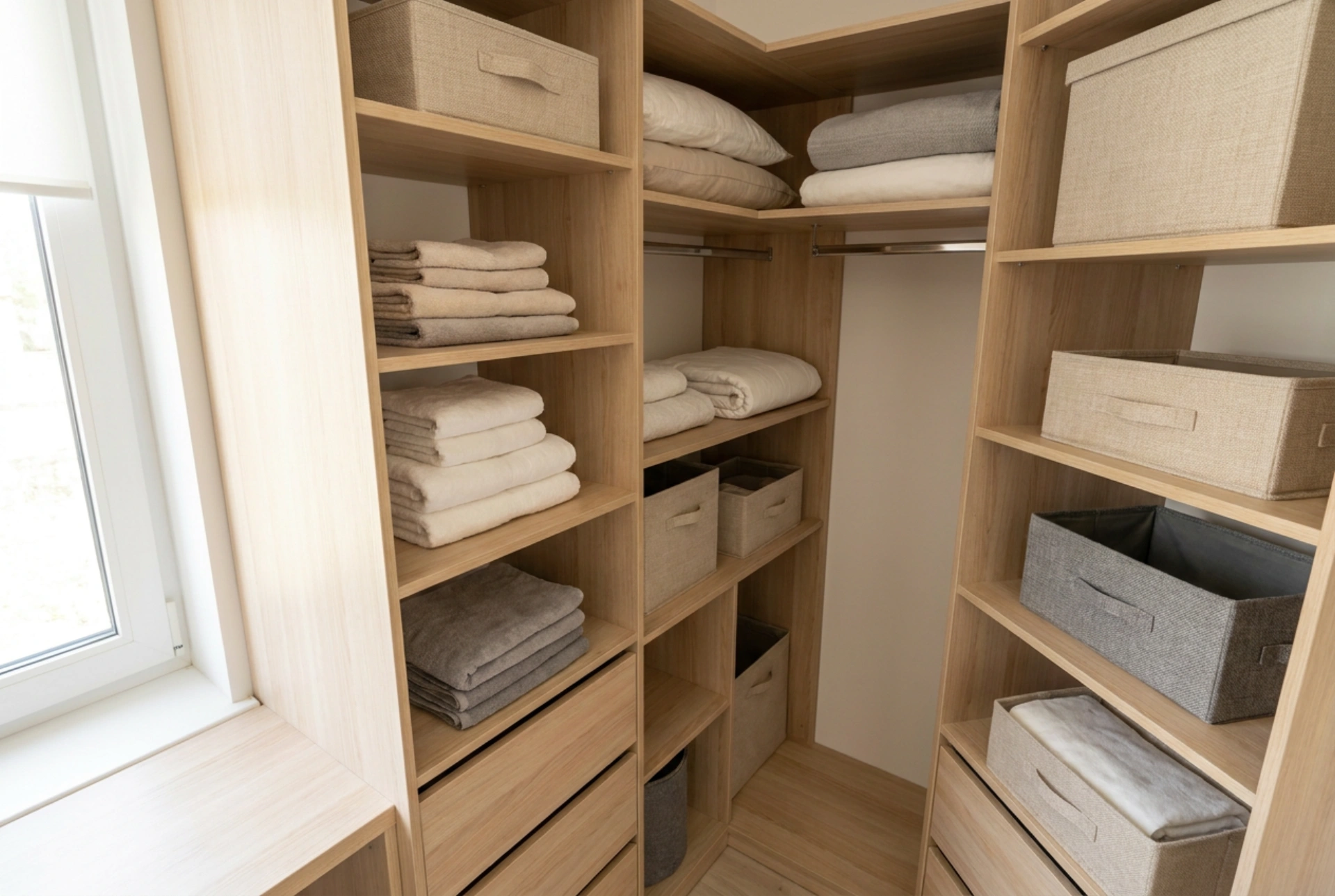


Corner wardrobes are highly effective for maximizing bedroom storage, but without precise structural planning, their deep recesses often become inaccessible, dead zones.
The Geometry of the Corner: Understanding the Blind Spot
The primary challenge of any corner wardrobe is the intersection where two storage planes meet at a ninety-degree angle. This junction creates a deep, rectangular cavity that is difficult to reach from a standard forward-facing position. To prevent this area from becoming a graveyard for unused items, you must choose between two main structural configurations: the L-shaped layout and the diagonal layout.
An L-shaped configuration utilizes two independent wardrobes meeting at a right angle. This setup maintains clean room lines but leaves a deep corner. A diagonal wardrobe cuts across the corner at a forty-five-degree angle, creating a pentagonal footprint. While the diagonal option offers easier physical entry, it occupies significantly more floor space and can overpower smaller bedrooms. For most standard layouts, the L-shaped configuration is superior, provided you implement the correct internal hardware to access the depth.
Internal Hardware: Mechanics of Deep Access
Standard static shelves in a corner wardrobe inevitably lead to forgotten items. To utilize the full depth of an L-shaped corner, specific mechanical solutions must be integrated during the planning phase:
- Corner Pull-Out Shelves: These systems feature articulated runners that pull the rear baskets directly out of the cabinet when the door is opened. This brings stored items into the light and within easy reach, eliminating the need to stretch into the dark cavity.
- Curved hanging rails: Instead of two perpendicular rails that block each other, a continuous curved hanging rail allows hangers to slide smoothly around the corner, ensuring no garments are trapped in the angle.
- Rotational Carousels: For circular corner configurations, heavy-duty rotating shelves allow you to spin shoes, folded knitwear, or storage boxes into view with minimal effort.
Zoning and Material Placement by Frequency of Use
Organizing a corner wardrobe requires a logical hierarchy based on ergonomics and frequency of use. Items should be categorized into three distinct zones: high-access, medium-access, and seasonal storage.
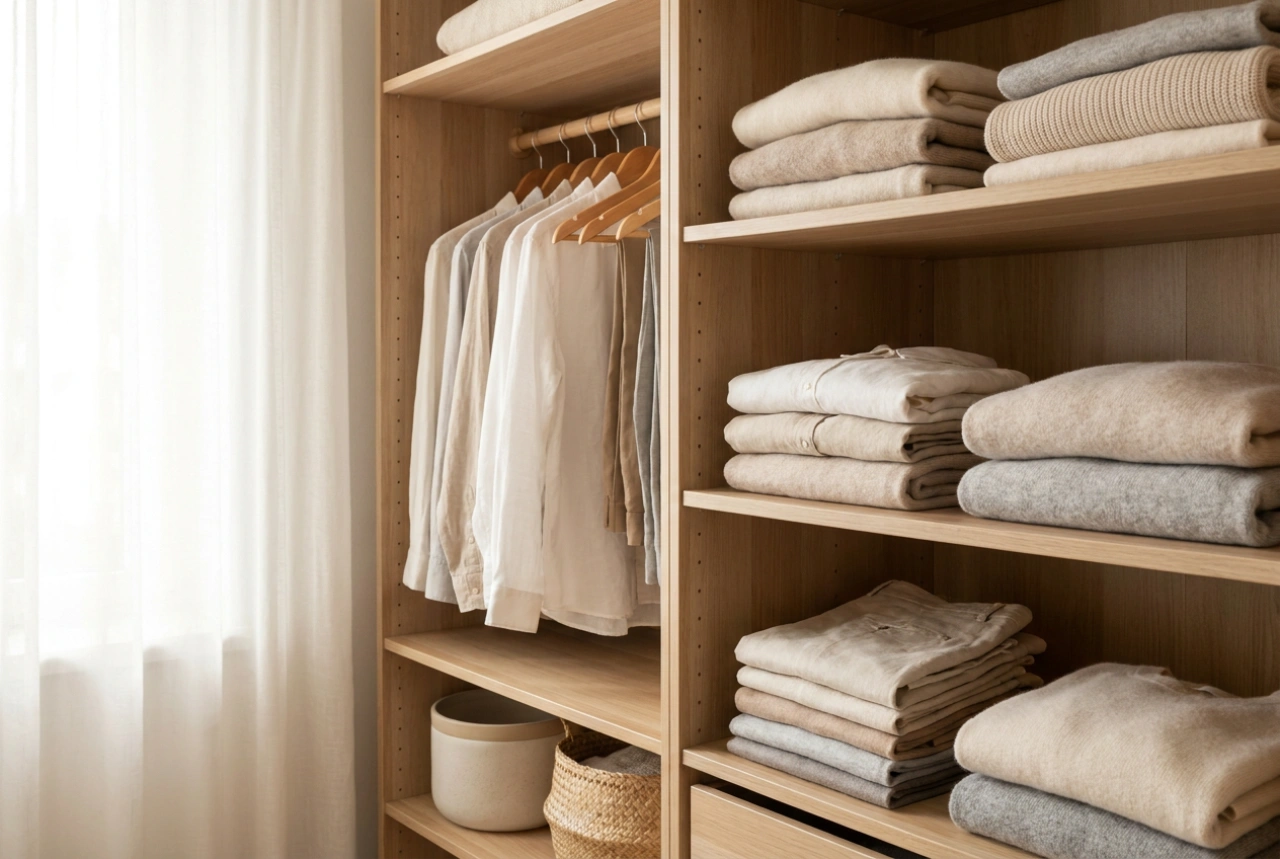
The deep, hard-to-reach corner apex should be reserved exclusively for low-frequency items. This is the ideal location for seasonal bedding, winter coats in protective vacuum bags, or travel gear. The outer, easily accessible wings of the wardrobe should hold daily wear, such as work shirts, trousers, and activewear. Store heavier items like boots and storage bins on the lower levels to maintain a low center of gravity, while lighter accessories belong on upper shelves.
Lighting and Visibility inside Deep Cabinets
Deep corner cabinets suffer from a lack of ambient light, making it difficult to distinguish colors and textures. Standard ceiling lights cannot penetrate the deep recesses of an L-shaped wardrobe, casting shadows over the contents.
Integrating low-voltage LED strip lights along the interior side panels or under individual shelves resolves this issue. Opt for motion-activated sensors that illuminate the cabinet automatically when the doors glide open. Positioning lights vertically along the front edge of the cabinet frame, rather than at the back, ensures that stored clothing does not block the illumination, casting light evenly across the entire depth of the shelf.
Door Mechanisms and Clearance Zones
The choice of wardrobe doors directly impacts how much space is saved in the bedroom. Traditional hinged doors require a wide clearance arc, which can obstruct bedside tables or passage paths. However, they allow complete, unobstructed access to the entire interior of the wardrobe at once.
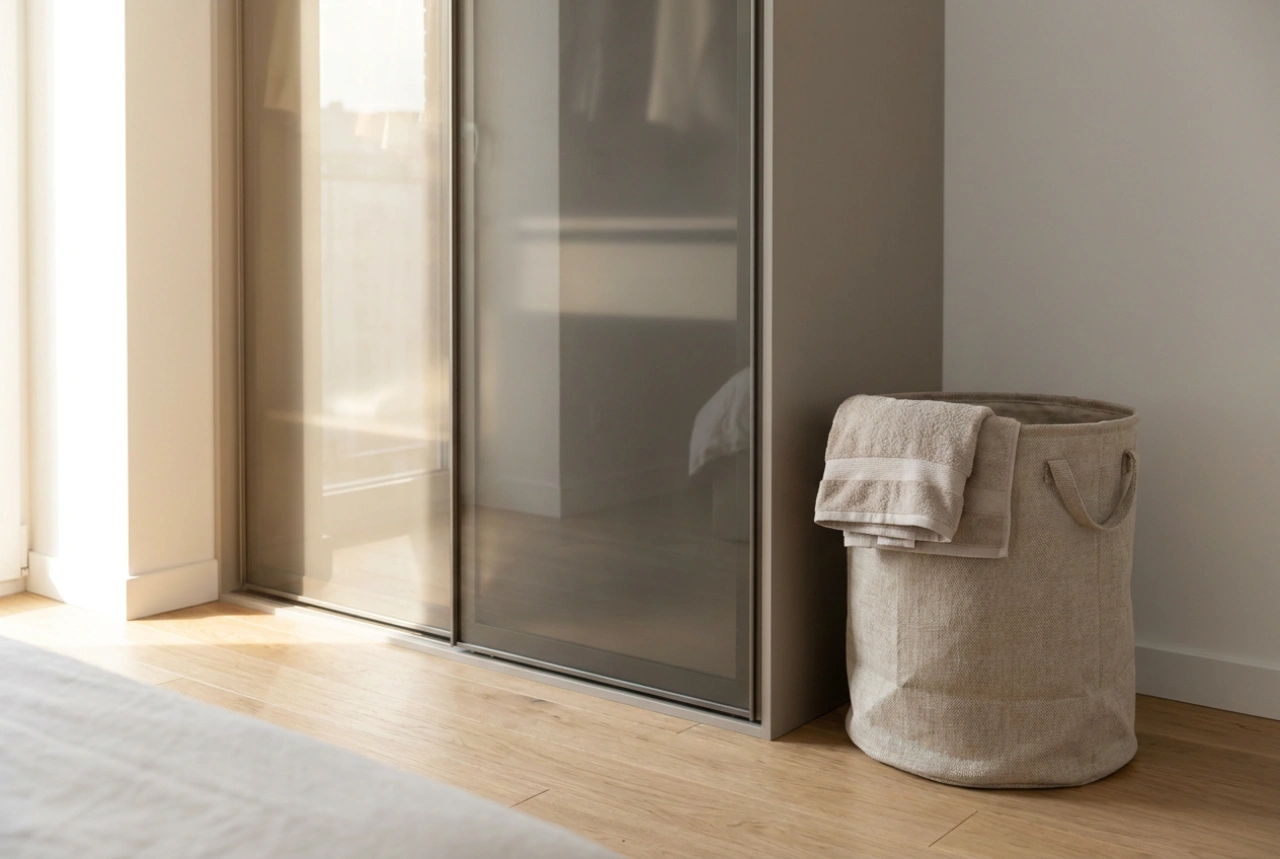
Sliding doors do not require external clearance space, making them excellent for tight bedrooms. However, they always block at least half of the wardrobe opening at any given time, which can make accessing a deep corner difficult. For corner wardrobes, folding or bi-fold doors offer the ideal compromise; they fold outward with a minimal clearance footprint while exposing the entire corner joint for easy access to your specialized pulling systems.