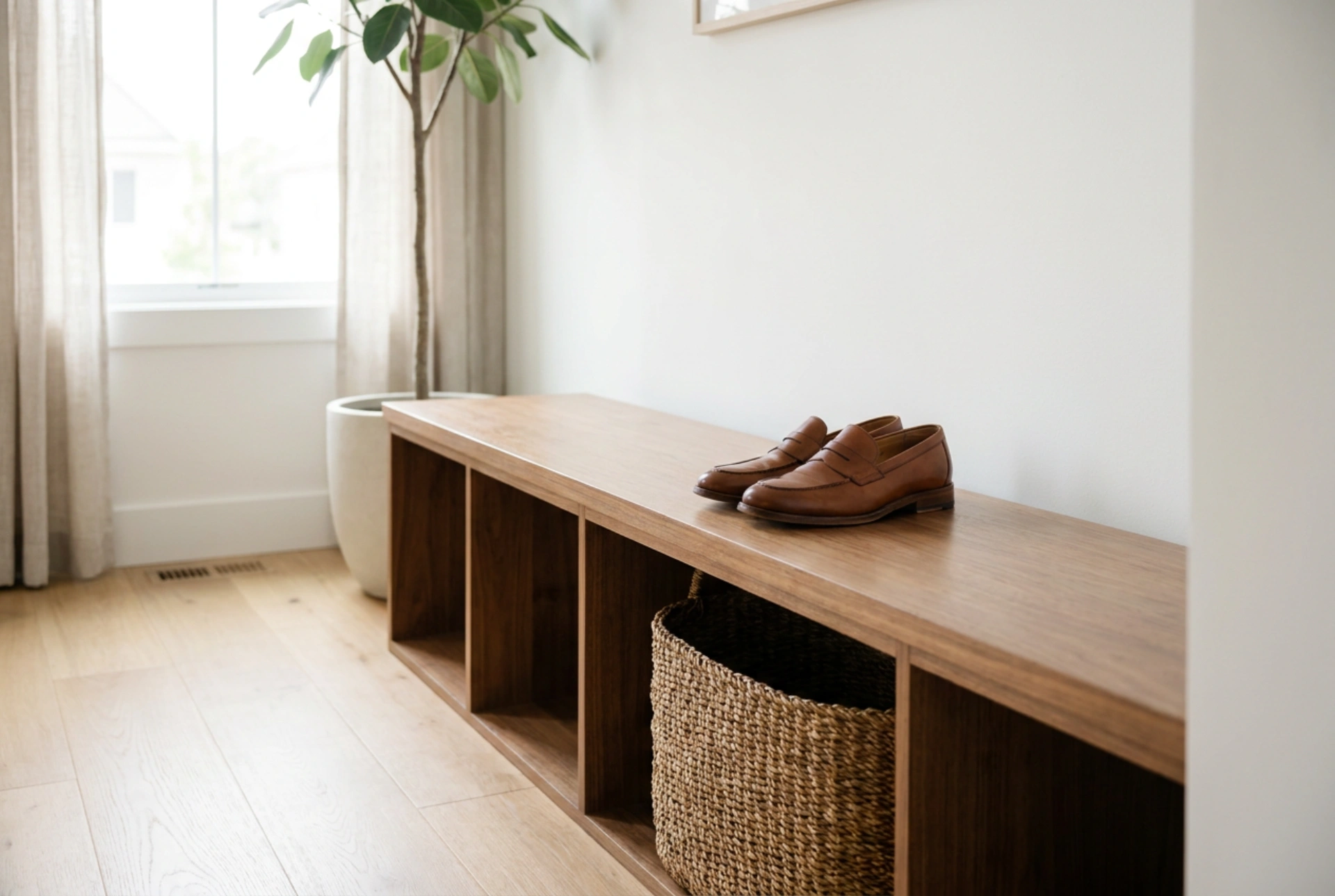


An entryway wardrobe equipped with an integrated bench streamlines your transition between the comfort of home and the demands of the outside world by establishing a logical sequence of movement.
The Biomechanics of the Transition Zone
The primary function of an entryway bench is not merely decorative; it serves as a crucial physical support during the high-friction moments of leaving and entering the home. Sitting down stabilizes the center of gravity, which reduces physical strain and prevents the loss of balance when dealing with complex footwear. By dedicating a specific physical plane to the act of changing shoes, you naturally confine the dirt, moisture, and debris carried on soles to a highly localized, easily cleanable zone. This structural boundary prevents the migration of outdoor contaminants deeper into the living spaces.
Optimizing the Sequential Flow of Storage
An efficient entryway operates on a strict linear workflow based on the physical order of operations when entering or exiting the home:
- The Upper Tier (Long-Term and Seasonal Storage): Closed cabinets directly above the seating area should house off-season gear and items used only occasionally. This keeps the immediate visual field clear of clutter.
- The Middle Tier (Immediate Access): High-frequency hooks mounted at shoulder level accommodate daily-wear jackets, bags, and keys. Position these elements so they do not overhang the bench seating area, preserving the full depth of the seat.
- The Seating Plane: A clear, unobstructed surface constructed from high-density materials allows for the temporary placement of groceries, parcels, or bags during the unloading process.
- The Lower Tier (Footwear Management): Open cubbies or raised wire shelves directly beneath the bench utilize gravity to dry wet footwear through natural air convection, keeping wet soles off the floor.
Material Selection for High-Traffic Durability
Because the entryway is exposed to moisture, road salt, and mechanical friction, material science must guide your structural choices. Hardwoods such as oak or ash, sealed with a high-performance polyurethane or hardwax oil, offer excellent resistance to indentation and water staining. For the under-bench shoe storage, non-porous materials like powder-coated steel or heavy-duty polypropylene trays are ideal. These surfaces resist the chemical action of winter road salts and can be easily wiped down or washed, preventing permanent damage to the wooden frame of the wardrobe.
Ergonomics and Spatial Dimensions
To ensure the bench remains functional and comfortable for all household members, adhere to standardized ergonomic principles during planning. The optimal height for an entryway seat ranges between 40 to 45 centimeters from the finished floor, mimicking standard dining chair proportions. A minimum depth of 35 to 40 centimeters is required to provide adequate support without protruding too far into narrow corridors. If space permits, leaving a clear gap of 10 to 15 centimeters between the bottom of the bench and the floor allows for the rapid kicking-aside of daily shoes, keeping the main walkway free of physical trip hazards.