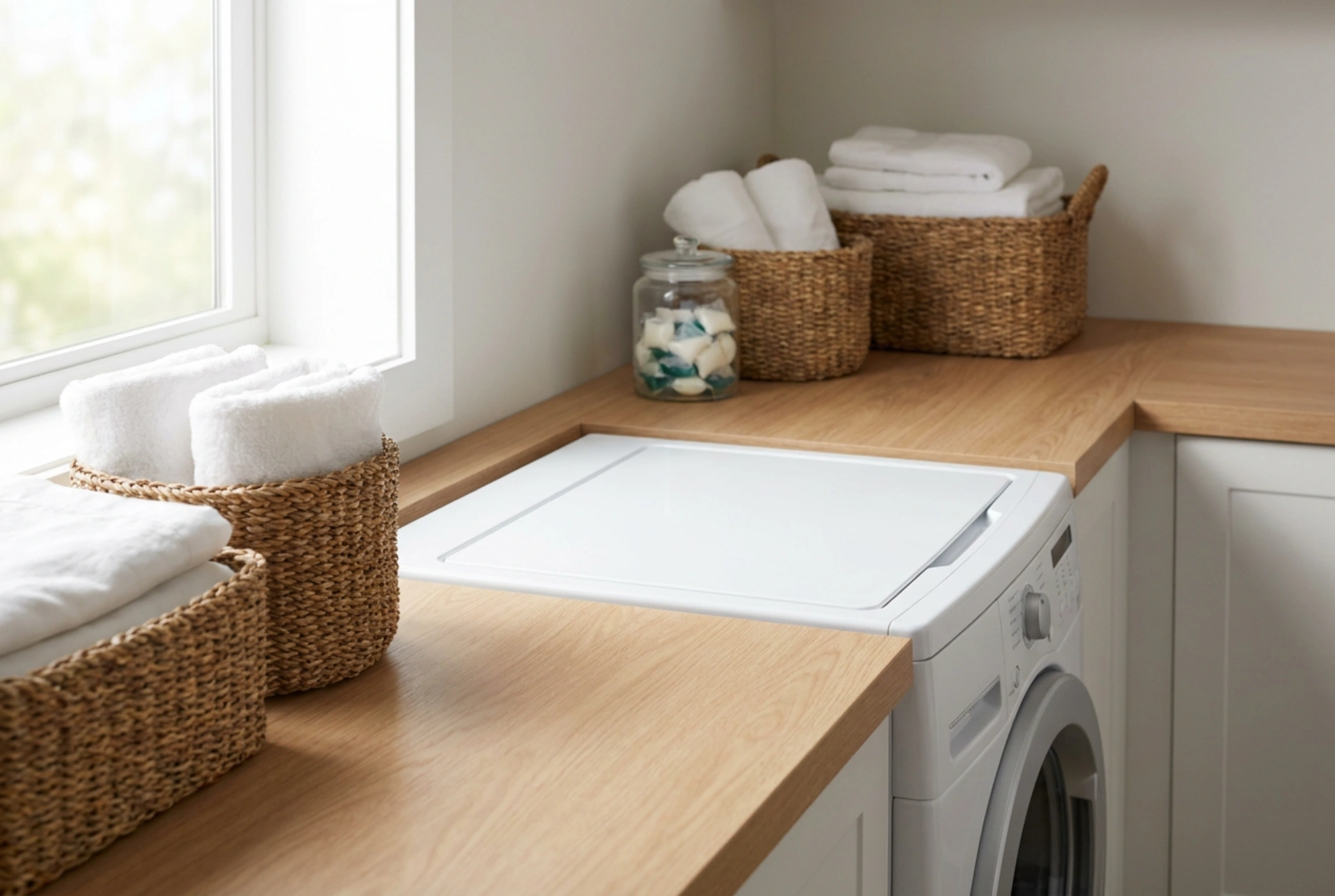


Integrating a top-loading washer-dryer into a compact home requires a clever balance between vertical access and functional storage surfaces.
The physics of top-loading appliances
Top-loading washer-dryers demand a distinct approach to spatial planning because their door opens upward. This structural reality means you cannot install a continuous, fixed countertop directly above the machine. When planning the layout, you must leave a clearance zone that matches the full swing height of the lid plus at least five centimeters of reach-in clearance. This prevents knuckle injuries and allows you to load heavy, wet textiles without obstruction.
Furthermore, these machines naturally vibrate during high-speed spin cycles. Because top-loaders use a vertical drum axis or a specialized suspension system to balance dual-function cycles, they need a lateral buffer of at least two centimeters on all sides. Placing rigid cabinetry flush against the metal chassis will transmit vibrations directly into the walls, causing structural noise and potential wear on surrounding joinery.
The hinge-top countertop solution
To maximize usable space without sacrificing the top-loading mechanism, you can install a split or hinged countertop. By using heavy-duty piano hinges and gas struts, a section of the wooden or composite worktop can lift smoothly against the wall when the appliance is in use. When closed, this surface serves as a stable folding station.
- Piano hinges: These distribute weight evenly along the entire seam, preventing the wood from warping over time due to humidity.
- Gas struts: These assist in lifting the heavy panel and hold it safely upright, preventing accidental drops during loading.
- Water-resistant seals: Apply a high-quality polyurethane seal to the cut edges of the countertop to prevent swelling from escaping laundry steam.
Vertical storage and zoning
With the area directly above the machine requiring clearance, the surrounding vertical space becomes prime real estate. Installing open shelving starting exactly ten centimeters above the fully opened lid height ensures that no storage space is wasted. Group your laundry items by chemistry and frequency of use to streamline your workflow.
Keep heavy items like liquid oxygen bleach and bulk detergents on the lowest open shelf to reduce lifting strain. Use lightweight woven or plastic baskets on higher shelves for folded linens and dry wool dryer balls. This organization prevents chemical spills from dripping down onto the machine's electronic control panel, which is typically located at the rear of a top-loading appliance.
Managing moisture and airflow
Condensation is a significant factor in small utility zones, especially during the drying phase of a combined appliance. Top-loading washer-dryers release warm, moist air during operation. To prevent mold growth on surrounding wooden cabinetry or drywall, ensure there is active airflow. Maintaining a gap of at least ten centimeters behind the machine allows the heat to dissipate, protecting both the appliance motor and your home structure from moisture accumulation.