

Maintaining a perfectly organized wardrobe relies on understanding the physics of friction, gravity, and material compression within your storage spaces.
The Physics of the Vertical Fold: Why Drawers Fail Without Structure
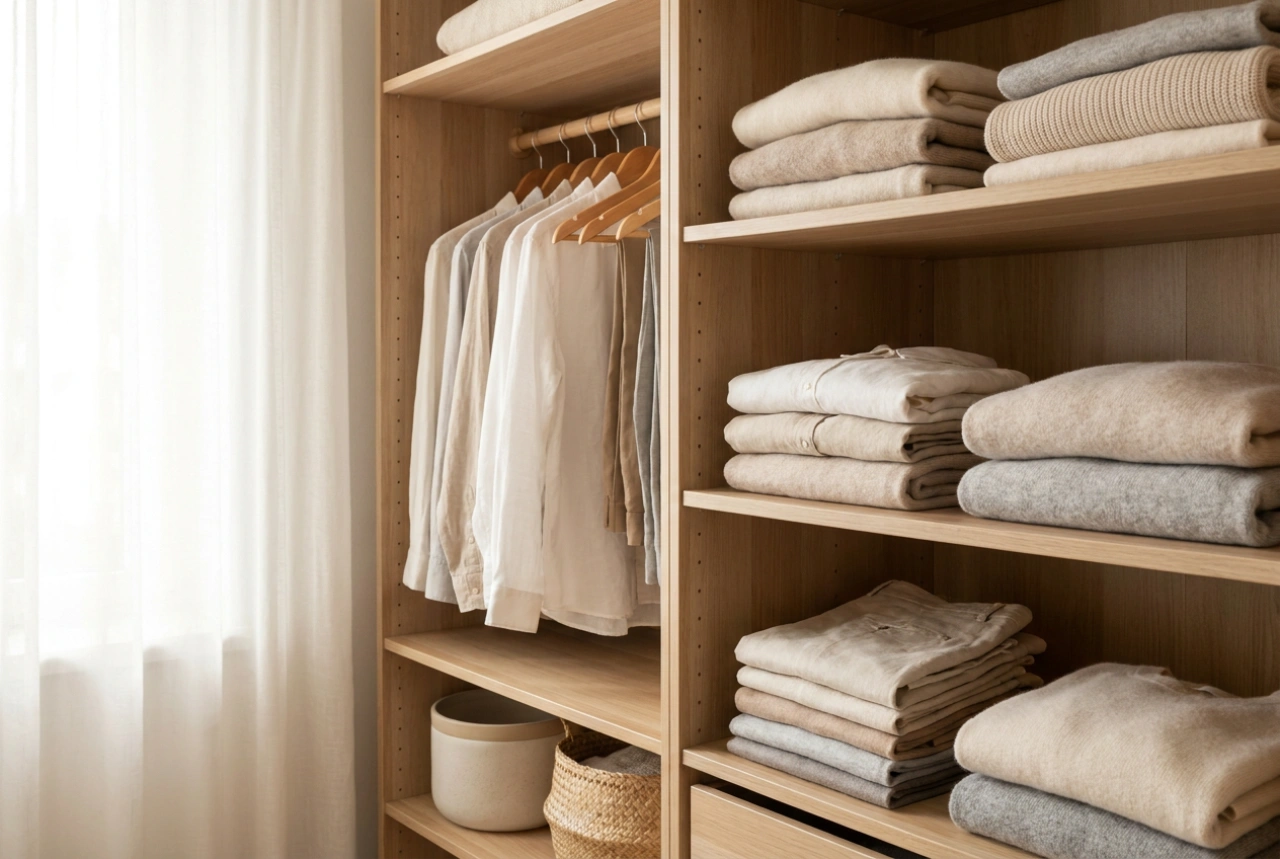
Traditional horizontal stacking of garments in a drawer is inherently flawed. Gravity forces the weight of the upper clothes onto the lower ones, causing compression that leads to deep wrinkles. More importantly, retrieving a single item from the middle of a stack creates frictional drag, pulling adjacent garments with it and disrupting the entire structure. Organizing garments vertically, often called file-folding, solves this problem by ensuring every item is visible and independently accessible.
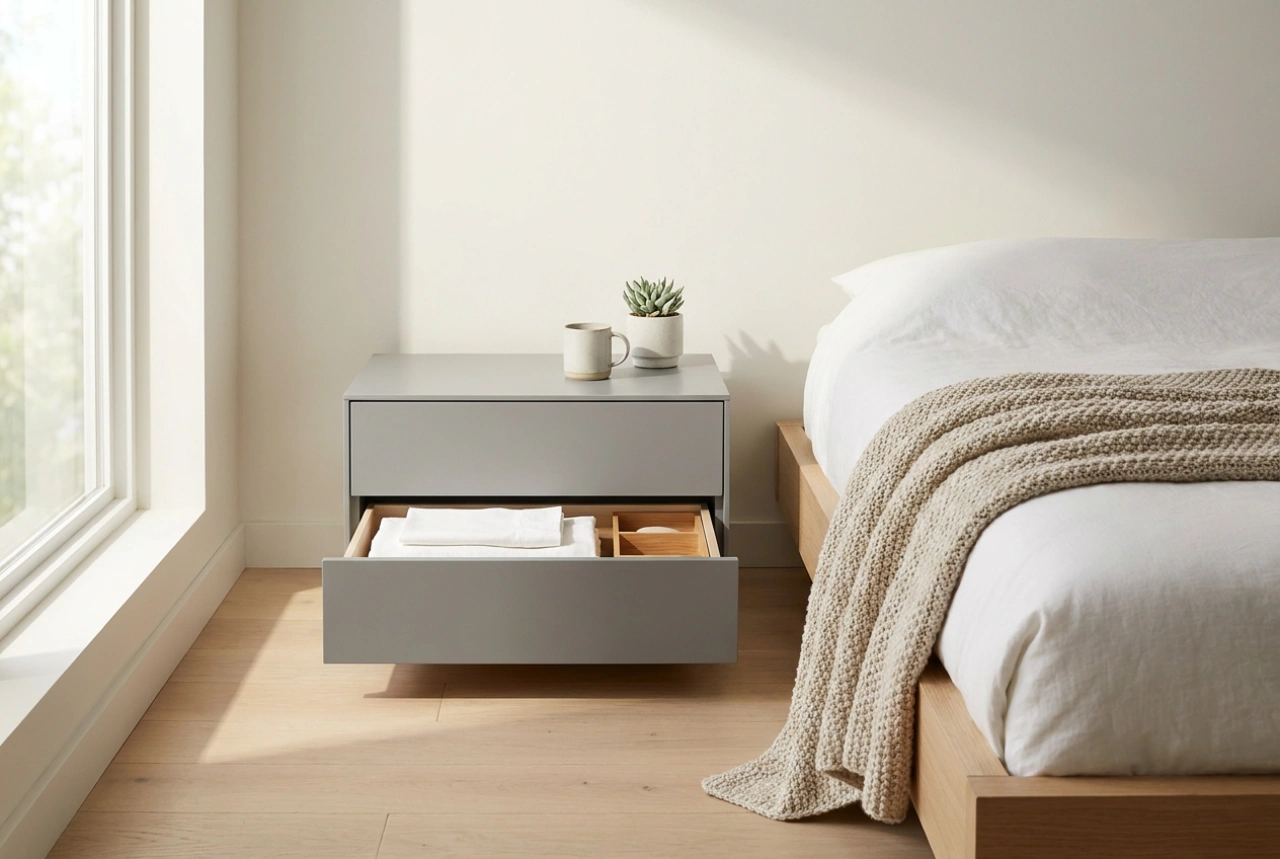
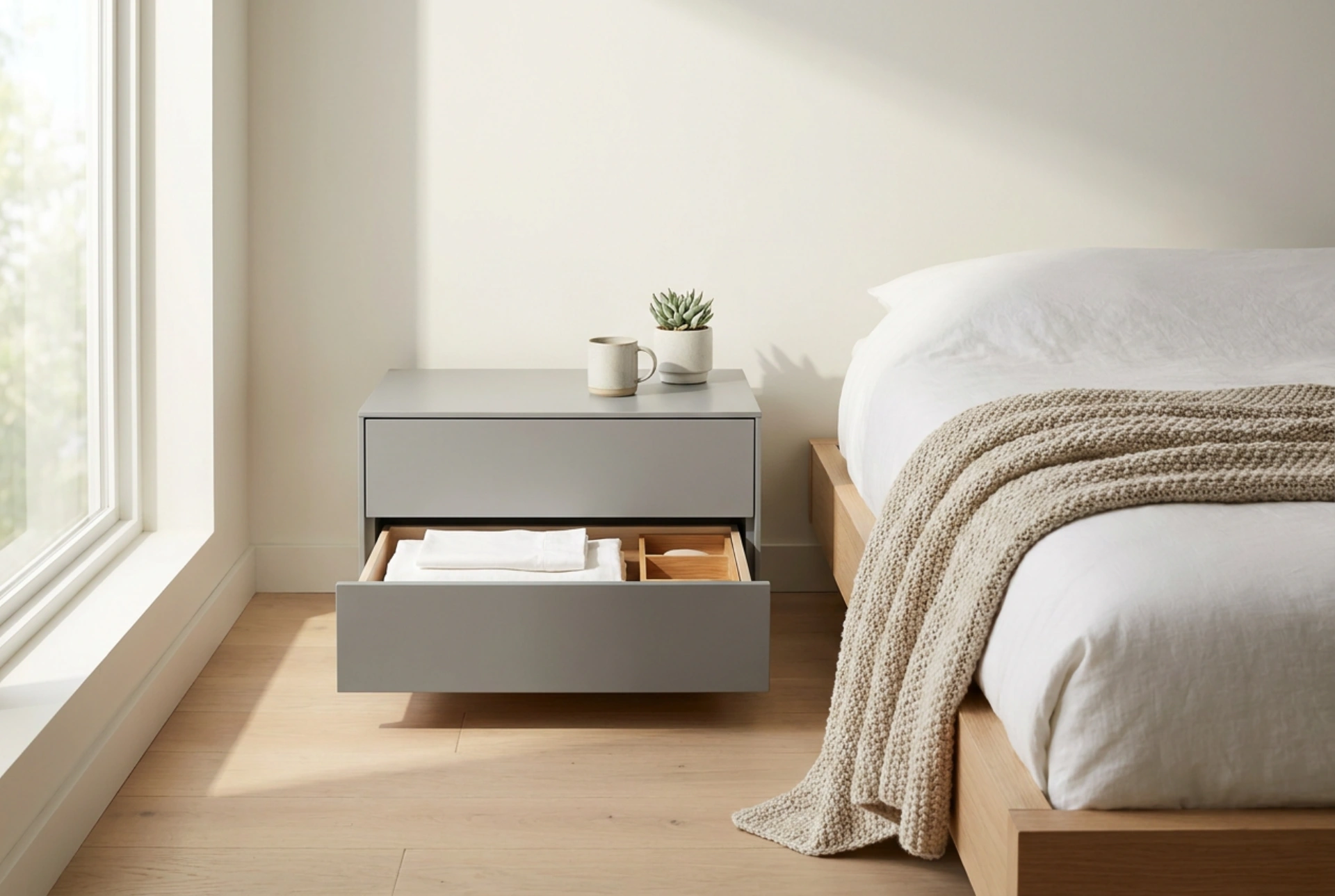
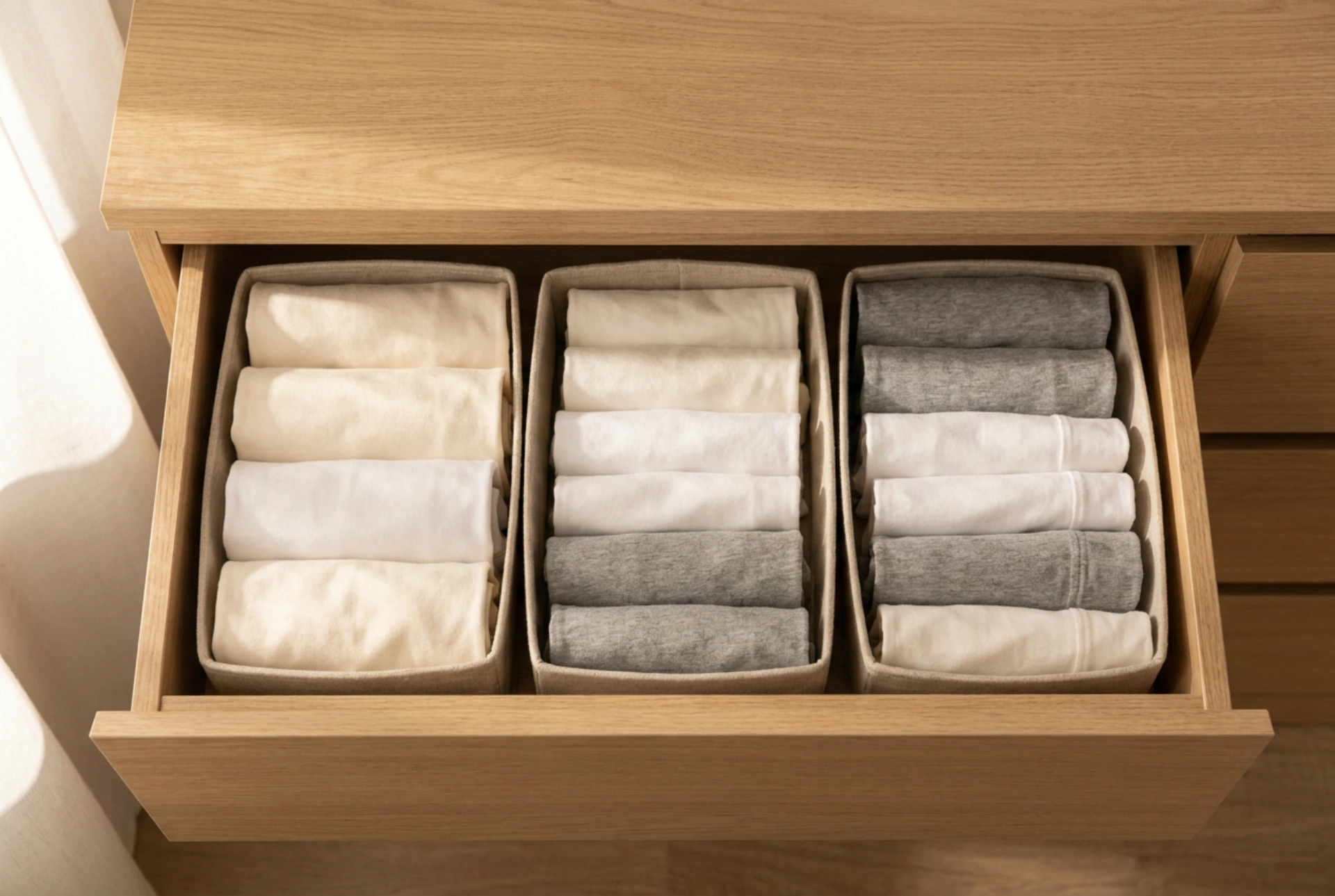
However, vertical folding has a primary structural weakness: lack of lateral support. When you remove a garment from a row of vertically folded clothes, the surrounding items lose their physical support network and collapse under gravity. This is where drawer organizers act as essential structural retainers. By dividing a large, open drawer into smaller, rigid compartments, you limit the lateral movement of the fabric and prevent the domino effect of collapsing clothes.
Selecting the Right Compartment Architecture
Not all drawer dividers are created equal, and matching the material and size of the organizer to the fabric type is critical for long-term maintenance of your folding system.
- Rigid Wood or Acrylic Dividers: These are ideal for heavy, structured garments like denim, knitwear, and thick cotton sweaters. The rigid walls hold high-tension folds in place and withstand the outward pressure of bulky fabrics.
- Soft Textile or Non-Woven Fabric Bins: Best suited for delicate, lightweight materials such as silk, thin cotton, and synthetics. The soft texture of the organizer walls creates gentle friction against the smooth fabrics, preventing slippery garments like activewear or undergarments from unravelling.
- Grid Organizers: Small, square cells are perfect for highly repetitive, low-bulk items like socks and underwear. Because these items have minimal structural integrity when folded, individual cell containment is the only way to prevent them from shifting during the physical movement of opening and closing the drawer.
Optimizing Kinetic Friction and Compression
To keep your organizers working efficiently, you must balance the compression of the folded clothes. If you pack a compartment too tightly, the lateral pressure increases friction, making it difficult to pull an item out without dragging the organizer or adjacent clothes upward. Conversely, under-packing a compartment leaves too much empty space, allowing the garments to slide, lose their vertical orientation, and unfold.
The ideal density is reached when garments touch each other lightly enough to stand upright without leaning, yet retain enough flexibility to allow a finger to slide easily between them. When a compartment becomes semi-empty due to laundry cycles, use a simple tension divider or a fabric spacer to temporarily reduce the compartment volume and maintain the necessary lateral pressure.
Step-by-Step System for Loading Your Organizers
To establish a self-sustaining system, follow a precise sequence when preparing and placing your garments:
- Assess Fabric Memory: Smooth out the fabric on a flat surface before folding to release trapped air and set the textile fibers in a uniform direction.
- Fold to Match Compartment Depth: Always measure the height of your drawer organizer. Fold your garments so that their final height is roughly one centimeter shorter than the compartment wall. This prevents the top of the garment from catching on the drawer frame when opened.
- Place with the Spine Facing Up: Insert the folded garment into the organizer with the smooth, folded edge (the spine) facing upward. This presenting edge has the highest structural integrity and prevents individual layers of the garment from catching on your hands.
- Organize by Gradient: Arrange items from front to back by frequency of use, and from left to right by color gradient or fabric weight. This reduces cognitive friction when searching for clothes, ensuring you do not disrupt the order of the drawer.