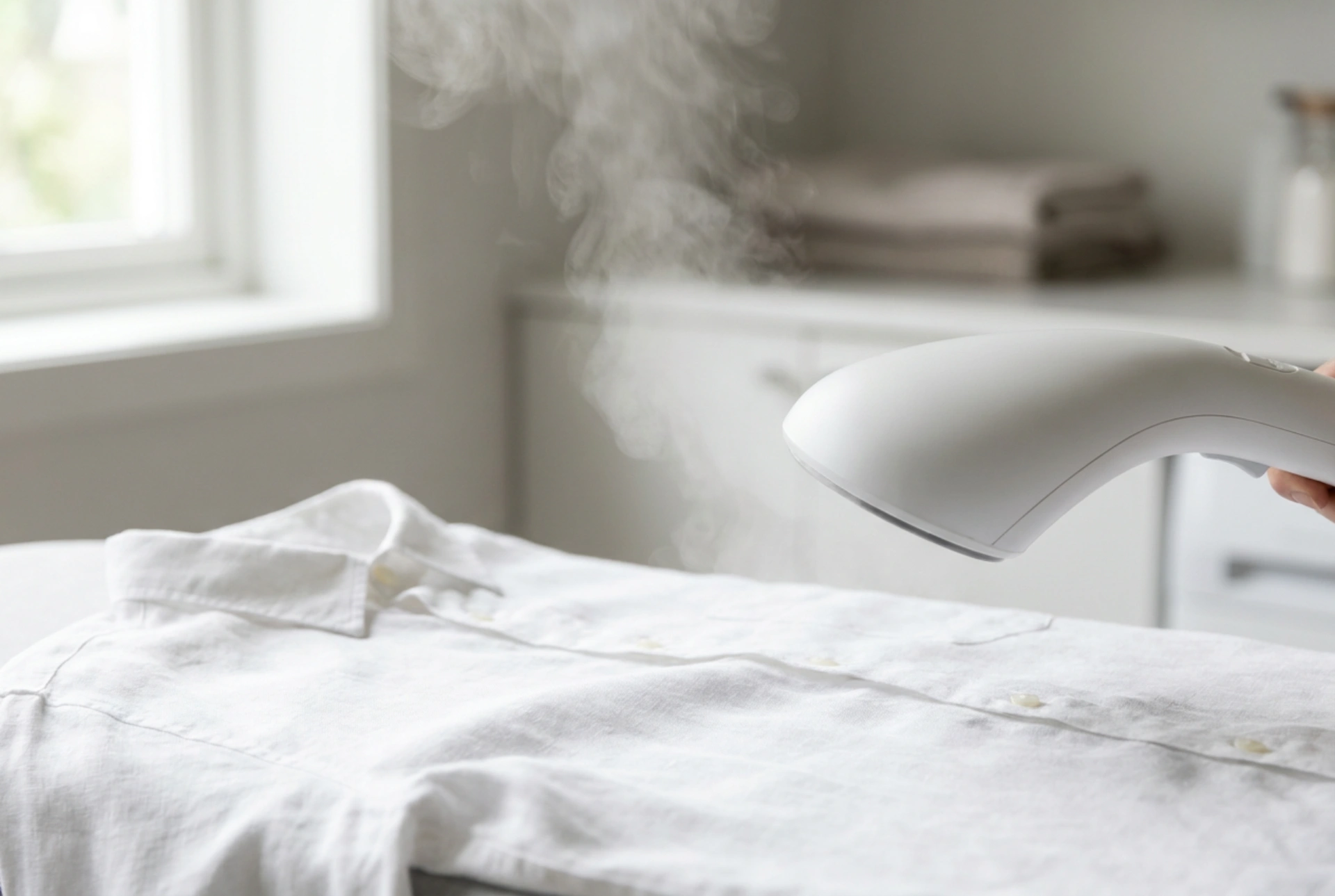


Ironing with a high-pressure steam generator delivers professional-grade results, but without the correct technique, intense heat and moisture can easily scorch delicate fibres or leave unsightly shiny patches.
The Science of Steam vs. Dry Heat
Traditional irons rely heavily on conduction—direct contact between a hot metal soleplate and dry fabric. This process physically flattens fibres under high mechanical pressure, which risks crushing the weave or melting synthetic filaments like polyester. A steam generator works on a different physical principle. It uses convection and hydration, injecting superheated dry steam deep into the textile structure. This moisture temporarily relaxes the intermolecular hydrogen bonds holding the polymer chains of the fibres in place, allowing the weight of the iron or gentle tension on the fabric to realign them without requiring extreme soleplate temperatures.
Selecting the Correct Temperature and Steam Rate
Matching the temperature of the soleplate to the specific fibre profile is the primary defence against scorch marks. Modern synthetic textiles have a low melting point, meaning even brief contact with a high-temperature plate will cause permanent thermal deformation. Use the following operational guidelines:
- Synthetics (Polyester, Nylon, Acrylic): Set the soleplate to the lowest temperature setting. Rely almost entirely on short, controlled bursts of steam to relax the wrinkles rather than the heat of the plate.
- Silk and Wool: Use medium heat. Always apply steam indirectly by hovering the soleplate a few millimetres above the surface, or use a protective pressing cloth to prevent the hot metal from touching the delicate animal proteins.
- Cotton and Linen: These robust plant-derived cellulose fibres require higher temperatures and maximum steam pressure to penetrate their dense structures. Work systematically from the thickest sections, like collars and cuffs, to the main panels.
The Correct Movement and Tension Technique
Mechanical technique is just as critical as temperature control. To prevent burning, the iron must never remain stationary while resting on the fabric. Always keep the soleplate in continuous, fluid motion. When smoothing garments vertically on a hanger, use your non-dominant hand to gently pull the hem of the garment taut. This tension, combined with the relaxing effect of the steam, allows the fabric to smooth out naturally with minimal physical contact from the iron head. For horizontal ironing on a board, always guide the iron in straight, parallel lines following the direction of the warp threads (the vertical weave of the fabric) to prevent stretching and distortion.
Preventing Mineral Spots and Wet Patches
A common cause of apparent scorch marks is actually the spitting of mineral-laden water from the steam vents. When hard water heated inside the boiler evaporates, it leaves behind calcium carbonate residues. These deposits can bake onto the soleplate and transfer to garments as brown stains. To prevent this, regularly perform a thermal flush of the boiler unit according to the manufacturer's chemical guidelines, and ensure the steam generator has reached its full operating temperature before pulling the trigger. Activating the steam function before the chamber is sufficiently hot results in condensation, leading to water droplets spitting onto the fabric, which can warp delicate silks.
Aftercare and Material Cooling
Once a garment has been steamed, the hydrogen bonds within the fibres are still highly malleable due to the residual heat and moisture. If you fold or wear the item immediately, it will instantly crease again. Always hang the garment on a sturdy, contoured hanger in a well-ventilated space for at least ten to fifteen minutes. This cooling period allows the moisture to evaporate fully and the fibres to cool down, locking the smooth, wrinkle-free structure permanently into place.