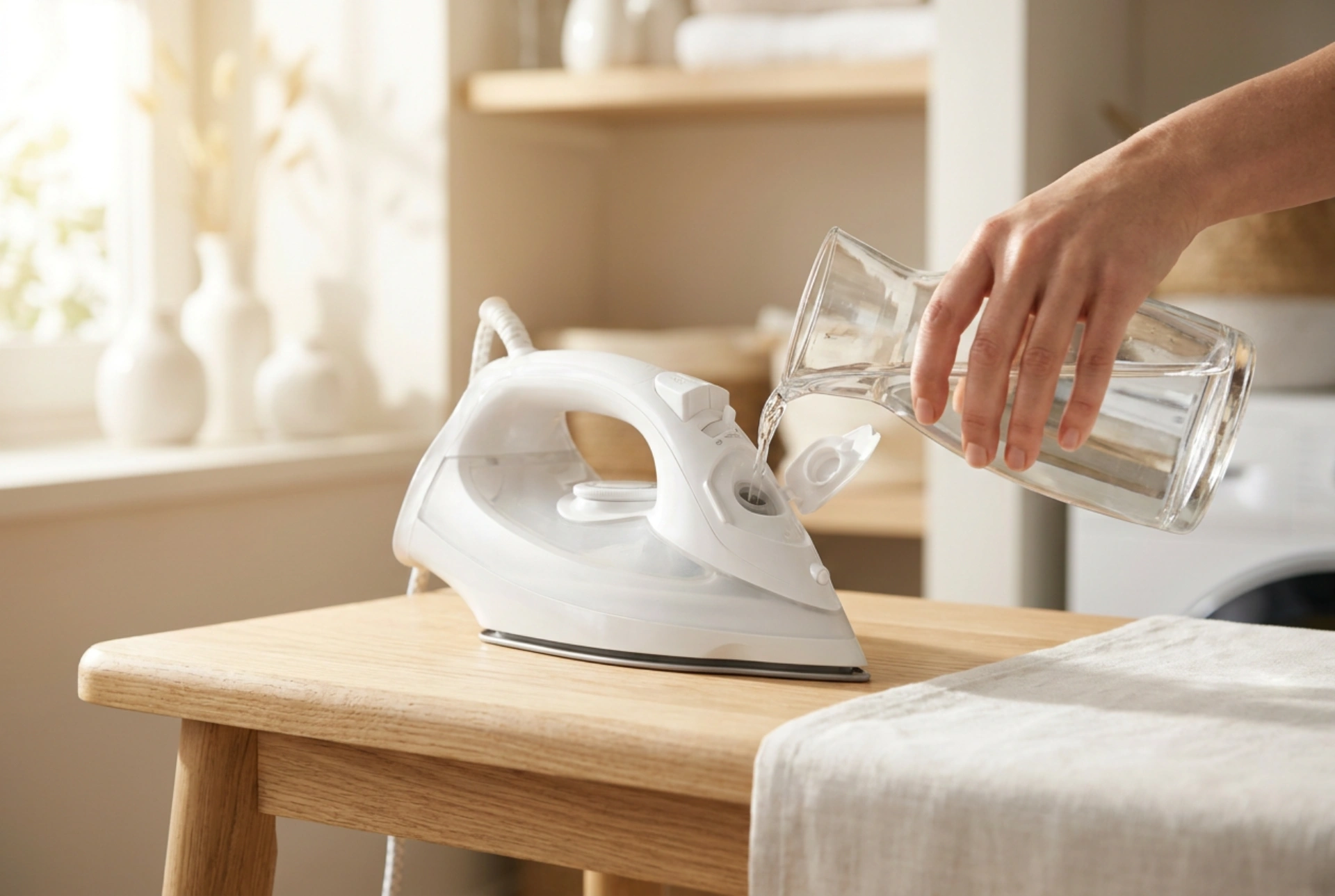


Using the right water in a steam iron directly determines its lifespan and the efficiency of steam production. Understanding the chemical differences between tap, distilled, and demineralized water prevents both mineral buildup and internal metal corrosion.
The Science of Distilled Water
Distillation is a physical purification process that mimics the natural water cycle. Water is heated to its boiling point, converting it into steam and leaving behind impurities, heavy metals, and dissolved minerals such as calcium, magnesium, and sodium. The steam is then channeled into a cooling condenser, where it reverts to liquid form. The resulting distillate is highly pure, containing virtually no dissolved solids or ionic charges.
Because it lacks minerals, distilled water has very low electrical conductivity. While this makes it ideal for laboratory applications, its interaction with household appliances is complex. The absence of minerals alters the water’s chemical equilibrium, making it highly reactive with its immediate environment as it attempts to re-establish a natural balance of dissolved substances.
How Tap Water Damages Steam Irons
Standard tap water contains dissolved calcium and magnesium hydrogencarbonates. When water is heated inside the iron’s boiling chamber to generate steam, a thermal decomposition reaction occurs. Soluble calcium bicarbonate breaks down into insoluble calcium carbonate, water, and carbon dioxide. This insoluble precipitate is commonly known as limescale.
As limescale accumulates, it coats the heating element and clogs the microscopic steam vents. Because calcium carbonate is an excellent thermal insulator, a thick layer of scale forces the heating element to work harder to reach steam-producing temperatures. This thermal stress eventually leads to the premature burnout of the internal heating components. Furthermore, loose flakes of scale can block the steam channels, resulting in spitting, uneven heat distribution, and permanent stains on fabrics during ironing.
The Corrosive Nature of Pure Distilled Water
It seems logical that using pure distilled water would completely eliminate the issue of limescale. However, pure distilled water introduces a different chemical hazard known as corrosion. Because distilled water is entirely devoid of dissolved ions, it is highly aggressive—often referred to in materials science as "hungry" water. It actively seeks to dissolve minerals from any material it contacts to reach chemical equilibrium.
When poured into a steam iron, distilled water readily absorbs carbon dioxide from the surrounding air. This reaction produces weak carbonic acid, lowering the water’s pH and making it slightly acidic. This acidic, ion-depleted water chemically attacks the metallic components inside the iron, such as the aluminum, brass, or copper elements of the steam chamber. Over time, this acid corrosion degrades the internal seals and eats away at the heating chamber, causing the iron to leak rusty, discolored water that can ruin clothing.
The Optimal Water Strategy for Steam Irons
To maximize the lifespan of a modern steam iron, you must balance the risks of scale formation and metal corrosion. Appliance manufacturers design modern heating chambers with specific metal alloys and protective coatings that accommodate a certain level of water hardness. Here is how to manage the water chemistry effectively:
- Use a 50/50 Blend: If you live in an area with extremely hard tap water, the ideal solution is to mix equal parts tap water and distilled water. This dilutes the concentration of calcium ions to prevent rapid scale buildup while providing enough mineral content to neutralize the aggressive, corrosive properties of the distilled water.
- Opt for Demineralized Water: Unlike distilled water, commercially available demineralized water is produced via ion exchange filtration. It removes the scale-forming calcium and magnesium ions but often retains a slightly different chemical profile that is less aggressive toward metals, especially when formulated specifically for household appliances.
- Utilize Self-Cleaning Cycles: Modern irons feature built-in calc-clean functions. These systems use thermal shock—flooding the hot soleplate with cold water—to break loose accumulated scale deposits, which are then flushed out through the steam vents. Regular execution of this cycle allows you to safely use standard tap water.
By understanding the physical chemistry of water under heat, you can make informed decisions that protect your appliance's internal components and ensure consistent steam performance for years.