

Choosing an ironing board goes far beyond selecting a simple flat surface; it is an exercise in managing heat, steam, and ergonomics to optimise fabric smoothing. Understanding the physics of steam dispersal and structural stability ensures faster results with significantly less physical strain.
Steam Management through Perforated Mesh Bases
The primary mechanism of ironing relies on the combination of heat, moisture, and pressure to break the intermolecular bonds in fabric polymer chains. When using a steam iron, the moisture must have an immediate escape route once it passes through the textiles. This is why the construction of the board’s surface is critical.
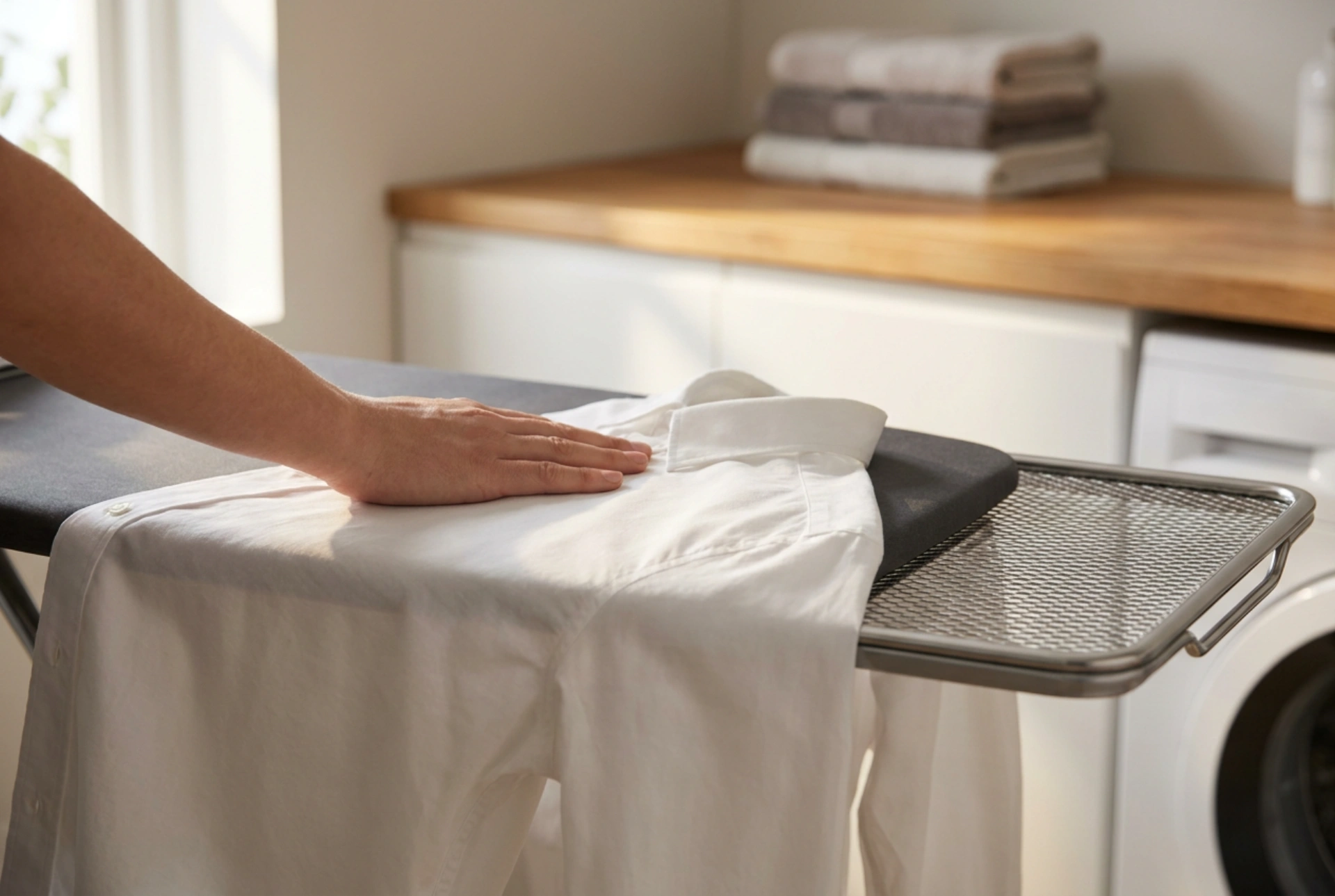
A high-quality board features a perforated steel mesh base rather than a solid plastic or wooden panel. This mesh allows steam to pass completely through the garment, preventing condensation from pooling on the board’s surface. Without adequate perforation, trapped steam cools and reverts to water, dampening the underside of the fabric and creating wet patches that are difficult to dry. This excess moisture can also cause the internal padding to rot and the metallic frame to corrode over time.
The Material Science of Padding and Covers
The layers between the metal mesh and your garment dictate the efficiency of heat transfer. Cheap boards often use thin polyurethane foam padding, which quickly degrades, flattens under heat, and leaves the grid pattern of the metal mesh imprinted on your clothes. For optimal results, a combination of thick, needle-punched felt and high-density cotton is superior.
Felt padding acts as an excellent thermal insulator and reservoir. It absorbs just enough moisture to keep the fabric stable while resisting the downward pressure of the iron, ensuring a smooth glide. When paired with a cover made of heavy-duty cotton, the coefficient of friction is perfectly balanced. Some advanced covers incorporate metallised threads or reflective coatings. These materials reflect heat back up through the underside of the fabric, essentially ironing both sides of the garment simultaneously and reducing ironing time by up to one-third.
Frame Geometry and Structural Stability
Ironing requires constant lateral and vertical force. A board that wobbles or flexes absorbs the physical energy you exert, forcing your muscles to work harder to maintain pressure. The geometry of the support legs is therefore paramount to safety and comfort.
Look for asymmetrical frames or wide T-leg designs constructed from heavy-gauge tubular steel. A wider base footprint lowers the centre of gravity, preventing tipping when pressing heavy fabrics like denim or coats. Furthermore, the locking mechanism must offer continuous or multi-stage height adjustment. This allows you to set the board precisely at hip height, preventing spinal flexion and reducing lower back strain during long sessions.
Iron Rests and Board Ergonomics
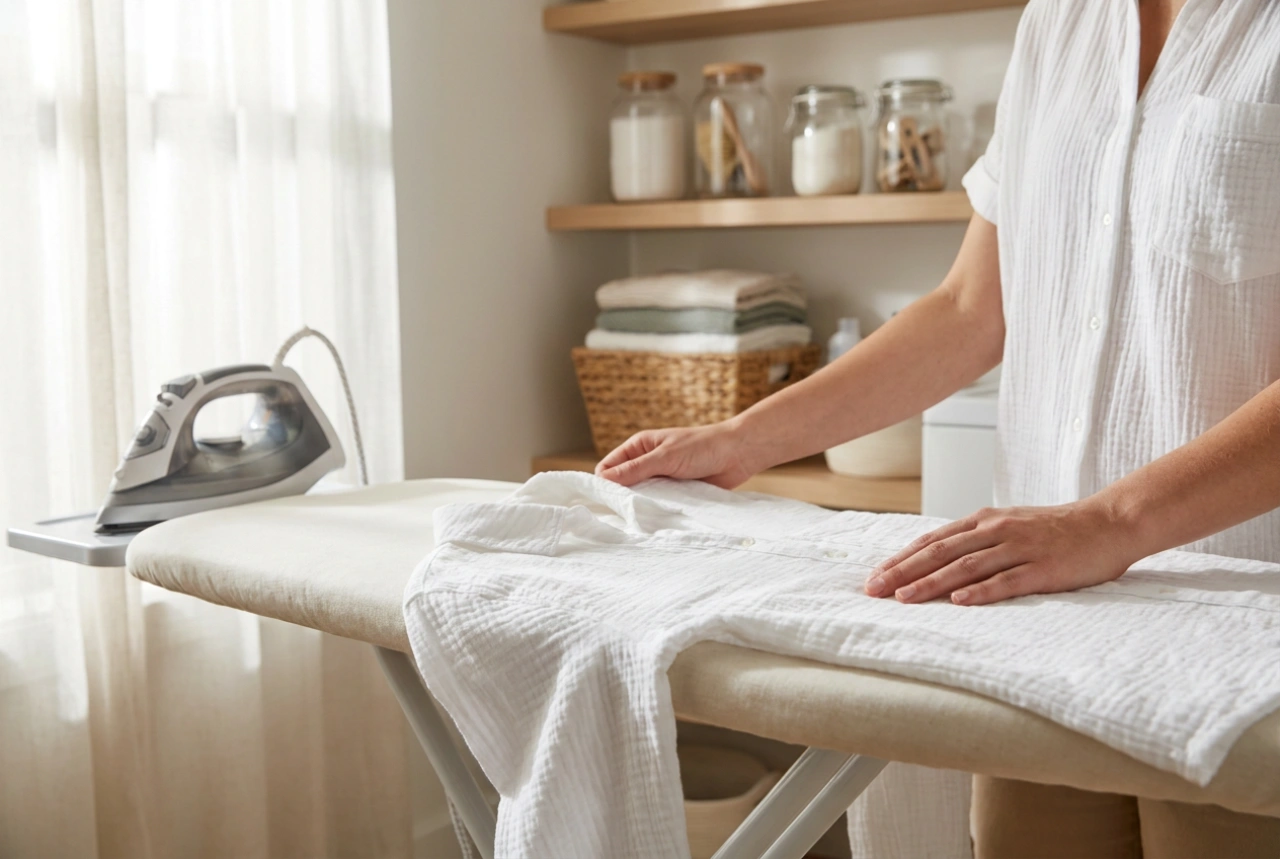
The shape of the board’s nose and the design of the iron rest are functional features that directly impact workflow. A tapered, narrow nose is essential for manipulating the shoulders of shirts, sleeves, and tight waistbands. It allows the fabric to drape naturally without bunching, eliminating the risk of ironing unwanted creases into the back of a garment while smoothing the front.
At the opposite end, a dedicated, heat-resistant iron rest is vital. Materials like high-grade silicone or integrated metal plates allow you to park the iron horizontally without scorching the cover. Placing the iron flat on a dedicated rest reduces wrist strain, as you do not need to constantly lift and tilt the iron onto its heel. This simple mechanical shift streamlines the hand-to-board motion, keeping the iron’s heating element at its most efficient angle throughout the process.