

An disorganized sewing kit leads to bent needles, tangled threads, and damaged fabrics. Organizing your sewing tools systematically by material, frequency of use, and physical properties prevents degradation and streamlines your workflow.
The Chemistry and Physics of Sewing Tool Degradation
Before placing tools in compartments, you must understand how materials interact with their environment. Metal tools like dressmaker shears, hand needles, and rotary cutter blades are highly susceptible to oxidation. When steel is exposed to humidity, oxygen reacts with the iron to form iron oxide (rust). Storing needles unprotected in a humid container accelerates this process. Pin cushions filled with natural wool or emery sand are ideal because wool contains natural lanolin, which lightly coats the metal to repel moisture, while emery sand acts as a mild abrasive to remove existing microscopic rust.
Thread degradation is another critical factor. Sewing threads made of cotton, polyester, or silk are vulnerable to ultraviolet (UV) light and dust accumulation. UV radiation breaks down the molecular bonds in synthetic and natural fibers, leading to brittle threads that snap easily under tension. Dust acts as a microscopic abrasive; when a dusty thread passes through a sewing machine needle eye, it increases friction and heat, causing tension issues and machine wear. Transparent plastic containers are convenient for visibility but must be stored inside closed drawers to block UV light.
The Hierarchy of Compartmentalization
Effective storage relies on a strict hierarchy of separation based on frequency of use and physical dimensions. Creating dedicated zones prevents delicate tools from colliding with heavy metal implements.
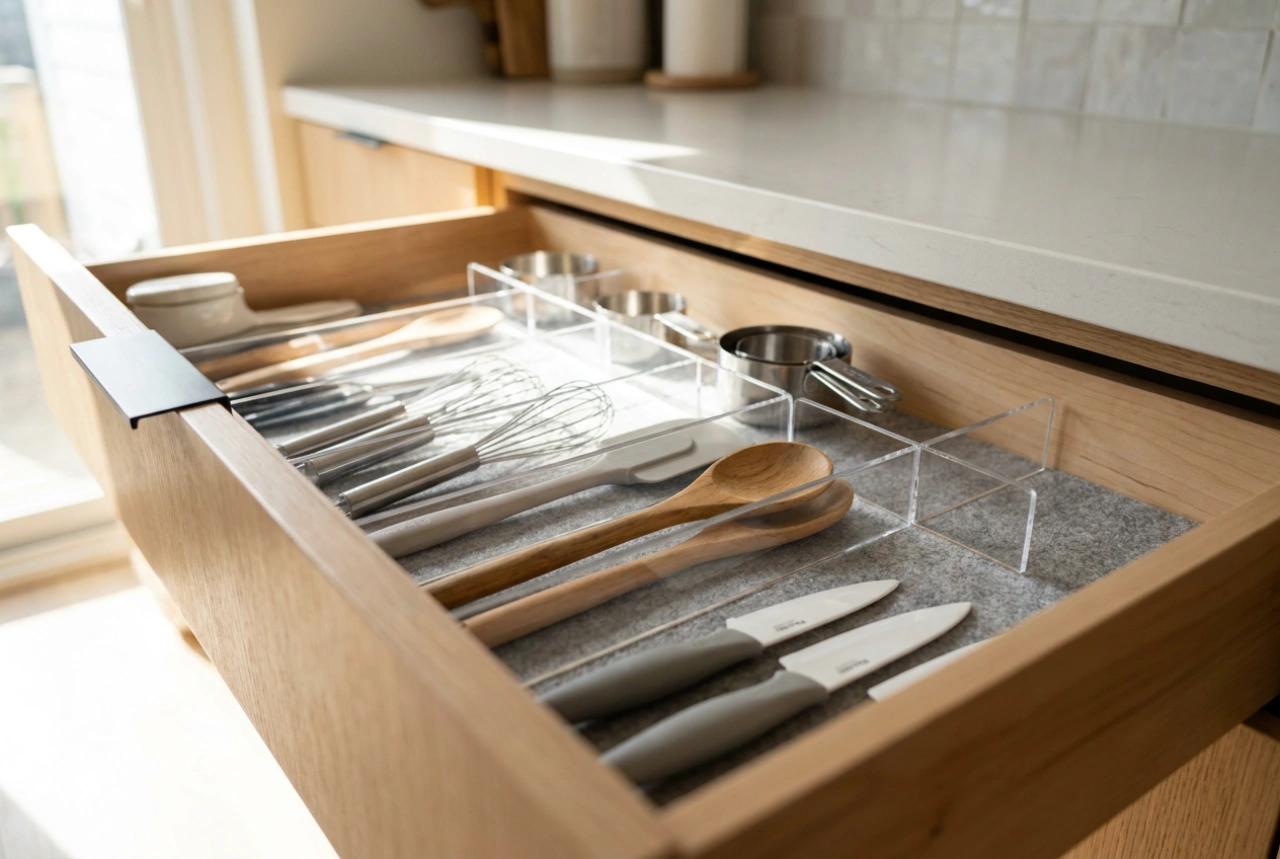
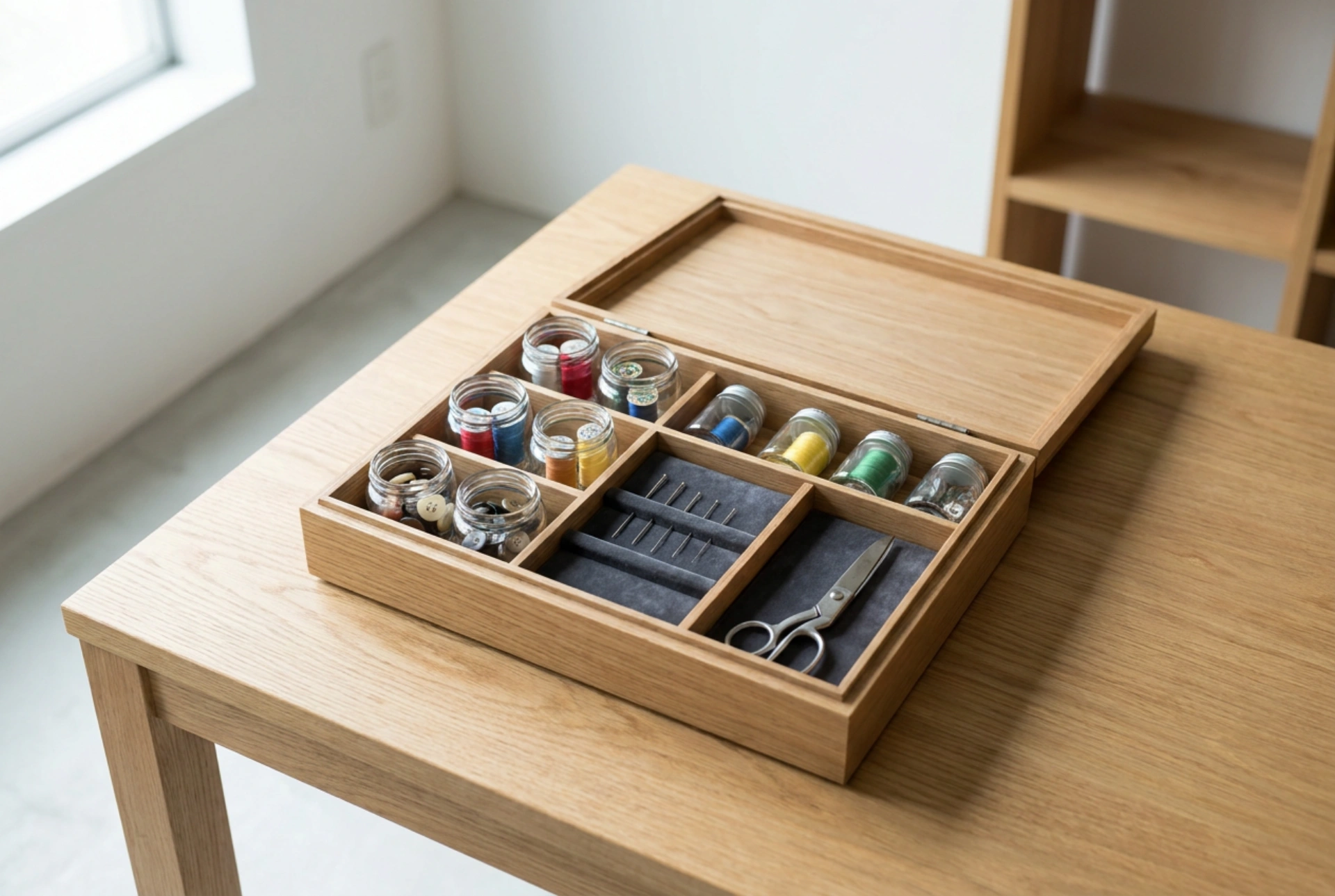
- The Upper Tier (Immediate Access): This level is reserved for daily-use tools such as shears, measuring tapes, and a selection of neutral-colored threads. These items should sit in shallow, open trays or molded felt inserts to prevent sliding and blade dulling.
- The Deep Compartments: Reserved for bulkier items such as bias tape makers, fabric markers, and spare sewing machine parts. Use modular dividers to prevent these heavier items from shifting and crushing lighter components.
- The Micro-Grid: Small items like presser feet, hand needles, safety pins, and buttons require micro-compartments. Small glass vials with cork stoppers or clear acrylic grid boxes with individual secure lids prevent mixing and loss of tiny, crucial parts.
Sorting Threads and Needles by Technical Specifications
Threads should never be tossed loosely into a drawer. The loose ends will inevitably tangle, creating knots that ruin the tension of the thread spool. Secure thread ends using small silicone spool savers or by utilizing the built-in slit on the spool rim. Arrange spools vertically on wooden pegs or within custom-sized grid compartments. Grouping threads by fiber type (polyester, cotton, silk) and weight is essential, as using the wrong thread weight can ruin a delicate fabric or snap during heavy sewing.
For needles, separation must be even more precise. Machine needles are engineered with specific tip geometries—such as ballpoint for knits or sharp denim needles for heavy woven fabrics. Storing used but still functional needles requires a dedicated pin cushion or a partitioned box labeled by needle type and size (e.g., 70/10, 90/14). Never mix hand needles with machine needles, as their eye configurations and shank shapes are completely different and require distinct handling methods to avoid damage to the needle tips.
Optimal Materials for Containers and Organizers
The choice of storage material directly impacts the longevity of your sewing supplies. Wood organizers are excellent for absorbing minor fluctuations in humidity, creating a stable microclimate for steel tools. However, ensure the wood is sealed with a non-reactive varnish to prevent natural wood acids from tarnishing metal over time. Acid-free plastic containers are highly durable and chemical-resistant, making them perfect for long-term storage of synthetic threads and notions. Avoid cheap, highly scented plastic bins, as they can release volatile organic compounds (VOCs) that degrade plastic spools and discolor delicate silk or cotton threads over extended periods.